This article has been reviewed according to Science X's editorial process and policies. Editors have highlighted the following attributes while ensuring the content's credibility:
Previous studies have suggested that body posture and movement can influence emotions. KAIST researchers have extended this line of research by showing that when people perform the same "depressed" body movements, their brain responses differ depending on the level of their depressive symptoms.
The findings are expected to provide a basis for research on which movements or exercises help which people and on mental health care methods suited to each individual's condition.
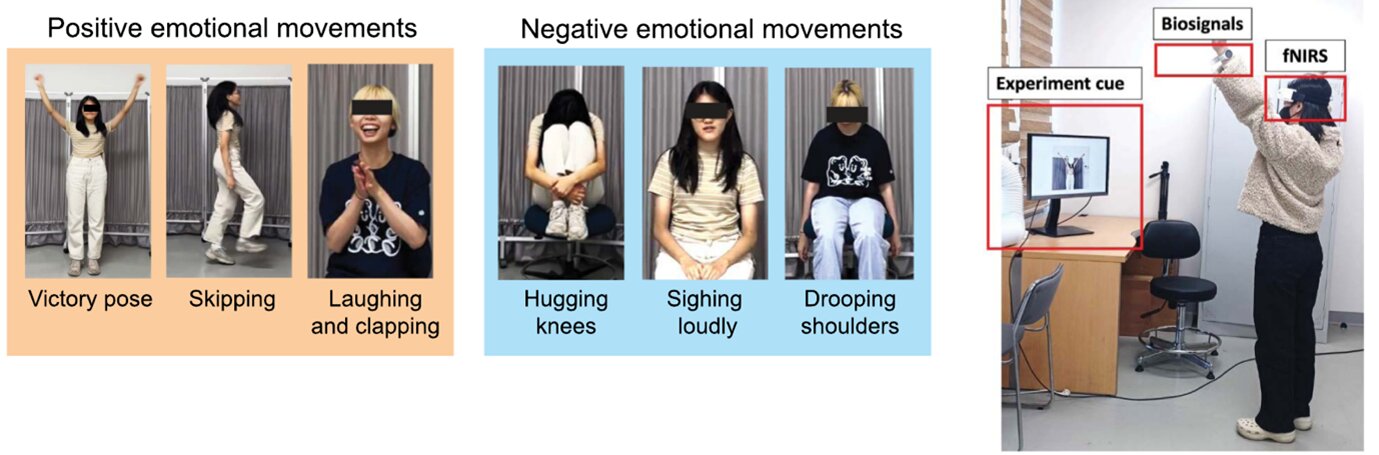
A research team led by professor Young-Gyun Park from the Department of Bio and Brain Engineering used a wireless brain imaging device to measure brain activity while people moved their bodies and identified differences in brain responses according to the level of depressive symptoms.
When people feel sad or exhausted, they may hug their knees, sigh deeply or let their shoulders droop. These movements express emotions. However, body posture can also influence emotions. One study has reported that people with depressive symptoms may experience more positive emotions and less fatigue when they adopt an upright posture.
Building on previous studies of the relationship between posture and emotion, this study asked whether the brain responds differently to the same movements depending on the level of depressive symptoms. The researchers started from the question of whether brain responses can differ even when outward behavior is the same.
Answering this question requires measuring brain activity while the body is moving.
Source link