As the closely watched screening test moves closer to Food and Drug Administration approval, MedTech Dive asked cancer experts what encourages and concerns them most about Galleri.
Grail’s multicancer detection test could soon become the first blood test of its kind to secure Food and Drug Administration approval.
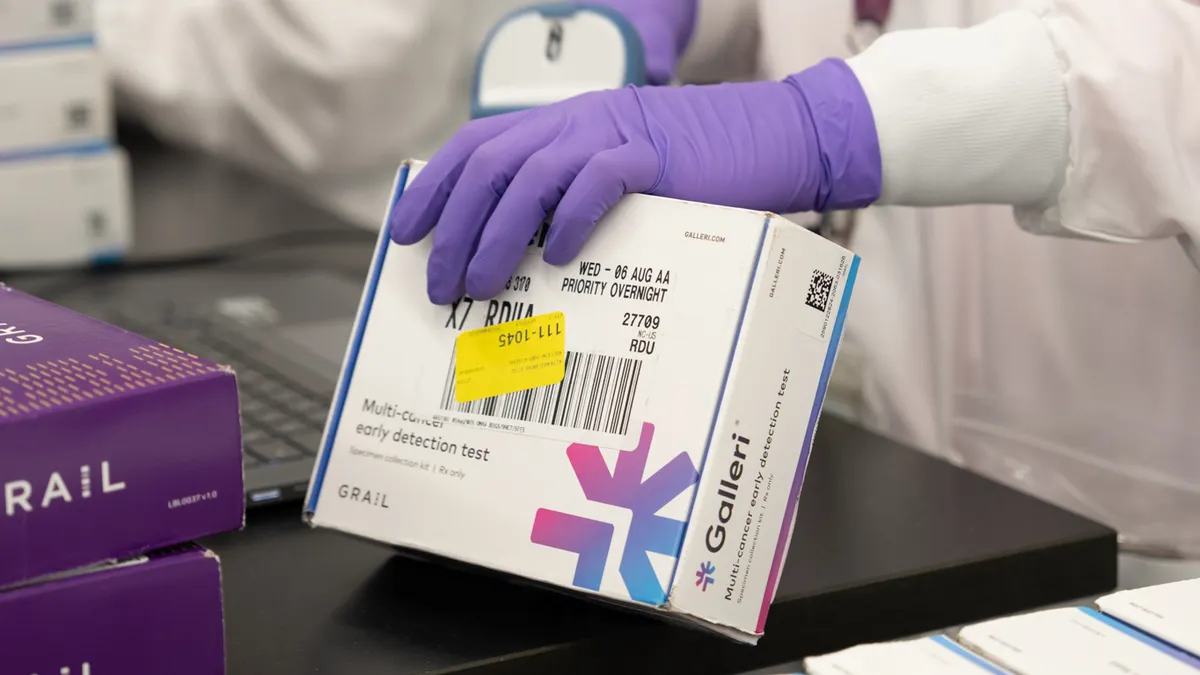
The Galleri test screens for many types of cancer from one blood draw. It works by analyzing DNA fragments for a shared cancer signal and then predicts its origin. A positive signal needs follow-up testing such as imaging or biopsy to confirm cancer.
An FDA advisory committee reviewed the clinical evidence for Galleri last month and endorsed its effectiveness by a 6-4 margin, reflecting caution among panelists about what the test can and cannot do to improve early detection of cancer. Grail, a publicly traded company that was spun out of Illumina, says Galleri should be used in addition to guideline-recommended single-cancer screenings. The test is intended for people age 50 and older.
FDA approval could expand insurance coverage for the test, which lists for $949. A new law paves the way for Medicare coverage starting in 2028.
As the medical world awaits the FDA’s decision, MedTech Dive asked five cancer specialists about Galleri’s potential to find cancer earlier, the test’s limitations, and their expectations for the use of multicancer testing. Their answers follow.
The first question about Grail’s test is, how good is it at identifying abnormal from normal, and when they find an abnormal signal, how often is it actually cancer?
Source link