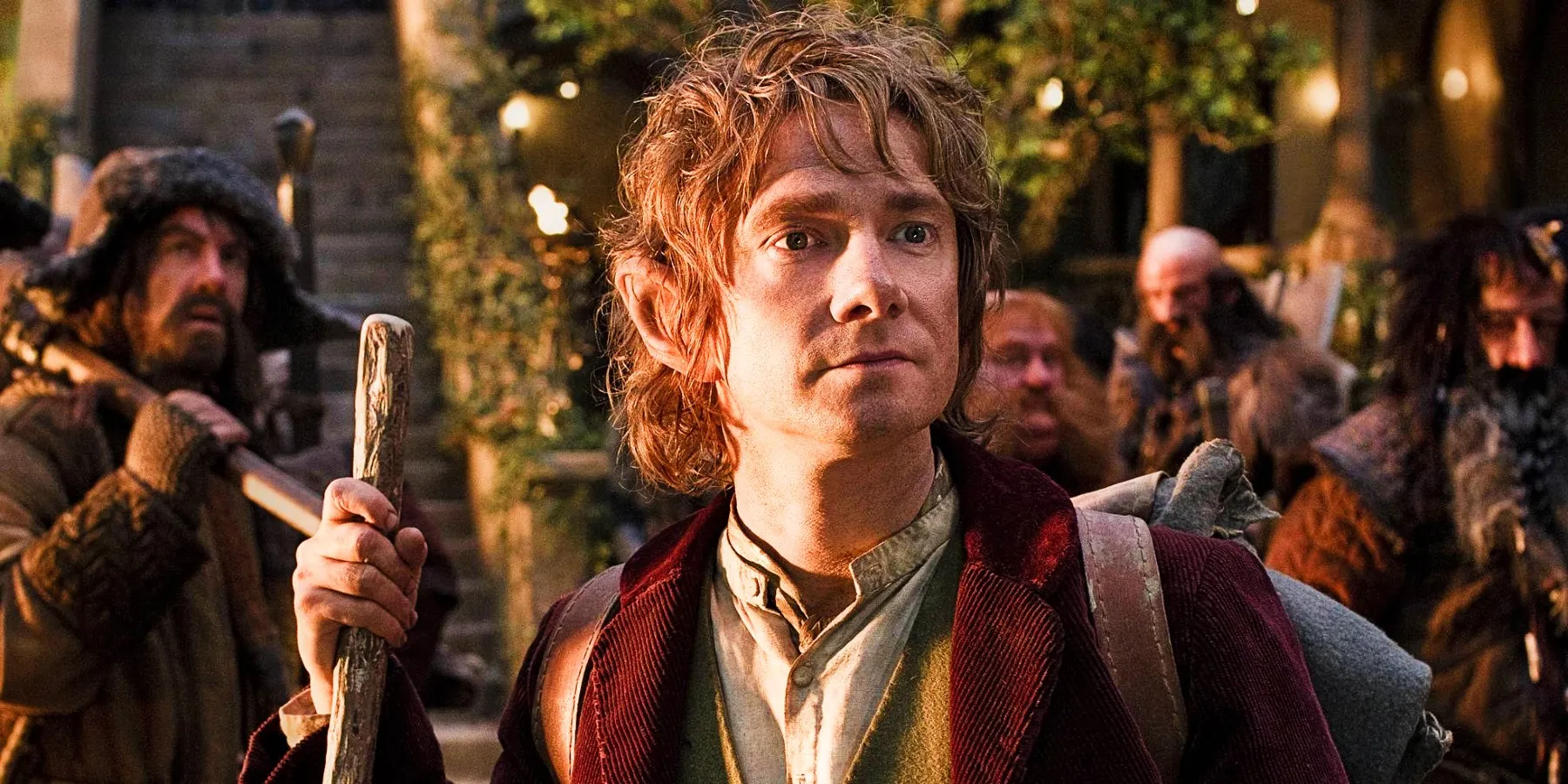
I couldn’t have been more excited for a movie adaptation of J.R.R. Tolkien’s The Hobbit. The story of Bilbo Baggins is my favorite book — I even prefer it to The Lord of the Rings — and I try to read it again every year. By virtue of being less ambitious, The Hobbit lets Tolkien deliver a compact narrative that makes his talent as a worldbuilder and writer shine.
That is also why, when I learned Peter Jackson would adapt The Hobbit as a trilogy of movies, I realized something was quite wrong. The results speak for themselves: The Hobbit movies are a CGI-riddled mess that, for the most part, fail to translate and portray the magic of Tolkien’s book.
But blaming it all on the corporate greed that turned what could have been one great movie into a drawn-out trilogy would be too simple. After all, Jackson and creative partner Philippa Boyens agreed to expand the originally planned two movies into three. The problem with The Hobbit movies isn’t just that they add an inordinate amount of “original” material; it’s that they forget what this story was in its conception: a bedtime fairy tale.
Tolkien would call The Lord of the Rings a fairy tale, too. ” They are what we today describe as “fantasy,” and Tolkien himself used that definition. Of course, the matter is much more complex, and fairy stories have more defining elements for Tolkien, who describes them in the essay On Fairy-Stories (written in 1937 and first published in 1947).
Source link