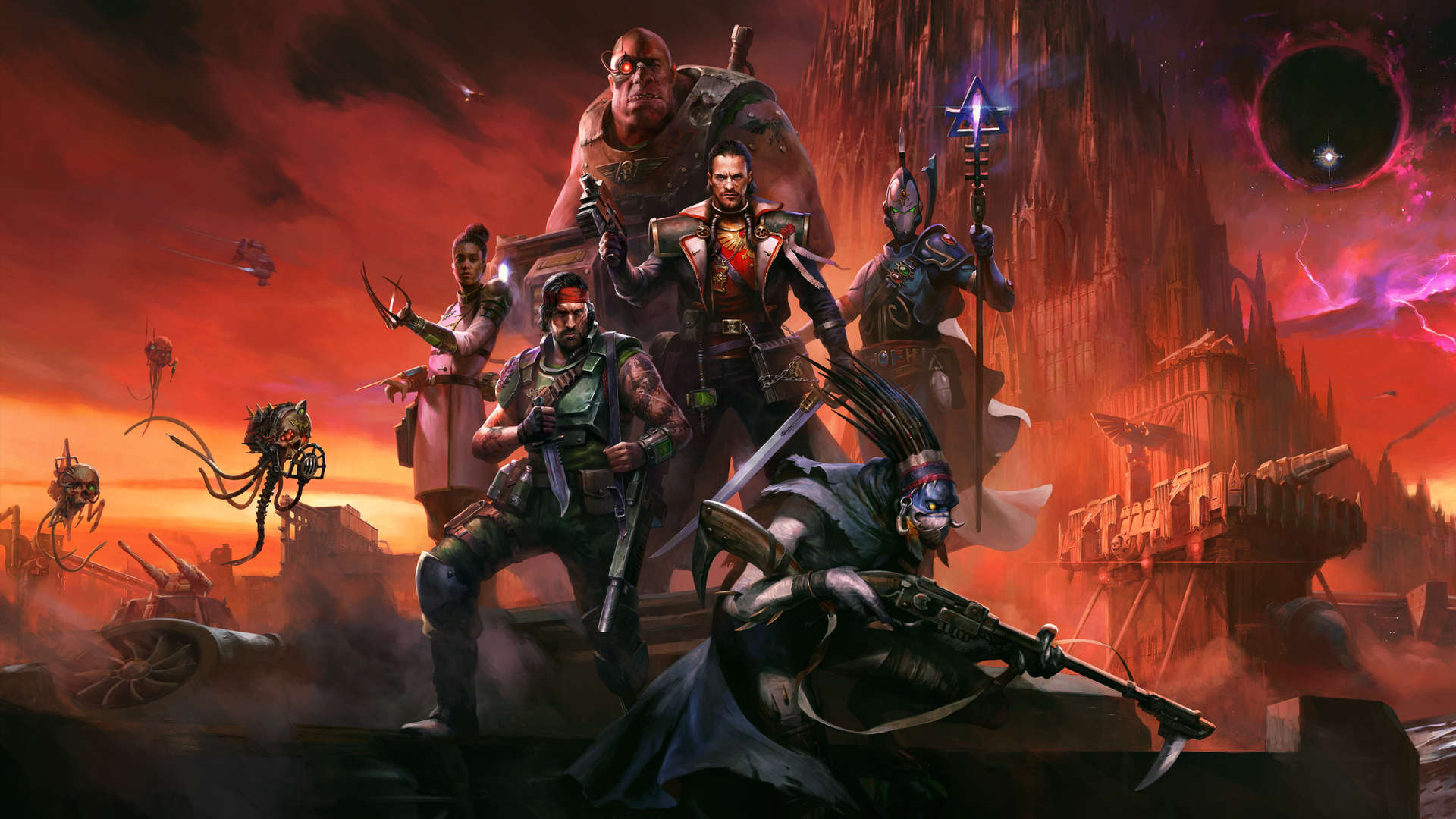
I have technically solved a lot of crimes from the comfort of my gaming chair, but it's surprisingly rare for games to actually engage with the mechanics of a criminal investigation. You'll chat to folk, maybe use your 'detective vision', and then the culprit is found. Warhammer 40,000: Dark Heresy asks more from you.
As an agent of the Inquisition, solving crimes and putting away heretics is your business. You don't complete quests, you solve cases, log evidence, make accusations, torture and snoop—all in a universe where your word is law.
Owlcat's given us a quick breakdown of Dark Heresy's detective systems in the video above, but like my favourite inquisitor, Gregor Eisenhorn , I wanted to dig a little deeper and put some questions to Veronika Larionova, Owlcat's senior narrative designer.
Is the detective system exclusively based on things that we've seen in the books and other games, or are there brand new elements that Owlcat created from scratch?
What tools do inquisitors have at their disposal when it comes to their detective work?
Can you conclude an investigation whenever you want, based on thin evidence?
Is it possible to conclude an investigation successfully just through luck—like picking a culprit at random? And will the outcome be different if you got the right person but failed to collect all the evidence?
Can the player benefit from purposefully pinning something on the wrong group or person?
Can we essentially play as Eisenhorn—not the character himself, of course, but exclusively making the kinds of choices that Eisenhorn would make?
Source link