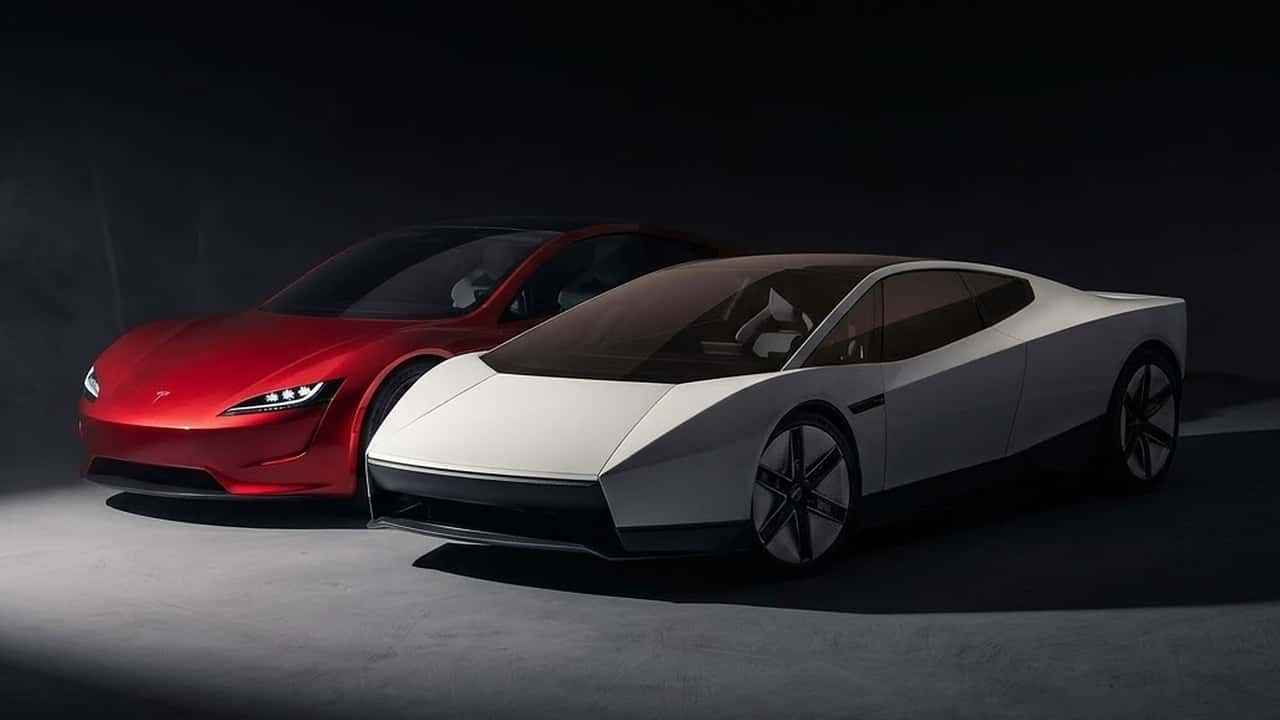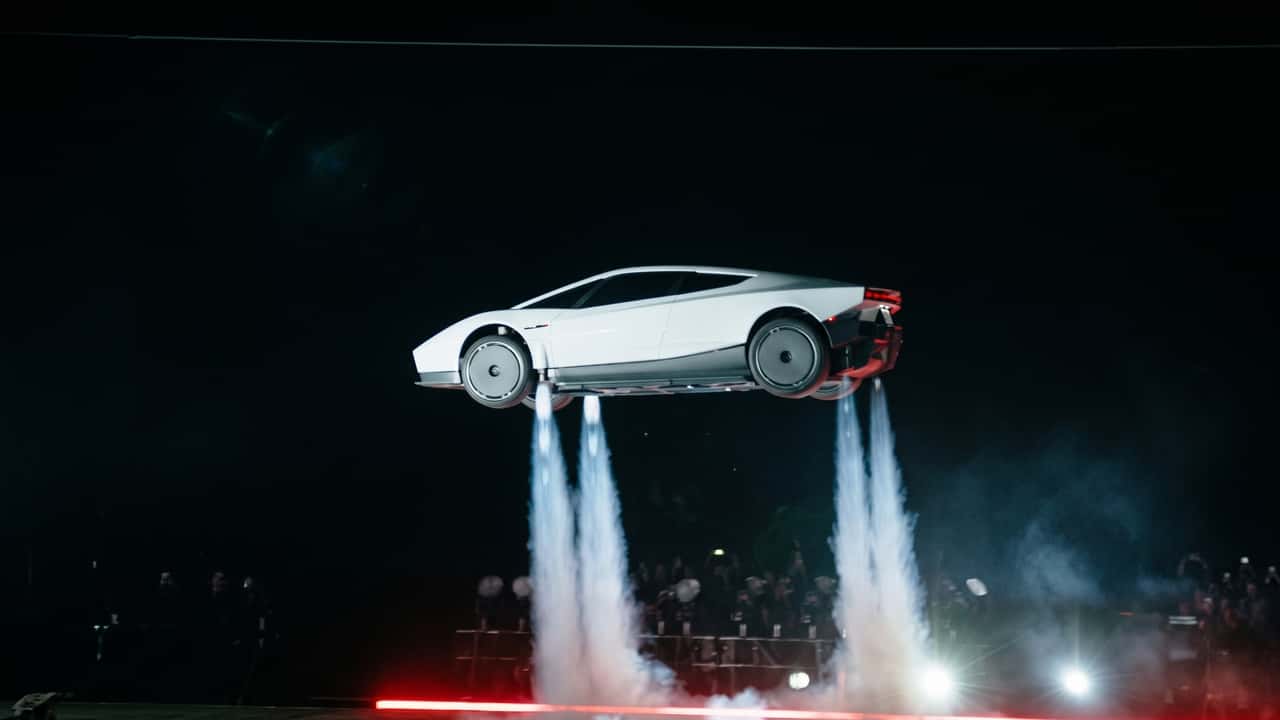
The new Tesla Roadster can apparently launch itself into the air, pull a barrel roll, and reach 60 mph in under a second. But what happens after it blows through the air, powering those tricks? Elon Musk says owners won’t need to visit their local rocket-fuel supplier, because the vehicle can replenish its air tanks on its own.
First, you need the right Roadster. All three versions, Performance, Thrust, and Rocket, get suction fans that hold the car to the road and let you drive it upside down. The base Performance has no thrusters, while the limited-availability Thrust adds rear-facing boosters (supplied from a tank located behind the passenger compartment) for acceleration.
The invite-only Rocket gets all 10 thrusters, including those needed for takeoff and airborne maneuvers. It's also a single-seater, which could mean its air tanks take up more interior space than the other variants. Joining the reservation queue won’t guarantee access to the full flying-car experience.
During the presentation, Tesla said the flying demonstrator carried two pressure vessels totaling 600 liters, containing roughly 250 kilograms of compressed air. Those figures describe the flying setup, not necessarily what the Thrust version will get.
There’s also a surprising weight penalty: those 250 kilograms of air amount to around 550 pounds, before counting the tanks, plumbing, and compressors. Air sounds like something that shouldn’t weigh much, but Tesla is carrying a considerable amount of it. Expelling it lightens the car, but it also depletes the pressure that powers the thrusters.
Source link