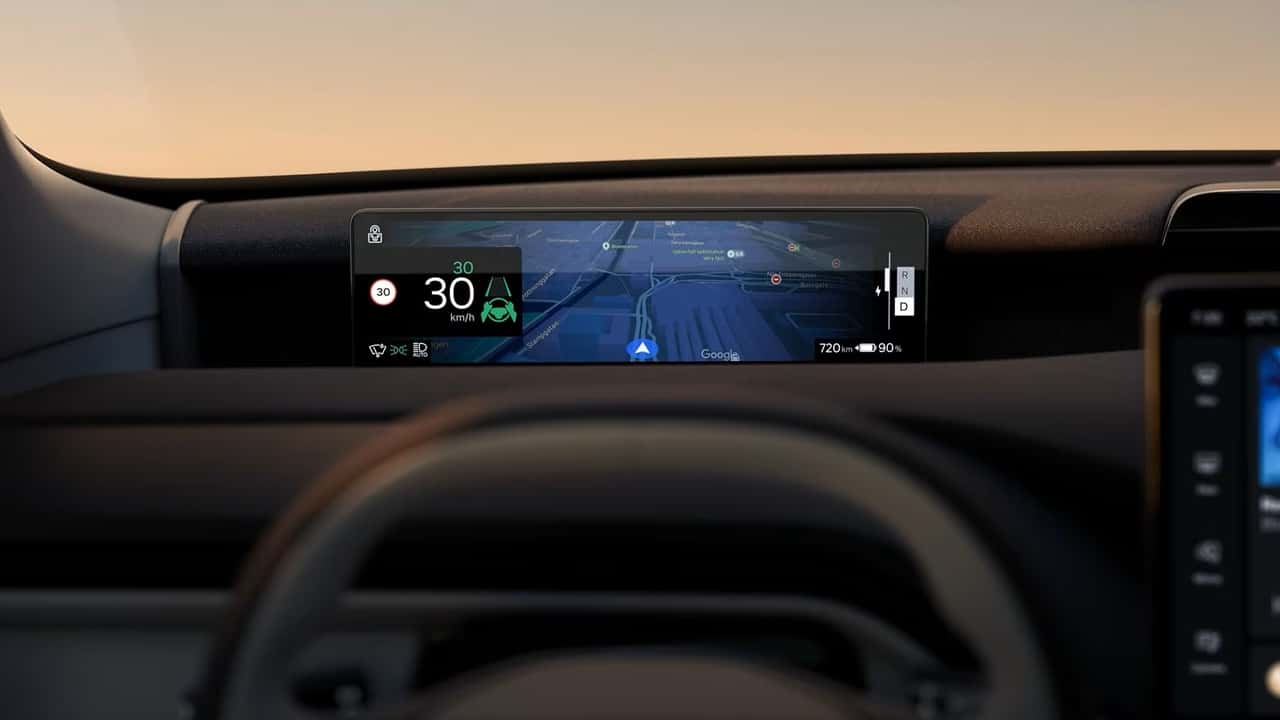
Volvo is giving its aging driver assistance system a makeover with Nvidia’s help. The Chinese-owned, Swedish-based automaker will integrate hands-free, point-to-point automated urban driving into its latest-generation models, which are expected to debut by the end of 2030.
The system is expected to function similarly to Tesla’s Full Self-Driving (Supervised) and Rivian’s Universal Hands-Free features. It uses cameras and various sensors to detect road markings and other vehicles, but doesn’t rely on pre-mapped areas to make decisions.
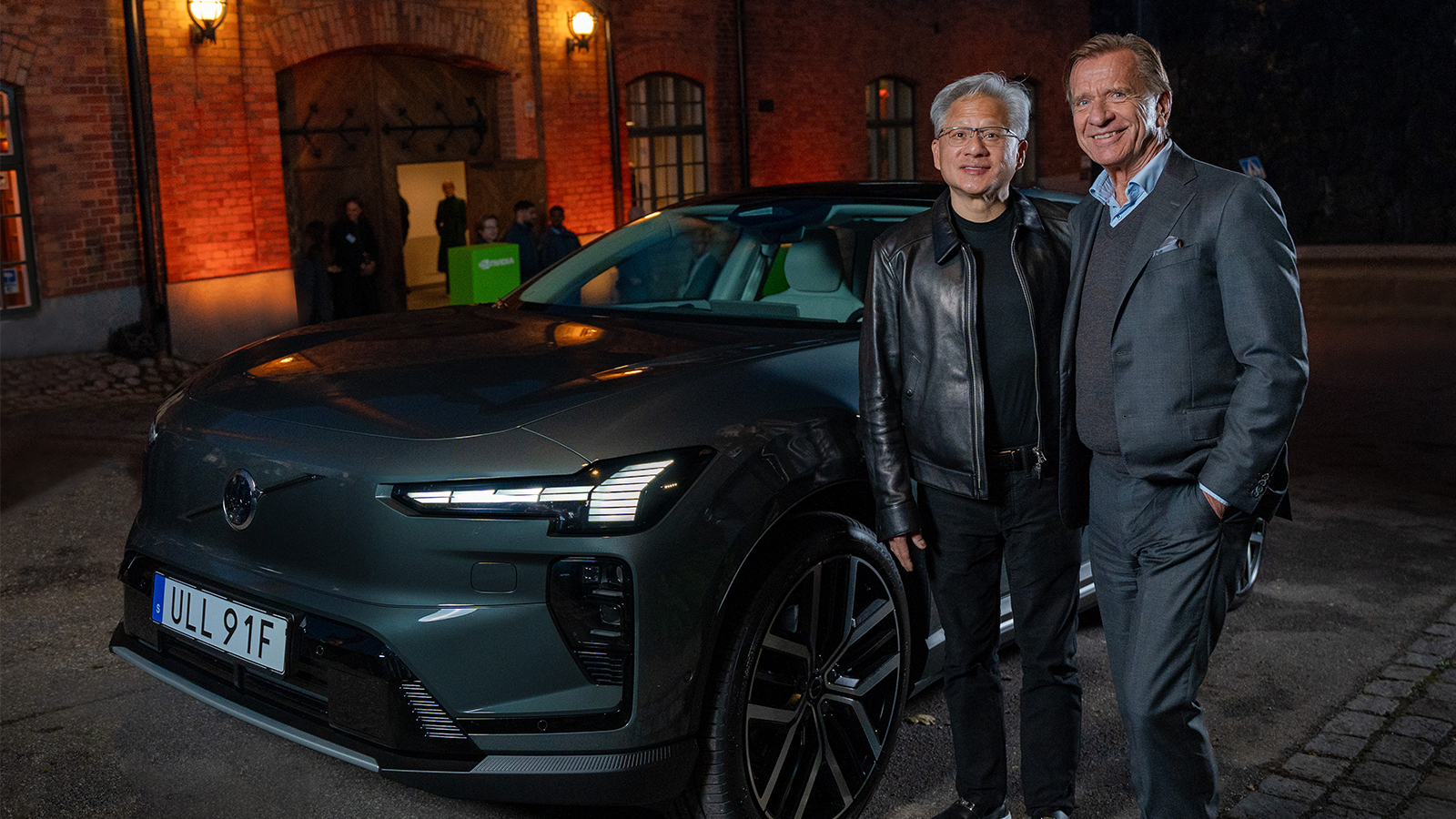
Nvidia Founder And CEO Jensen Huang (left), Volvo Cars CEO Håkan Samuelsson (right)
Further in the future, Volvo claims its AI-powered driver assistance system will deliver “eyes-off and mind-off” driving, but a timeline for the rollout has not yet been disclosed. The cars that will get dibs on the feature are also unknown.
By using Nvidia’s Hyperion platform, which includes custom high-powered chips and a full suite of sensors mounted around the vehicle, Volvo says its new point-to-point system will offer Level 2++ functionality.
Despite its confusing name, which is nowhere to be found on the Society of Automotive Engineers’ Levels of Driving Automation chart, the automaker claims the driver assistance system will be able to handle complex urban environments without explicit driver intervention. This includes stop signs, traffic lights, and unprotected left turns, according to Ali Kani, VP and general manager of the automotive team at Nvidia, quoted by The Verge.
Besides relying on Nvidia’s hardware suite, Volvo will also adopt the chipmaker’s Alpamayo software stack, which uses “reasoning” models to interpret complex road conditions and decide where to brake, accelerate, or steer.
Source link