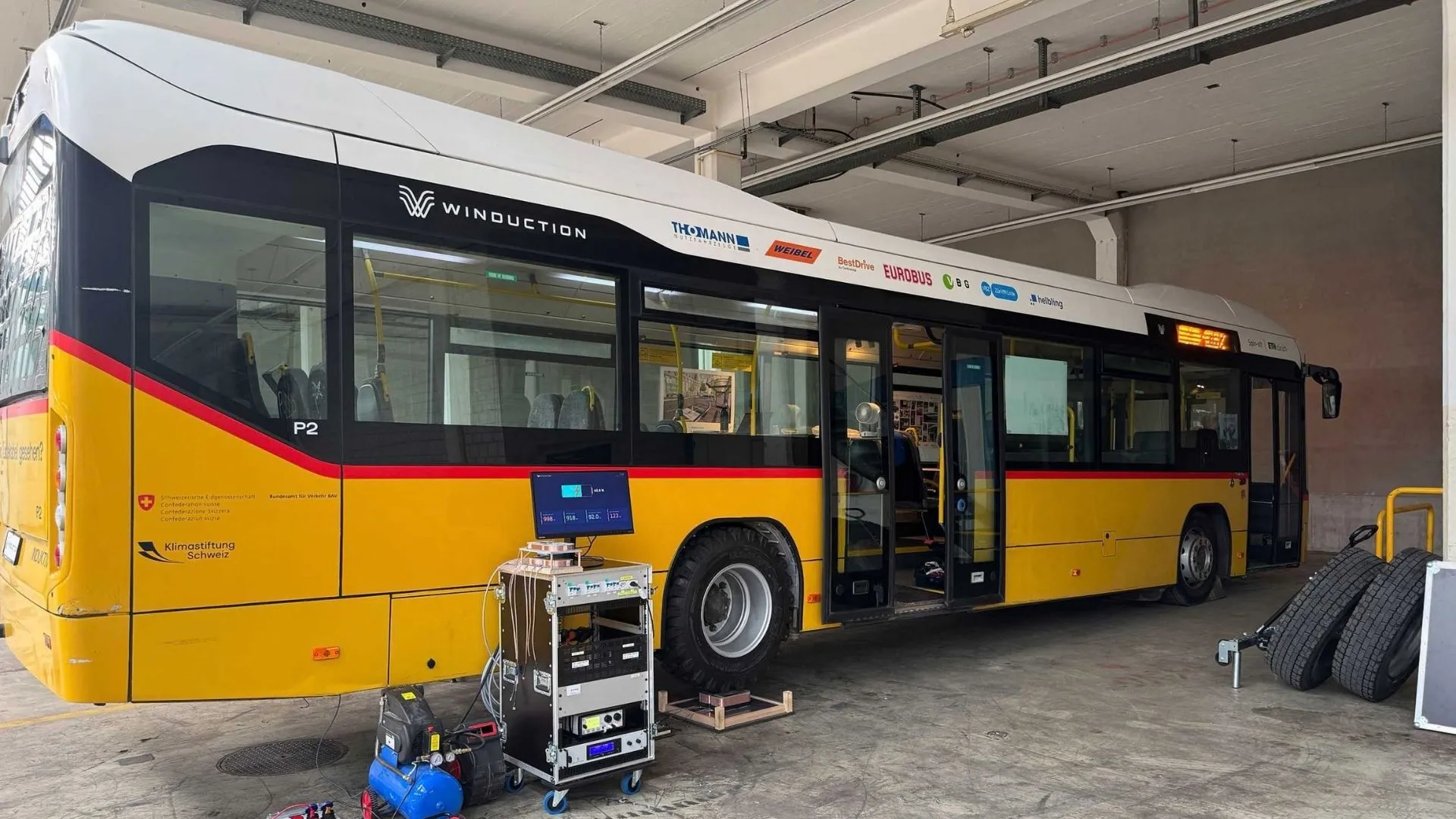
An electric bus prototype is drawing power through its wheels, using specially designed tires to transfer energy from a charging plate to its battery without a cable.
Developed by ETH Zurich spin-off Winduction, the system charges buses while they pause at stops.
The company reported road-to-vehicle energy transfer efficiency above 90 percent and aims to reduce the large batteries that buses carry throughout their working day.
Winduction is building testing infrastructure in Winterthur, Switzerland, and plans its first passenger-carrying pilot in 2028, with discussions underway involving transport operators in the Zurich Airport region.
Conventional wireless vehicle chargers transfer energy between a coil in the ground and another beneath the vehicle. The distance between them varies with vehicle design and affects how efficiently power moves across the gap.
Winduction places the receiving coils inside a specially designed bus tire, bringing them closer to the road.
“The only thing that always has contact with the ground on any vehicle is the wheel,” said ETH alumnus Sylvan Fricker, who is responsible for the technology at the company.
Coils in a road-embedded base plate connect to the electricity grid and generate a magnetic field. A second set inside the tire receives energy when the bus stops and transfers it to the battery.
“We minimize the large transmission distance between the road and the chassis by integrating coils into the wheel,” said Fricker.
The reported efficiency means less than 10 percent of the energy is lost during transfer from the road to the vehicle.
Source link