India's electric vehicle sector is rapidly expanding, prompting a renewed emphasis on local battery production. The government is taking steps to fortify the domestic supply chain. However, there are hurdles to increasing production capacities. Initiatives are being launched to boost technological access and cultivate a skilled workforce.
India has made progress in battery-pack assembly, but the more difficult part of localisation lies further upstream.
India’s electric vehicle journey has reached a point where the next question is no longer about adoption. It is about what India needs to build around that adoption. EV penetration in India has risen sharply, reaching 8.26% of vehicle sales in FY2025-26, compared with just 0.08% in FY2015-16. The scale of the transition is now large enough to make the underlying supply chain a strategic consideration for the automotive industry. And at the center of that supply chain is the battery. Advt
For Indian EV manufacturers, battery localization can no longer be treated simply as an import-substitution exercise. It is increasingly about competitiveness, supply-chain resilience and the ability to shape the next phase of electric mobility from within India. From assembling batteries to building the ecosystem
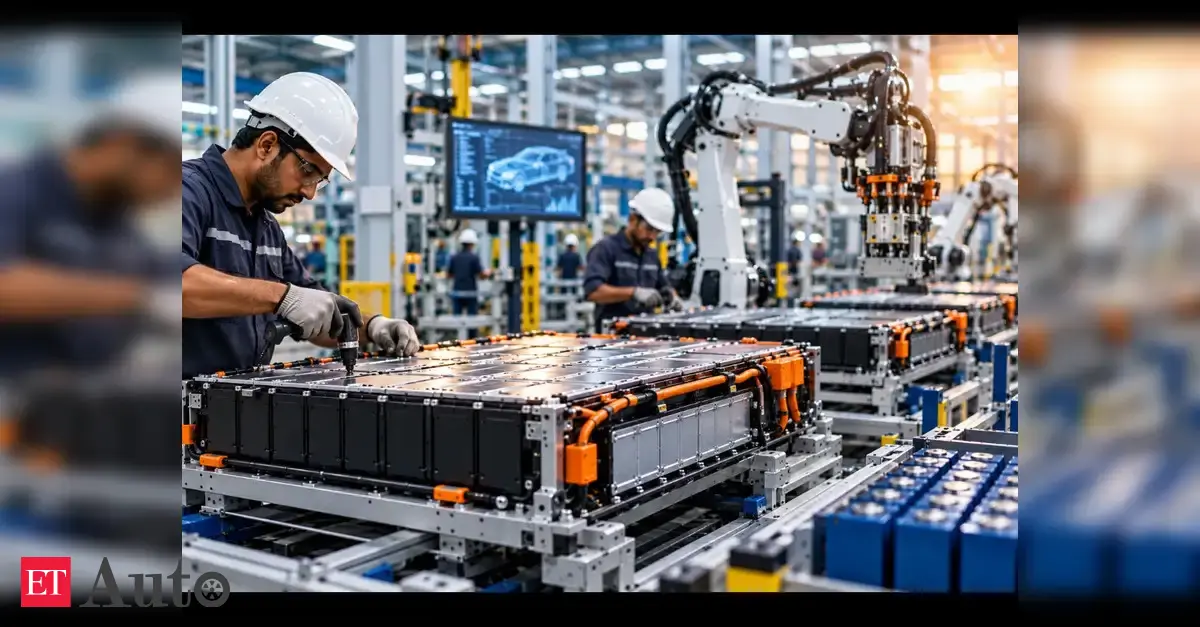
India has made progress in battery-pack assembly, but the more difficult part of localisation lies further upstream. A battery pack assembled in India can still contain cells, active materials and other components manufactured elsewhere. The distinction is important because cell manufacturing and battery materials account for a substantial share of the technology, economics and performance of an EV battery.
Source link