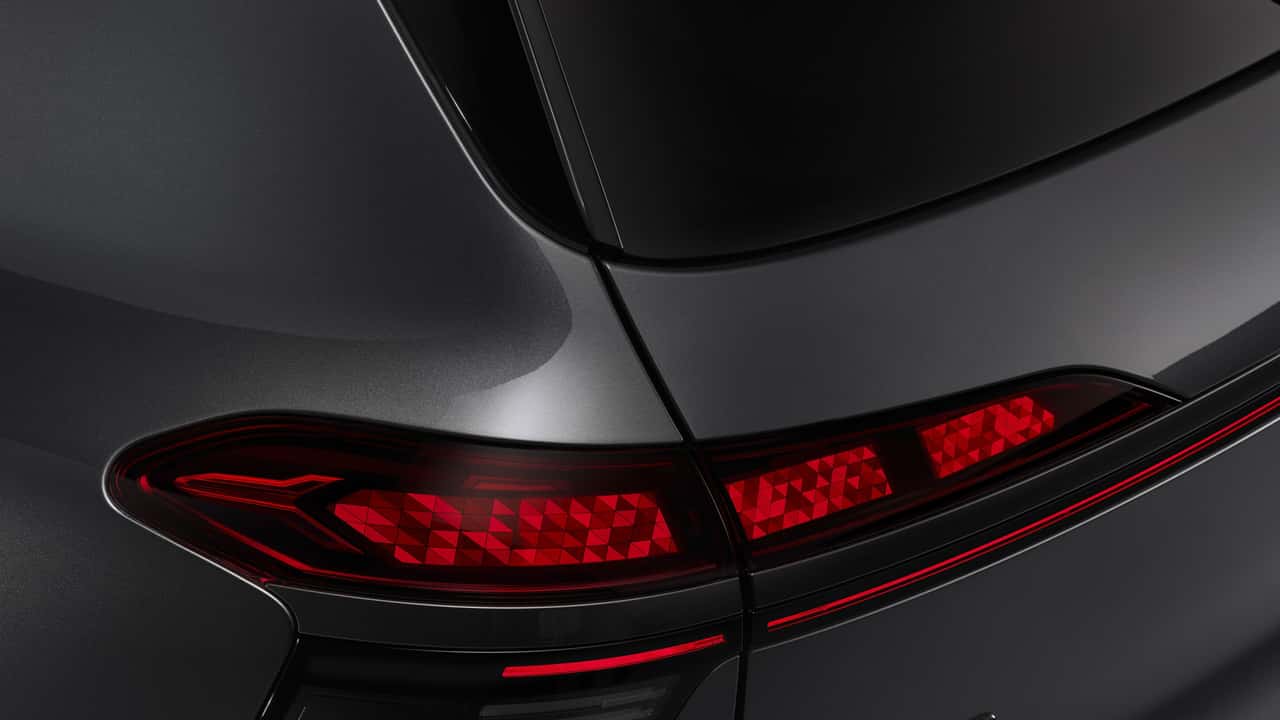
Audi's new flagship SUV has a lighting trick nobody else on the road can match. The Q9 uses curved digital OLED taillights made from six glass panels just 0.1 millimeter thick that wrap around the rear quarter panels instead of sitting flat.
Audi calls the setup a world first and previewed it when the Q9 debuted this past July. The hardware backs that up with 512 individually controllable lighting segments spread across those six panels.
Here is how the system works and what it changes for anyone driving behind one.
Conventional LED taillights sit behind flat lenses, which limits how far the light can wrap around a car's body. Audi's curved digital Q9 flagship SUV changes that by shaping the glass substrate itself to match the rear quarter panel. The lighting follows the curve of the body instead of stopping where a flat panel would.
The 0.1-millimeter glass substrate is thin enough to bend without cracking the OLED layer bonded to it. The result is a light element Audi says measures just one millimeter thick overall, built on technology the brand has spent a decade developing for production cars.
Audi was the first automaker to put segmented OLED lighting into a production vehicle, and the digital version in the Q9 pushes that further. Each OLED rear light connects to the car's electrical system control unit through a bus system. That link lets hundreds of segments be controlled on their own instead of lighting up as one block.
That fine control also keeps the curved panels easy to read from the side, not just straight on.
Source link