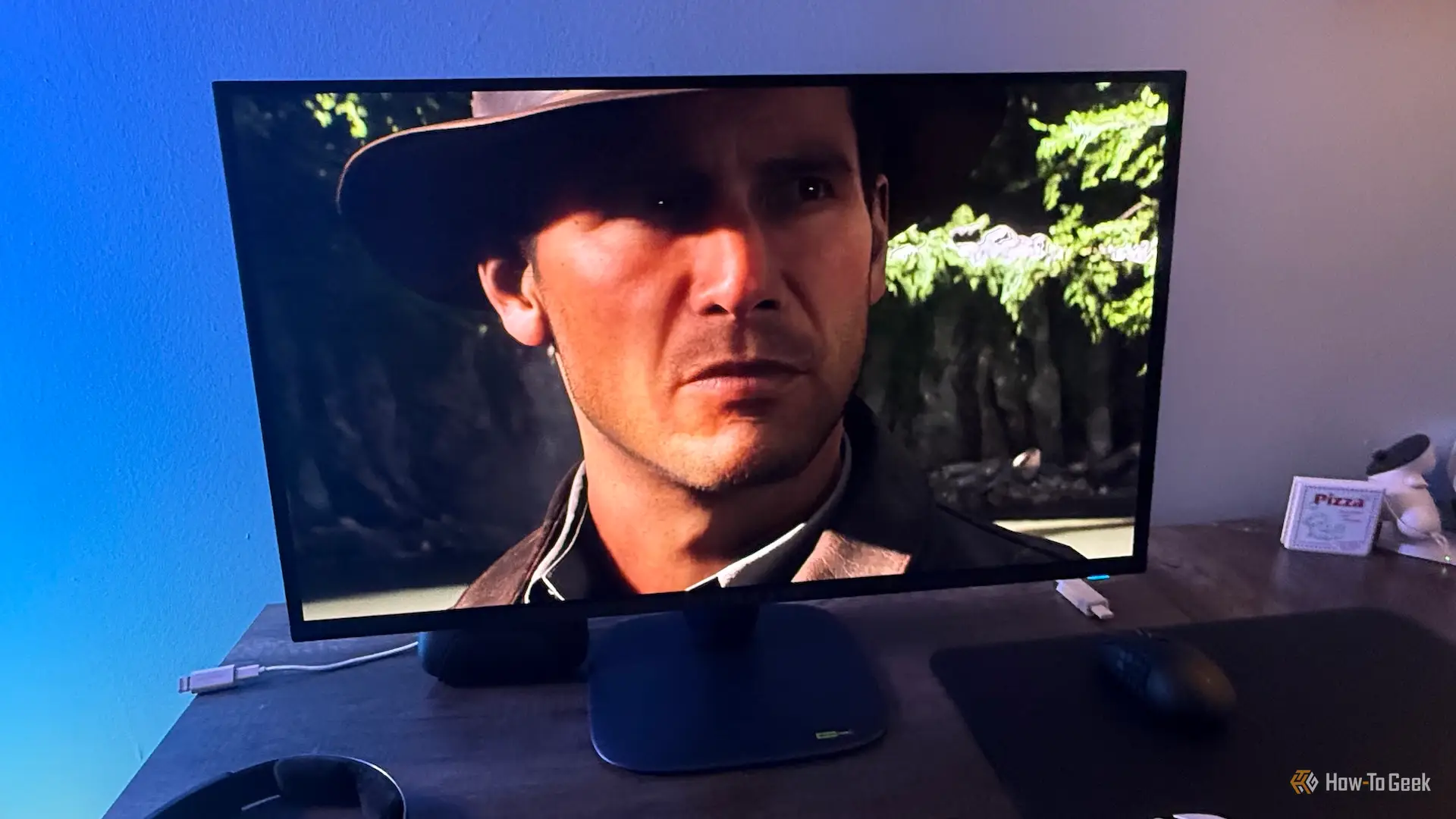
There's little argument that, among today's flat-panel display technologies, OLED (Organic Light-Emitting Diode) screens are objectively the best.
This self-emissive screen technology is capable of perfect black levels and snappy pixel response times. That's why modern OLEDs have little to no ghosting compared to LCDs. Because pixels change so quickly, you're seeing every frame in crisp isolation. The problem is that almost all the movie content you watch actually needs some of that blur to look right.
Except for a few high frame-rate movies like The Hobbit and Avatar: The Way of Water, movies are shot and released at 24fps. There's a long history behind why the industry settled on this frame rate that I can't really go into here. In short, it's a mix of film's technological history as well as the best balance between smooth motion and cost. An important factor when you are paying for film by the foot. That's why it's called "footage" after all.
Regardless of why the number is 24fps, that is the reality that your OLED panel has to deal with, and its pixel response time is too good for this established cinematic standard.
This is why when you see certain types of camera movement, such as slow panning, the image appears to skip and jump. You are literally seeing one frame instantly snap to the next. This has always been a problem, even on film projectors and CRTs, so filmmakers plan their shots to minimize it. However, they couldn't account for future technology that would have no natural blending from one frame to the next.
Source link