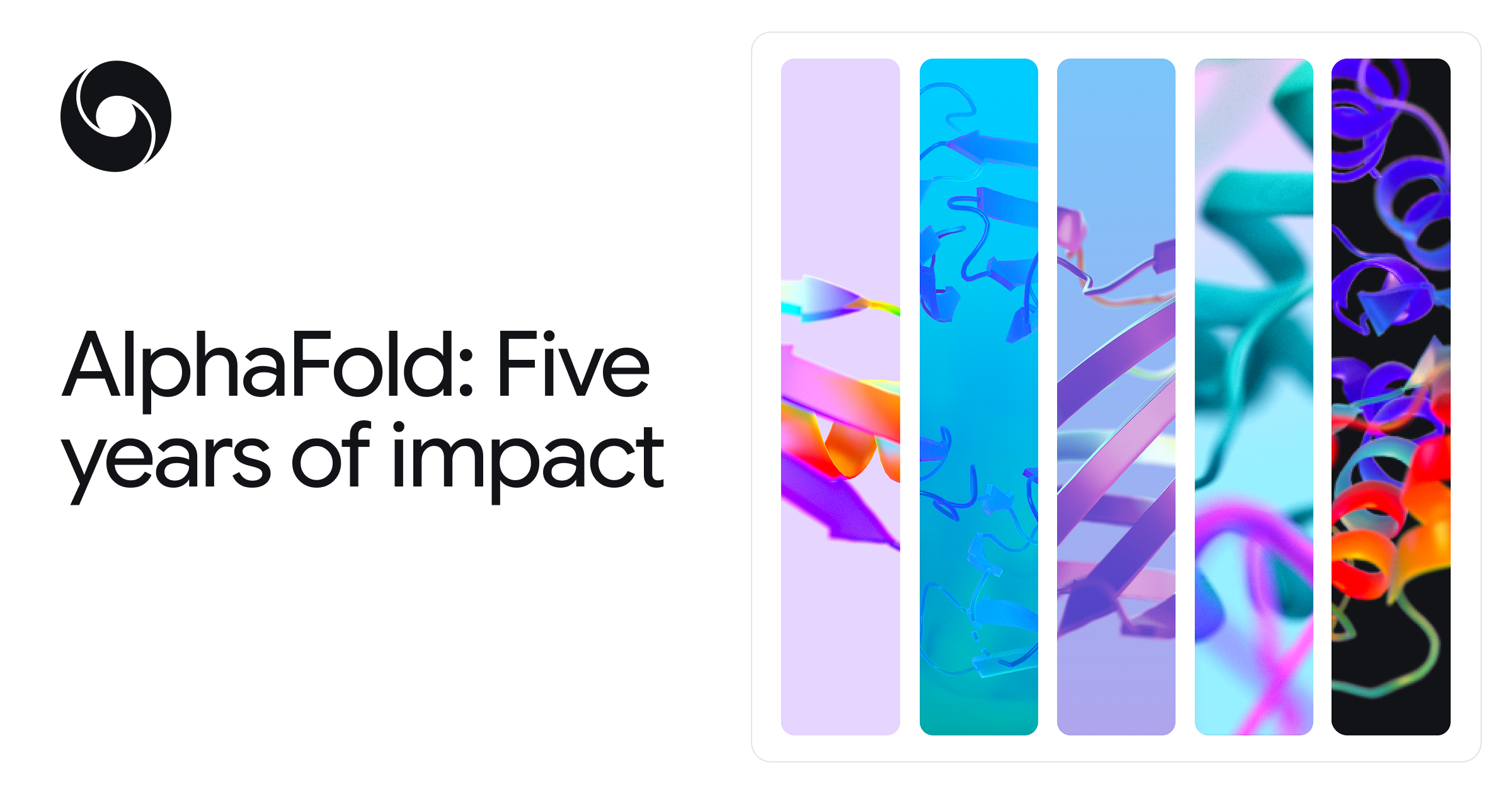
Since 2020, AlphaFold has accelerated the pace of science and fueled a global wave of biological discovery — an achievement recognized with a Nobel Prize
Five years ago, AlphaFold 2 solved the protein structure prediction problem, unlocking new avenues of biological research and providing our first major proof point that AI can be a powerful tool to advance science.
Proteins are the complex, microscopic machines that drive every process in a living cell. Composed of long, unique chains of amino acids, they precisely fold into a 3D structure that largely defines the protein’s function - making knowledge of this shape critical for drug discovery and understanding disease.
p53 is a cellular tumor antigen related to diseases such as cancer. It is one of the most popular proteins in the AlphaFold Protein Database.
If a protein misfolds, it can lose its function and lead to disease, like Alzheimer’s and Parkinson’s. For decades, determining these structures was a monumental task, often taking a year or more of expensive, painstaking experimental work.
At the CASP 14 (Critical Assessment of protein Structure Prediction) competition in 2020, AlphaFold 2 predicted the structures of proteins based just on their amino acid sequences with astonishing accuracy - an achievement widely hailed as a solution to this 50-year-old grand challenge in biology. But the true, lasting impact of this breakthrough came when we put AlphaFold in the hands of the research community.
In 2021, we launched the AlphaFold Protein Database in partnership with EMBL-EBI , which was a tipping point toward AlphaFold becoming a scientific tool adopted around the world.
Source link