My first "big-screen" TV was a 51-inch Samsung Plasma, which I held on to for such a long time that I made the leap from 720p straight to 4K in 2016, when I purchased a 55-inch Samsung LED LCD TV. Coming from CRTs, I already thought these TVs were enormous, but standards have changed.
These days, 65-inch TVs are basically the mainstream, midrange choice. They're not considered small, nor particularly large, and given their popularity, it's fair to think that the 55-inch TV's days are numbered. That is why I ended up buying a 75-inch TV, which started out as a good experience, but I didn't have to wait long before I regretted it.
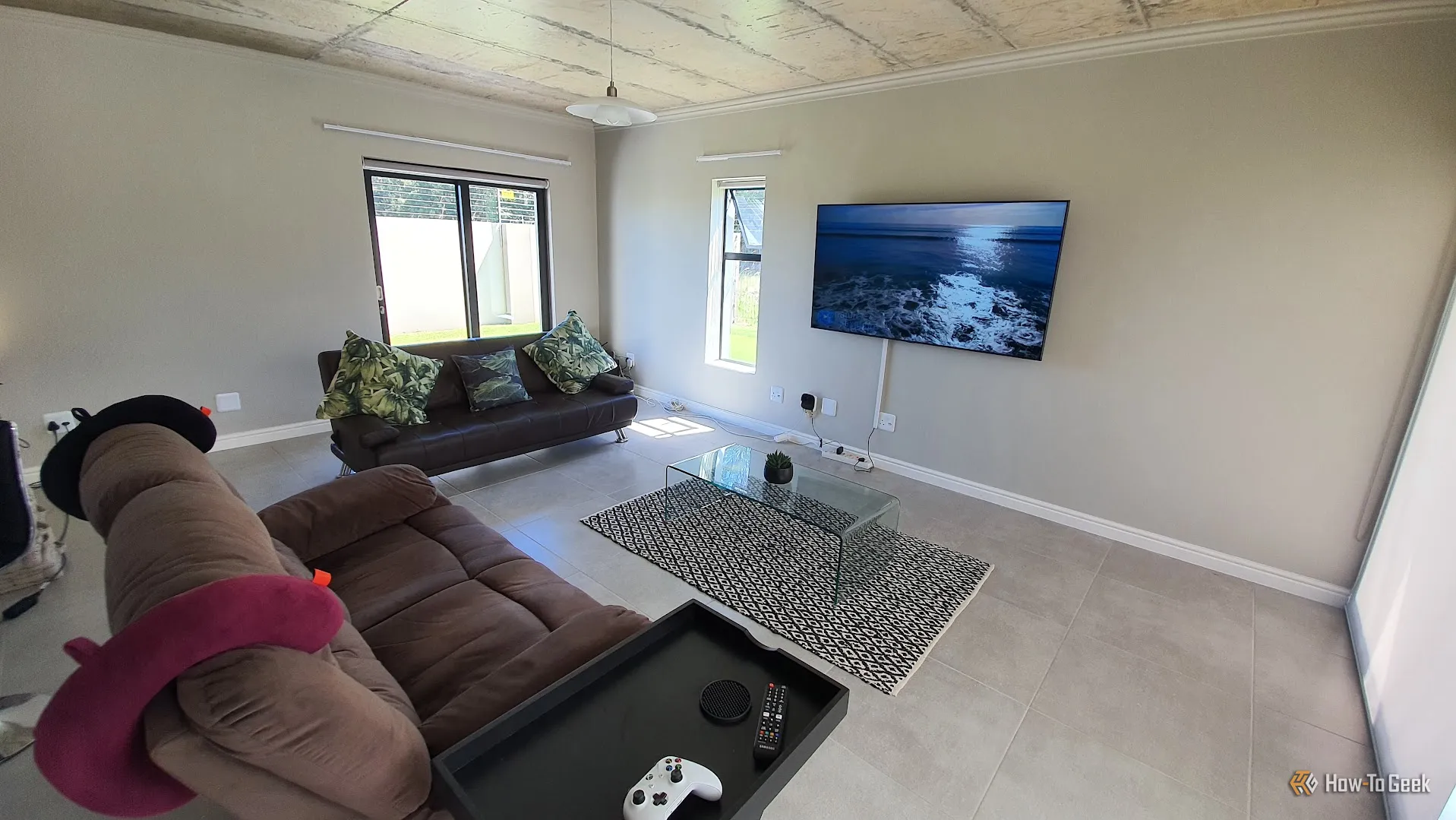
After moving into a new place with a larger open living area, we decided a larger TV would be nice. So I splurged on a 75-inch Samsung TV, and now we could sit further away from the TV for effectively the same image size and picture quality as the previous 55-inch model. At least on paper.
This is what you're supposed to do. Calculate the viewing distance, and that determines what size TV you should buy. The theory is sound, but what people actually do is a little different. So even though we'd set things up the right way according to the math, it always felt like the TV was too far away.
In the end, we just moved the furniture closer to the TV, and there wasn't that much difference in viewing distance compared to the 55-inch we'd replaced.
Source link