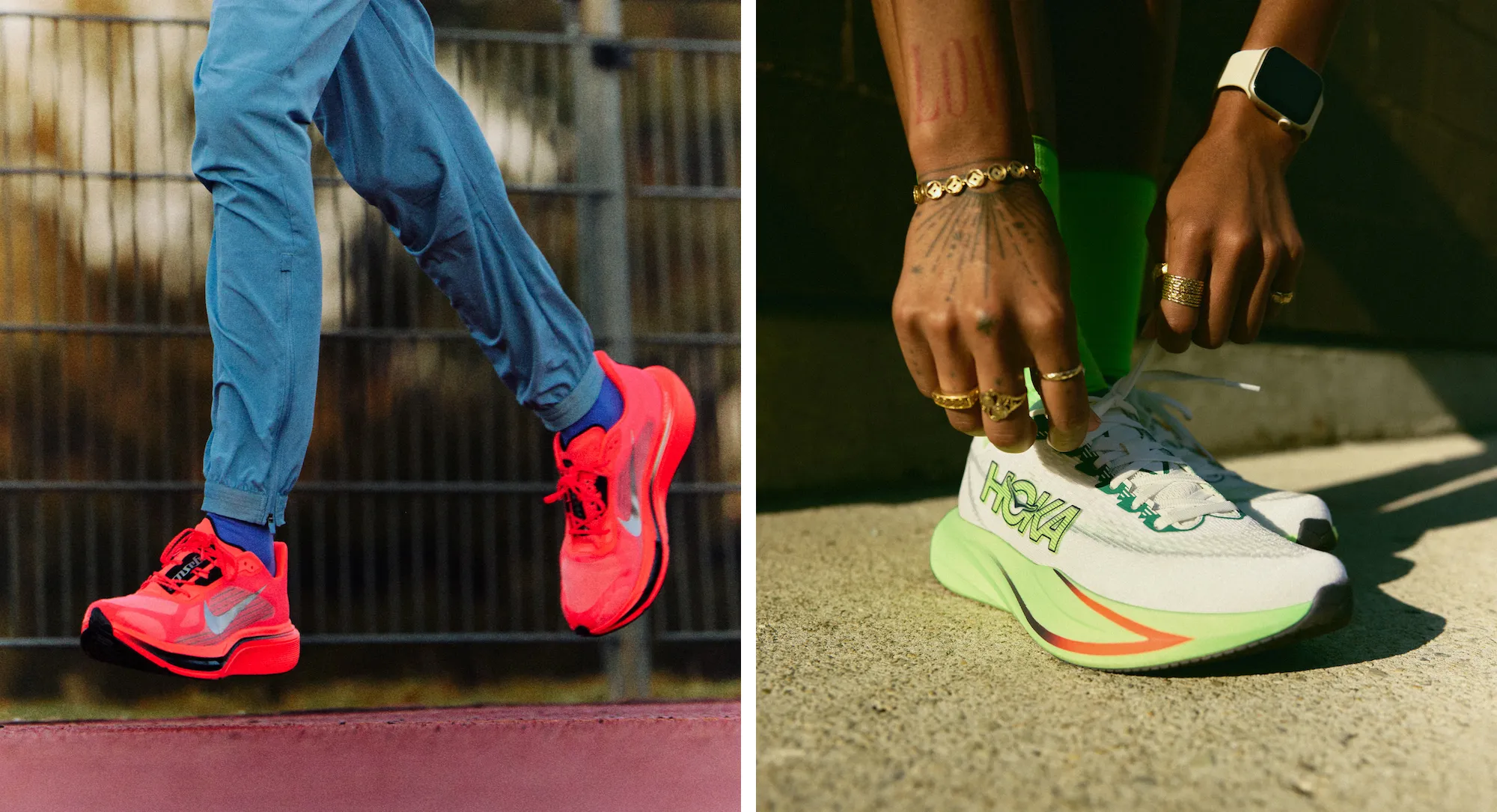
Designers from Nike and Hoka spoke to FN about the benefits of the changes, which go beyond mere wideness.
A little bit more room is going a long way in running shoes.
Across the sector, more accommodating toe boxes and forefoots are popping up in new releases, and brands are doing their best to make sure the changes get noticed.
For Hoka, it already featured greater toe volume on trail runners, particularly styles catering to ultra distances in which feet are more likely to swell. Feedback from athletes and consumers indicated even more interest in expanding the area around the front of the foot, so tweaks have been made to several road shoes models updated this year, including Hoka’s newest Clifton and Mach styles.
Other brands have made similar changes, including to both of Nike’s Pegasuses that have launched this year and Brooks’ Ghost Max. New Balance also created the brand-new Ellipse franchise with a wider than-average toe box as one of its selling points.
“Consumers are more savvy,” explained Rebekah Broe, Hoka senior director of product, performance footwear. “We’ve also seen brands that have stepped in and positioned themselves around a very declarative perspective on fit. There’s more awareness in the consumer’s mind on how important fit is in their relationship with the footwear.”
Improving that relationship won’t come through a one-size-fits-all approach, though — and not just because of the wide variety of foot shapes. The intended use of a shoe model also has to be considered, as the needs for daily training differ from speed work or races.
Source link