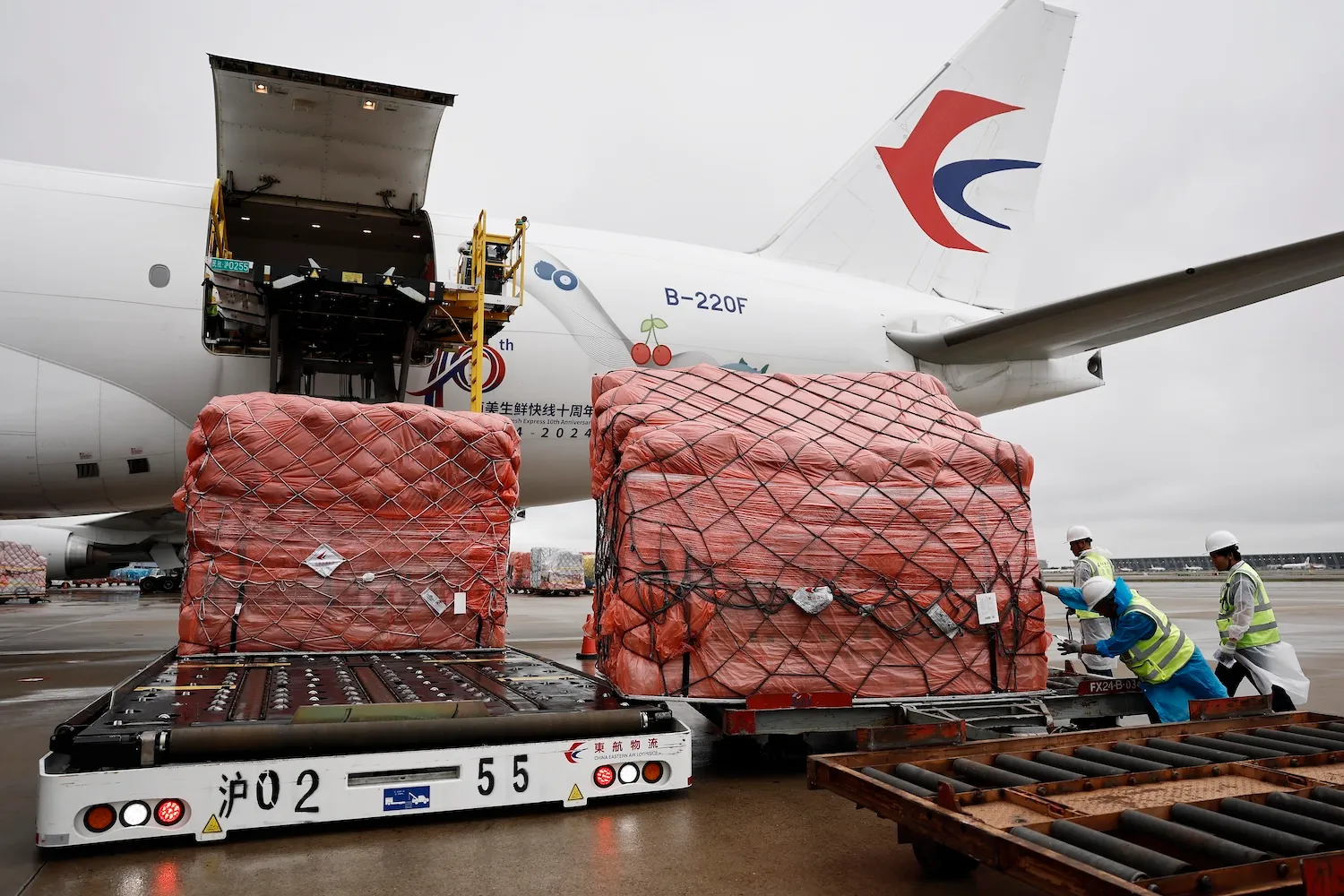
Air cargo demand between Asia and North America rose 17 percent year on year in September, extending the lane’s growth to eight consecutive months, according to the International Air Transport Association (IATA).
The figure marks the fourth time in a six-month span that air cargo demand increased at a double-digit pace on the trade lane. Every month since April has seen at least 8 percent demand growth between both markets.
Asia Pacific and North American carriers jointly accounted for 77 percent of the total year-over-year demand growth in September, adding 721.1 million and 678.2 million cargo tonne kilometers (CTKs), respectively.
Related Stories

Top Trucking LTLs See Q3 Revenue Surge on Fuel, Tighter Capacity, Higher Rates
Amazon's AI Bill Accelerates, but Its Cost to Deliver Each Order Keeps Shrinking
The Asia-North America trade lane had the strongest air cargo demand growth pace across the seven global routes monitored by IATA, with intra-Asia flights coming in a distant second at 10.2 percent.
“Stronger global trade and manufacturing provided a supportive backdrop, while AI-related shipments helped drive another month of double-digit growth across the Pacific,” said Marie Owens Thomsen, IATA’s senior vice president of sustainability and chief economist in a statement.
Total air cargo demand grew 7.7 percent, with gains taking place across all carrier regions. For international operations, demand increased 8.6 percent.
Both figures well outpaced total air cargo capacity, which grew 2.7 percent. For international flights, capacity measured by available cargo tonne kilometers (ACTKs) increased 3.3 percent.
As traffic grew faster than available capacity, the demand-led tightening raised global utilization.
Source link