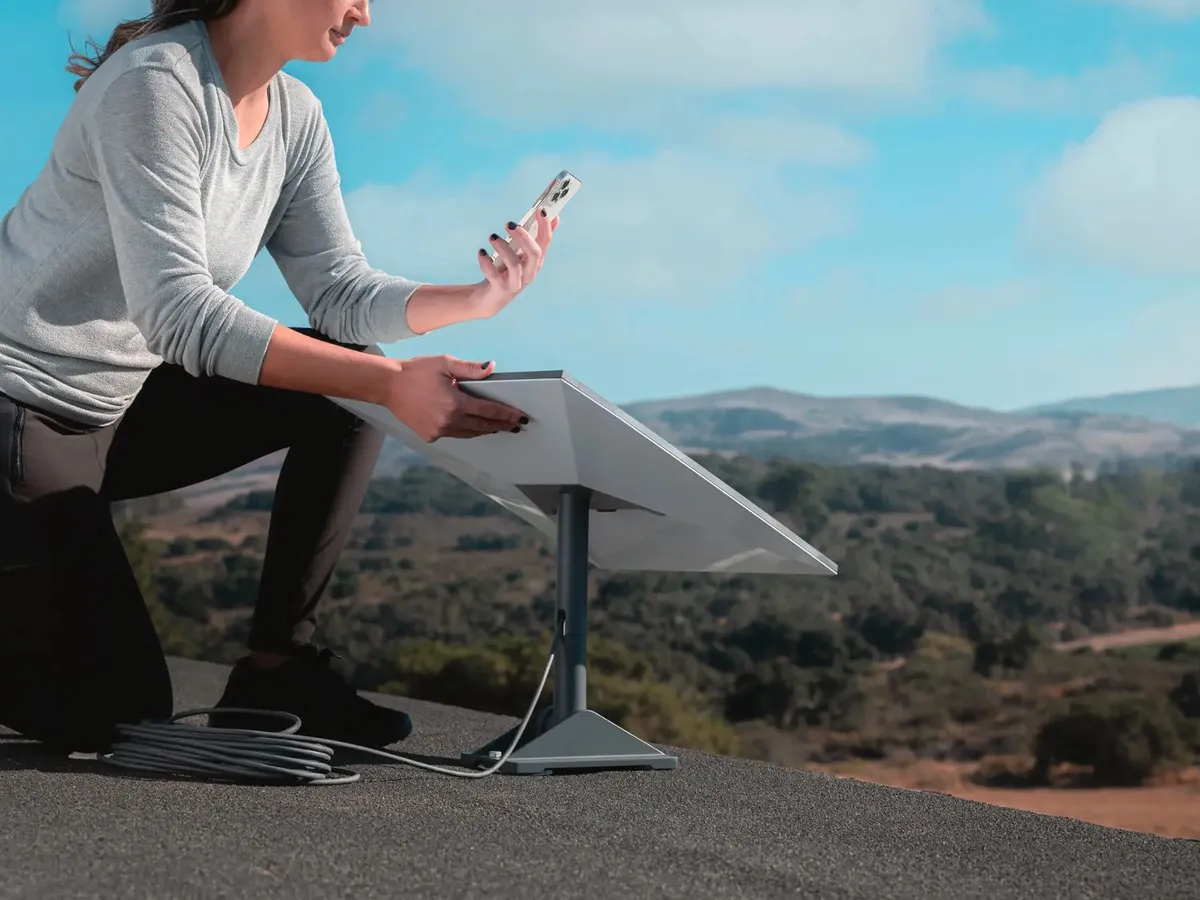
KDDI has signed an agreement with SpaceX to deliver direct-to-device satellite broadband and voice calls across Japan starting in 2027. The service will tap satellites with 20 times the throughput of older orbital hardware.
The deal expands KDDI’s mobile brand, au, beyond ground towers. It routes standard smartphone traffic directly through SpaceX’s Starlink Mobile V2 constellation.
Compatible smartphones connect directly to low Earth orbit satellites when users travel outside cellular base station range. Customers need no specialized handsets, external antennas, or hardware adapters. KDDI signed the agreement on 10 August and disclosed commercial terms on 15 September. SpaceX confirmed the rollout schedule on 17 September.
Technical specifications released by KDDI show the V2 satellites carry larger phased-array antennas. Each spacecraft provides roughly 20 times the individual throughput of first-generation units. SpaceX will also deploy more spot beams per spacecraft, multiplying data density by roughly 100 times over targeted areas. This capacity supports native Voice over LTE (VoLTE) calling, video streaming, and web browsing from orbit.
Japanese mobile carriers currently reach more than 99.9 percent of the population through ground infrastructure. Geographic coverage maps still leave wide blanks across national parks, steep mountain ranges, and outlying archipelagos. In those regions, building fiber backhaul and physical towers is structurally impossible or prohibitively expensive.
For consumer brands, outdoor logistics operators, and regional transport networks, direct satellite data removes operational dead zones. Delivery fleets on rural mountain passes gain uninterrupted tracking. Travelers on maritime routes keep voice and emergency connectivity without switching SIM cards or buying specialized satellite terminals.
Source link