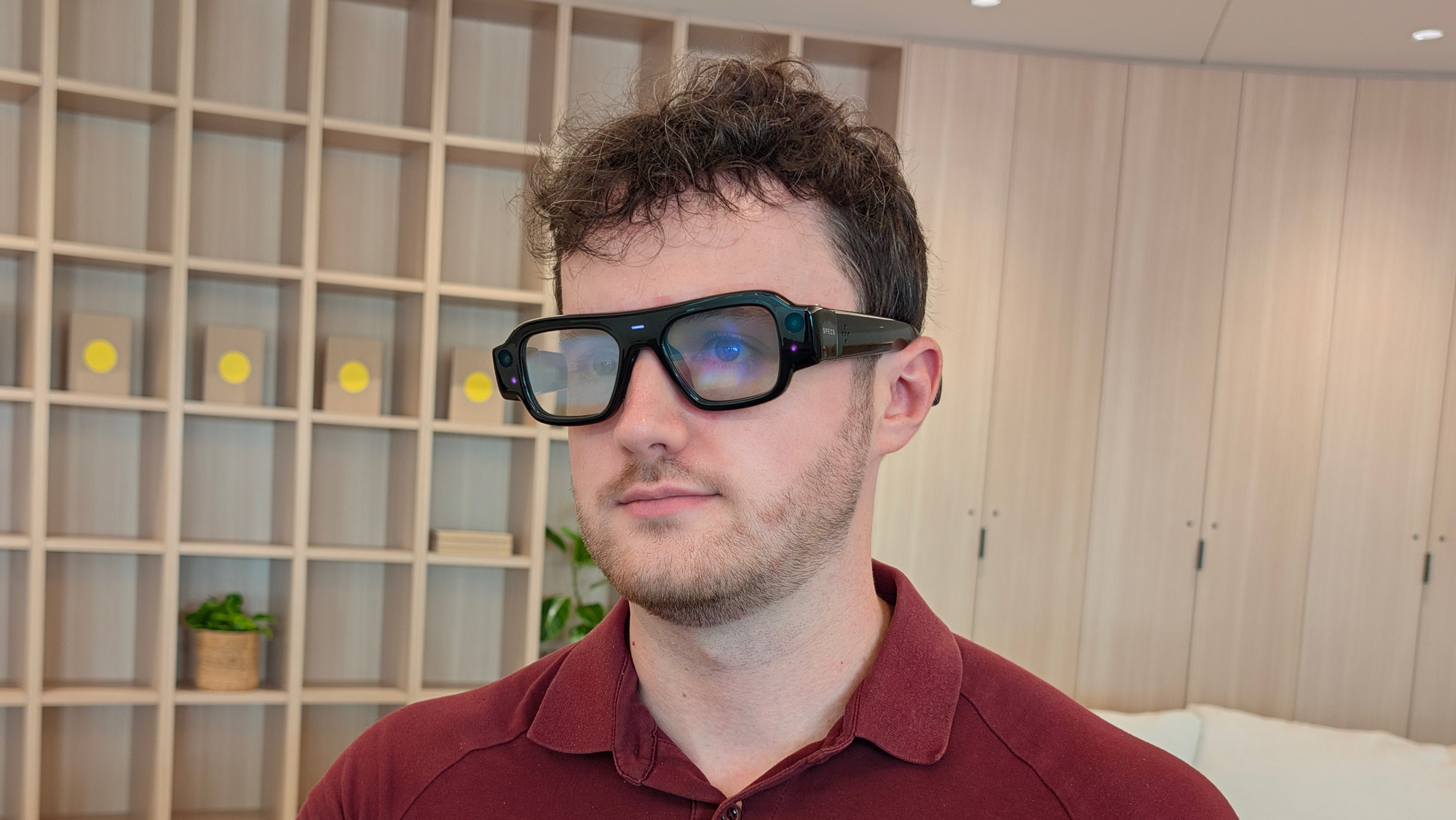
I briefly went hands-on with Snap's Specs at the "launch" event in Los Angeles. Here's what I thought.
If you're unfamiliar: Snap Specs are standalone true AR glasses, meaning they have physically transparent see-through optics and can position virtual objects and interfaces in real space, while having no tether or external computing hardware. Revealed back in June, when the company opened preorders, the $2195 Specs are set to be the first fully standalone true AR glasses outside China, and the most advanced on the planet that you can actually buy, beating companies like Meta and Apple to market.
For disclosure, Snap paid for my flights and accommodation for its "launch" event, which I put in scare quotes because it didn't actually launch the glasses. It did announce that Specs will have a built-in cross-platform agentic AI assistant, and an optional cellular case for on-the-go connectivity. CEO Evan Spiegel also demoed the glasses live on stage, a welcome respite compared to the usual prerecorded tech launches.
But while Spiegel's demo was inarguably impressive, the problem with Specs is that, through the lenses, it simply doesn't actually look like the cast and recorded views.
As soon as you put on Specs, you'll notice a number of optical artifacts. There is a rainbow pattern over the display area, which has poor color uniformity in general, as well as blue streaks from reflections of real-world light. This is not the crisp image you'll be used to in a VR headset, nor is it even anywhere near as clear and uniform as the much smaller Meta Ray-Ban Display HUD.
Source link