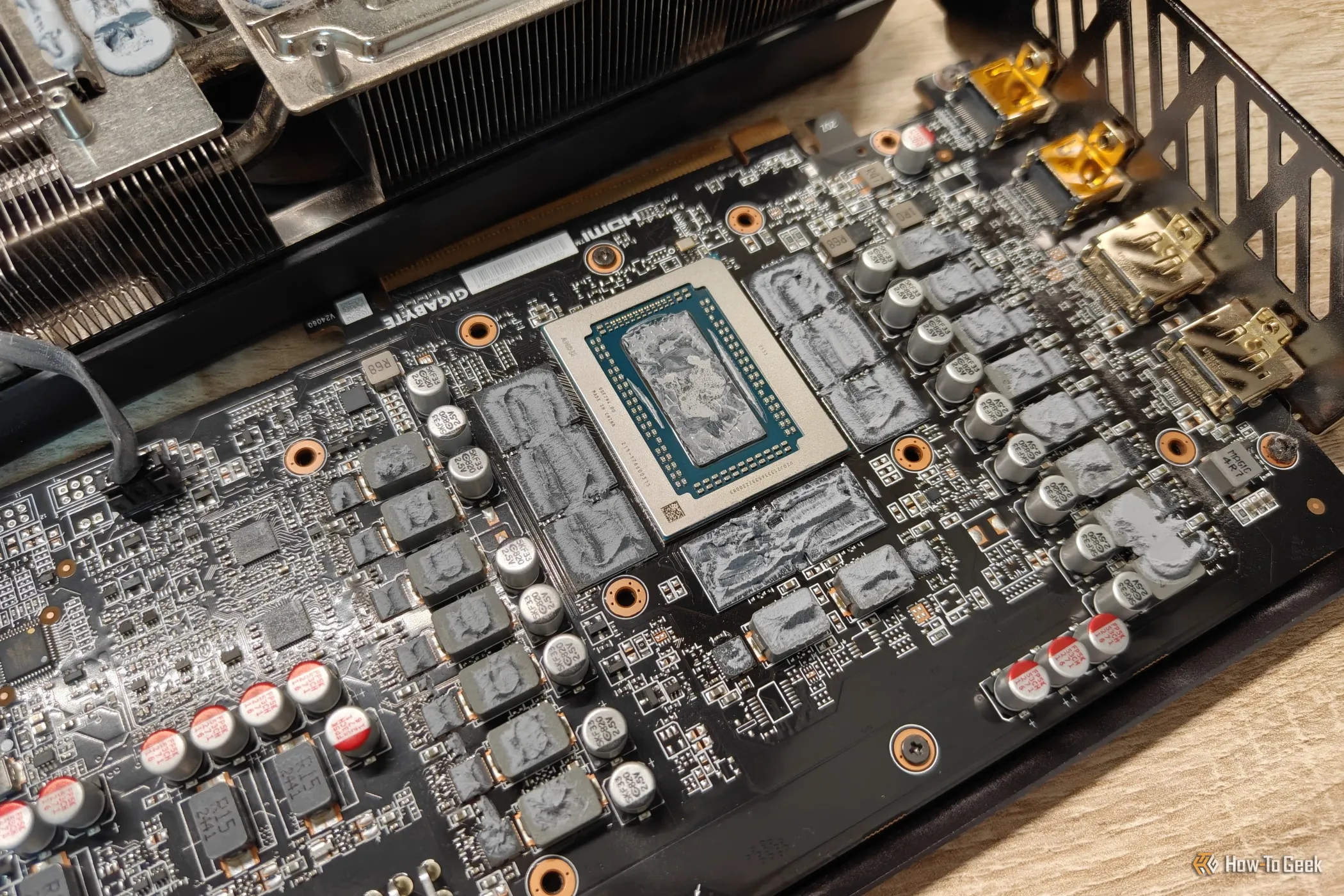
I bought a Gigabyte RX 9070 XT Gaming OC on the last day of December last year, and the card developed a high hotspot temperature after just a few weeks of use. The GPU hotspot regularly reached around 100°C while gaming, ramping the fans up to their maximum. I wasn't too happy about it, but I didn't want to go through the hassle of returning the card or fixing a "new" card on day one.
I did some research online and learned that my specific Gigabyte model used traditional thermal paste, which isn't ideal for a powerful GPU that generates a ton of heat. After eight months of putting up with it, I finally decided to open up and fix the card, and the problem was exactly what I expected.
A graphics card can get pretty toasty during gaming. This is completely normal, as a card can draw hundreds of watts of electricity, which ultimately converts into heat inside the card.
However, there's a big difference between normal operating temperatures and the issue that I was facing. To understand what I mean, allow me to give you a quick explainer on GPU hotspots.
The GPU die on a graphics card is the processor that does all the calculations required to render graphics. Unlike a typical desktop CPU, it doesn't have an integrated heat spreader, which is the metal piece that sits on top and, well, spreads heat. Instead, it's just a highly polished piece of ultra-pure silicon.
It's a different material than the cooler's contact plate, which is usually made of copper, nickel, or some other highly conductive alloy.
Source link