For India’s D2C brands, quick commerce has opened up another route to millions of consumers. But turning that access into profitable growth remains a challenge. Platform commissions, advertising expenses, inventory requirements and frequent discounting can quickly erode the margins brands earn from the channel.
For Gurugram-based personal hygiene brand Pee Safe, however, quick commerce has become one of its most profitable distribution channels, accounting for nearly 40% of domestic revenue and delivering double-digit contribution margins, compared with single-digit margins on traditional ecommerce.
Pee Safe spent nearly two years struggling to keep its products consistently available on quick commerce platforms. Its existing distributor network could not meet the channel’s replenishment requirements, while products and pack sizes that performed well on ecommerce did not necessarily find buyers on 10-minute delivery apps.
The company eventually overhauled its supply chain, changed how it managed its product assortment and used the consumer awareness it had built over the years to limit its dependence on paid advertising.
The result is a distribution mix in which quick commerce now contributes 40% of domestic revenue, followed by D2C and ecommerce at 35% and offline retail at 25%.
But the significance of Pee Safe’s experience goes beyond this revenue split. It shows how quick commerce economics can differ considerably depending on whether a brand uses the channel to create consumer demand or fulfil demand that already exists.
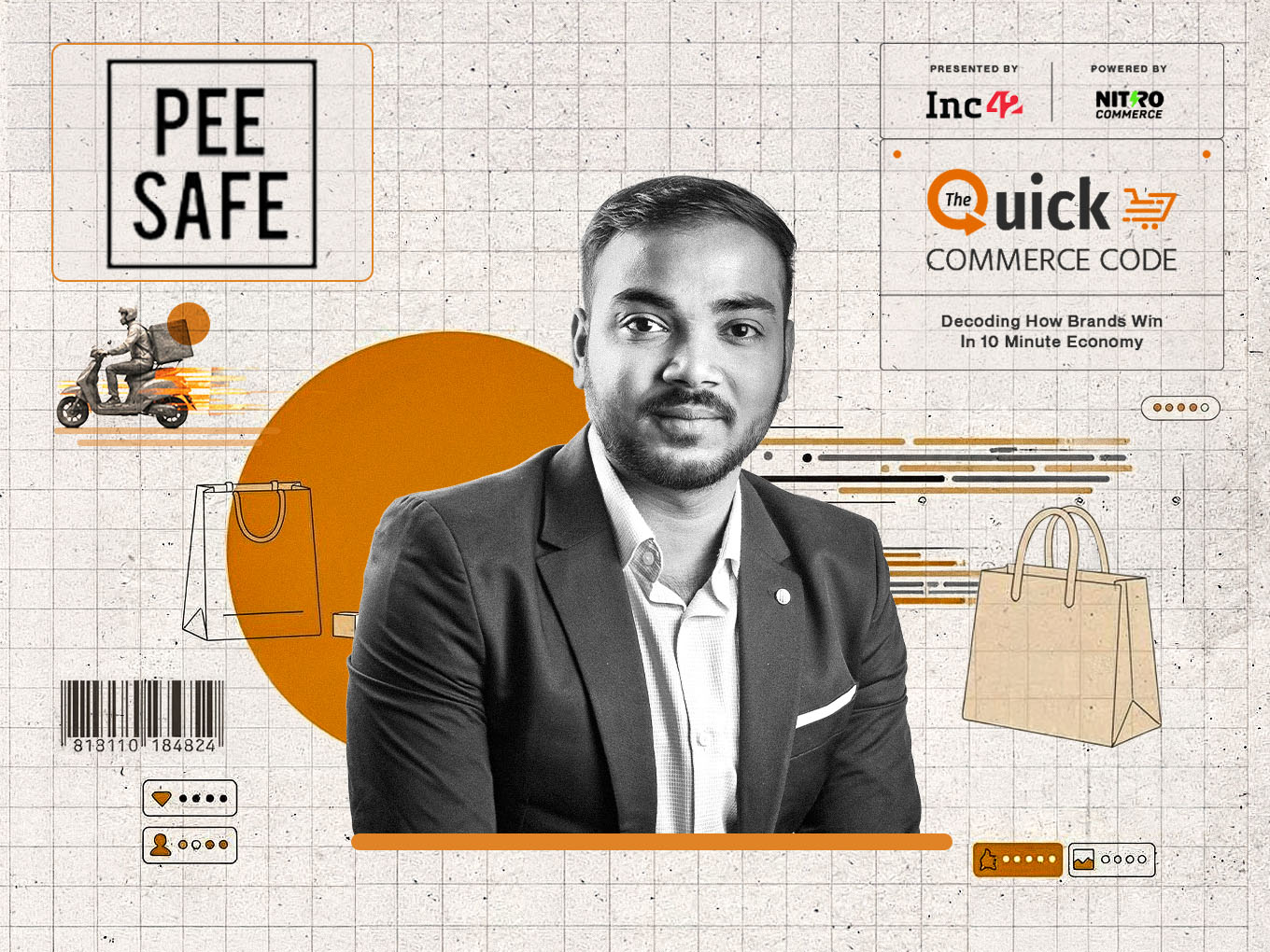
In an exclusive conversation for The Quick Commerce Code by Inc42 and Nitro Commerce, Pee Safe cofounder Rithish Kumar discussed how the brand built its quick commerce operations, the changes that improved its margins and the challenges of extending that growth into new markets.
Source link