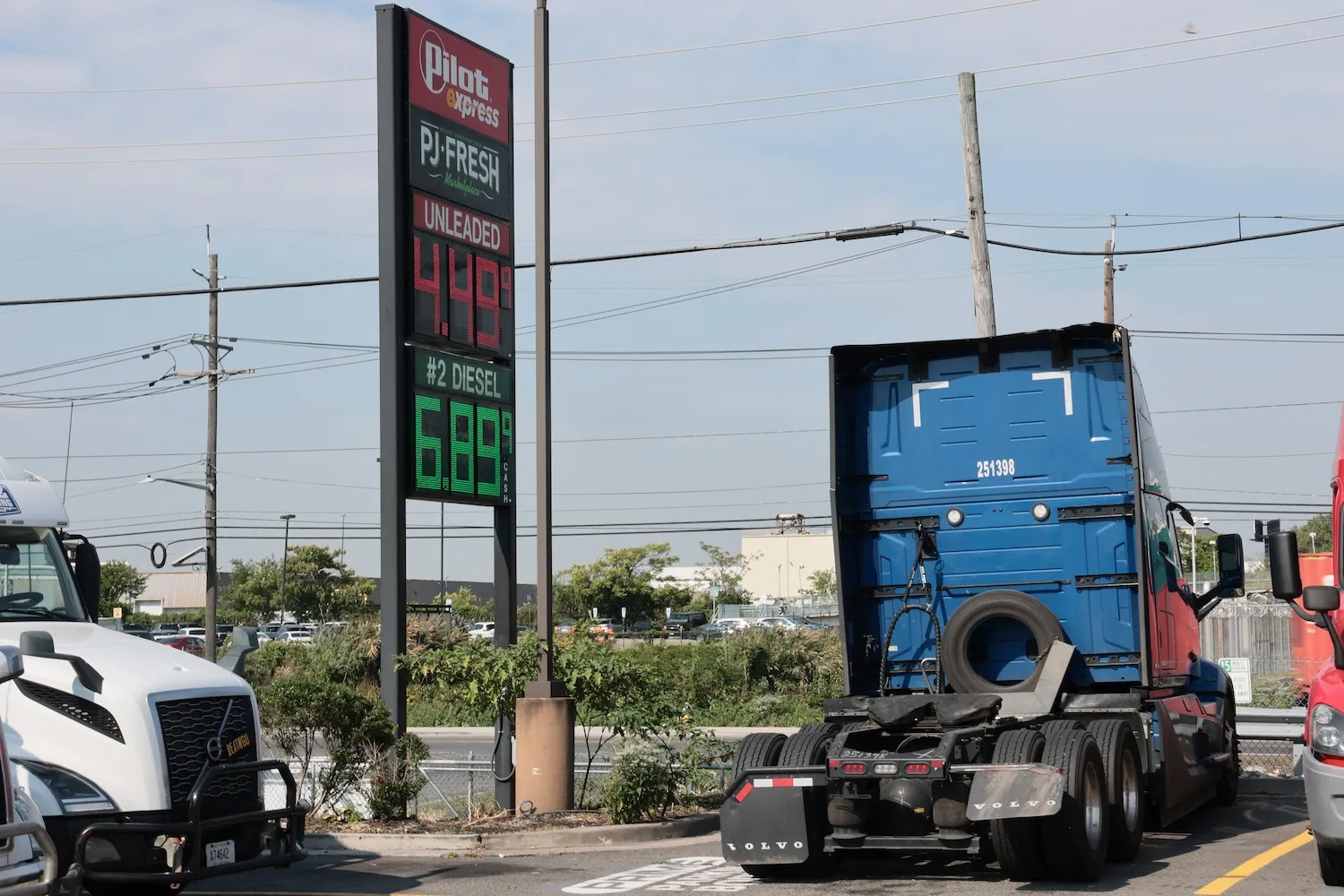
The International Energy Agency (IEA) warned Tuesday that constrained diesel supplies could persist well into 2027, as counter-seasonal stock draws and restricted production collide with peak winter demand. The agency’s monthly oil market report landed the same day that U.S. Energy Information Administration (EIA) data showed the national average on-highway diesel price falling for a second straight week to $6.179 a gallon.
The two-cent decline from $6.382 in the week of Sept. 28 offers shippers only modest relief. U.S. on-highway diesel remains more than $2.50 a gallon above year-ago levels, and September refining margins hit a record of almost $95 a barrel after attacks linked to the Iran war slashed refining capacity, according to the IEA.
Related Stories

New Wave of Hormuz Attacks Raises Stakes for Ocean Carriers Amid Falling Rates
Hormuz Freight Shock May Have Peaked, But Elevated Rates Are Here to Stay
For Jim Horrigan, an expert partner at Bain & Company who has spent more than 30 years in procurement and sourcing consulting, the message for shippers is to stop waiting for prices to normalize.
“You can’t do much about diesel prices, but you can work on focusing on the controllable expenses within freight,” Horrigan told Sourcing Journal.
In a report published Oct. 1 with Spencer Shute, a vice president at Bain-owned Proxima, Horrigan laid out four moves that leading freight-intensive companies are making now.
The first is taking control of fuel surcharges , where diesel inflation hits hardest. Bain recommends shippers establish their own surcharge schedules in carrier contracts, pegged to the EIA’s weekly diesel prices, and negotiate limits on how often carriers’ schedules change and how large adjustments can be for those who stay on them.
Source link