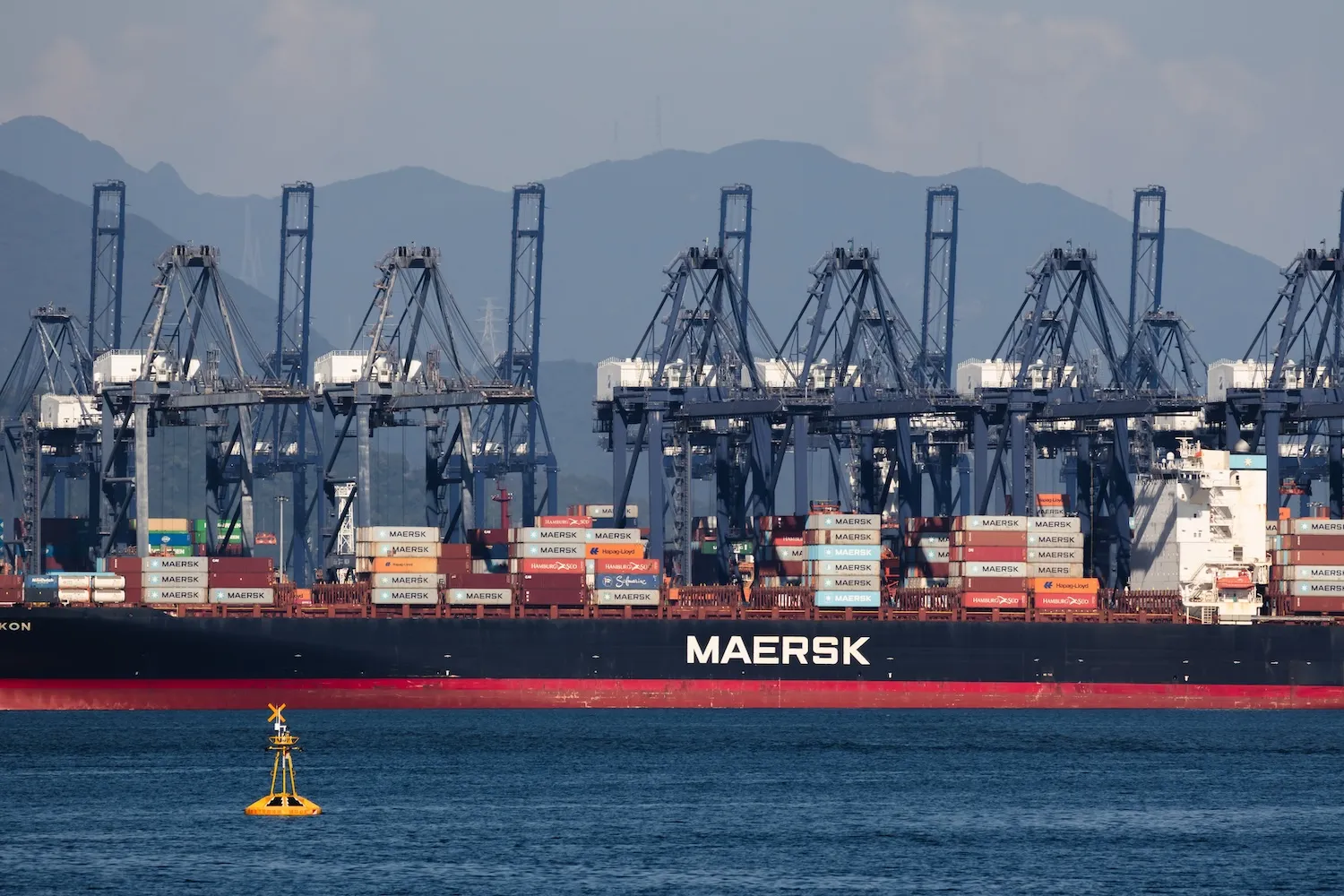
Container shipping could face an overcapacity dilemma if its heavy orderbook arrives faster than cargo needed to fill them.
According to a Sea-Intelligence analysis of the International Monetary Fund’s biannual World Economic Outlook, demand is not growing fast enough to absorb the new shipping capacity entering service.
While the IMF expects overall global trade volume growth to stabilize from 4.6 percent this year to 4.7 percent in 2027, advanced economies are forecast to see import growth soften from 5 percent in 2026 to 4.2 percent in 2027.
Related Stories

Backlog at China's Ports Was Finally Shrinking. Typhoon Champi Will Test That.
Ocean Carriers Are Ordering New Ships at a Pace Not Seen Since 2009
Container shipping companies are buying new vessels in droves as longer routings and port congestion absorb existing ships and head-haul demand (the first leg of a trading route) still outpaces capacity, with the ocean carriers also seeking bigger, more versatile ships with cleaner emissions profiles.
Industry consultancy Linerlytica calculated last week that global vessel orders total 16.2 million 20-foot equivalent units (TEUs) of capacity, which amounts to 46.5 percent of the current global fleet.
Another container shipping research firm, Alphaliner, says roughly 1,000 newbuildings carrying 8.5 million TEUs are due to enter the market in 2027 and 2028, while this fall’s orders deliver mainly in 2029 and 2030.
Most of the major ocean carriers including Mediterranean Shipping Company (MSC), Maersk, Cosco Shipping and CMA CGM either unveiled or have been reported to order new ships in recent months that are anticipated to be delivered mainly in 2029 and 2030.
Source link