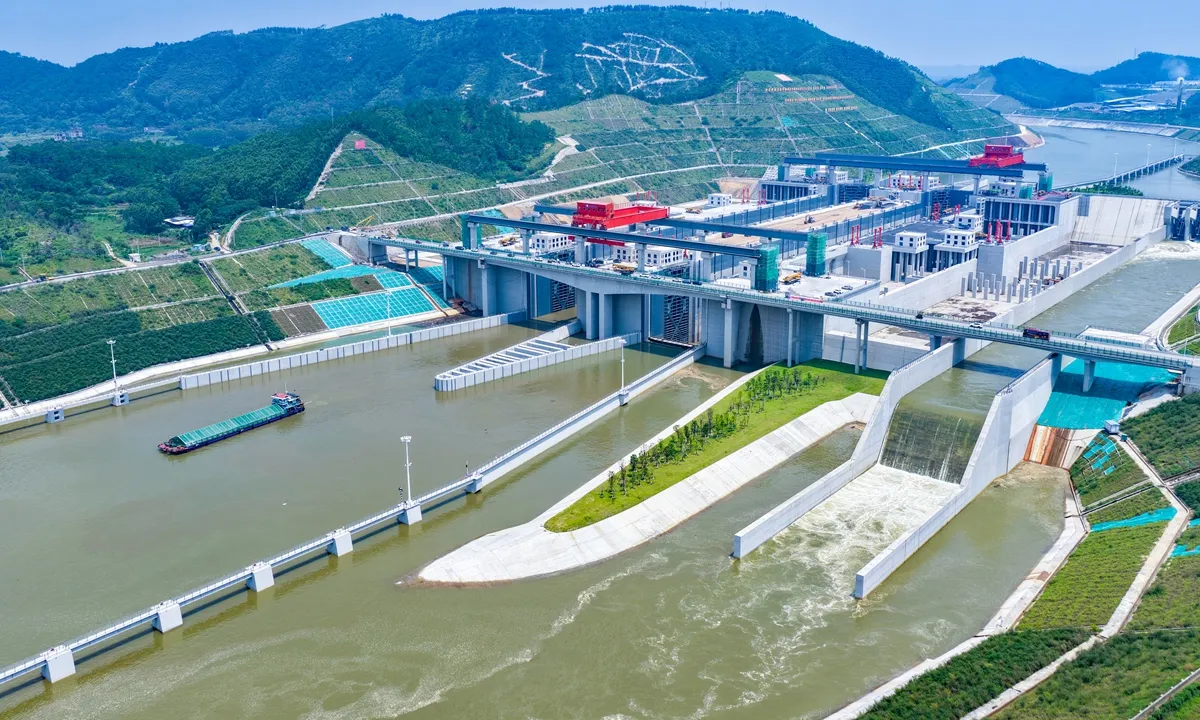
China opened the 72.7 billion yuan Pinglu Canal in Guangxi in 2026. The new waterway cuts more than 560 kilometres off the inland freight route connecting southwestern industrial hubs to Southeast Asian markets.
Vessels up to 5,000 tonnes can navigate the 134.2-kilometre river-to-sea channel, which runs directly from Hengzhou to the Beibu Gulf.
State planners designed the route for bulk commodities, components, and consumer goods moving along the New International Land-Sea Trade Corridor, where Singapore-China Integrated Developments highlighted expanded global distribution access. Traffic bypassing congested Pearl River ports in Guangdong reduces transport expenses by 18 to 30 per cent, delivering an estimated 5 billion yuan in annual freight savings.
Crews spent four years widening river channels and cutting through mountainous terrain. Excavation work shifted roughly 315 million cubic metres of earth and rock. Workers reused over 98 per cent of that displaced material on site.
Water levels drop 65 metres between inland river sections and the coast. Three navigation hubs with twin-line ship locks manage the elevation changes. Internal water-recycling systems also save more than 1 billion cubic metres of water annually.
Environmental infrastructure runs alongside the canal. Features include a 480-metre fish passage and dedicated wildlife bridges.
Inland manufacturers in Guizhou, Sichuan, and Yunnan have long faced steep overland penalties to reach the sea. Trucking industrial equipment or consumer hardware to coastal ports added 2,000 to 3,000 yuan per unit compared to shipping from Guangdong or Shanghai.
Direct barge access to the Beibu Gulf narrows that margin. Southeast Asian retail buyers sourcing heavy goods, agricultural inputs, auto parts, and new-energy materials gain faster turnarounds.
Source link