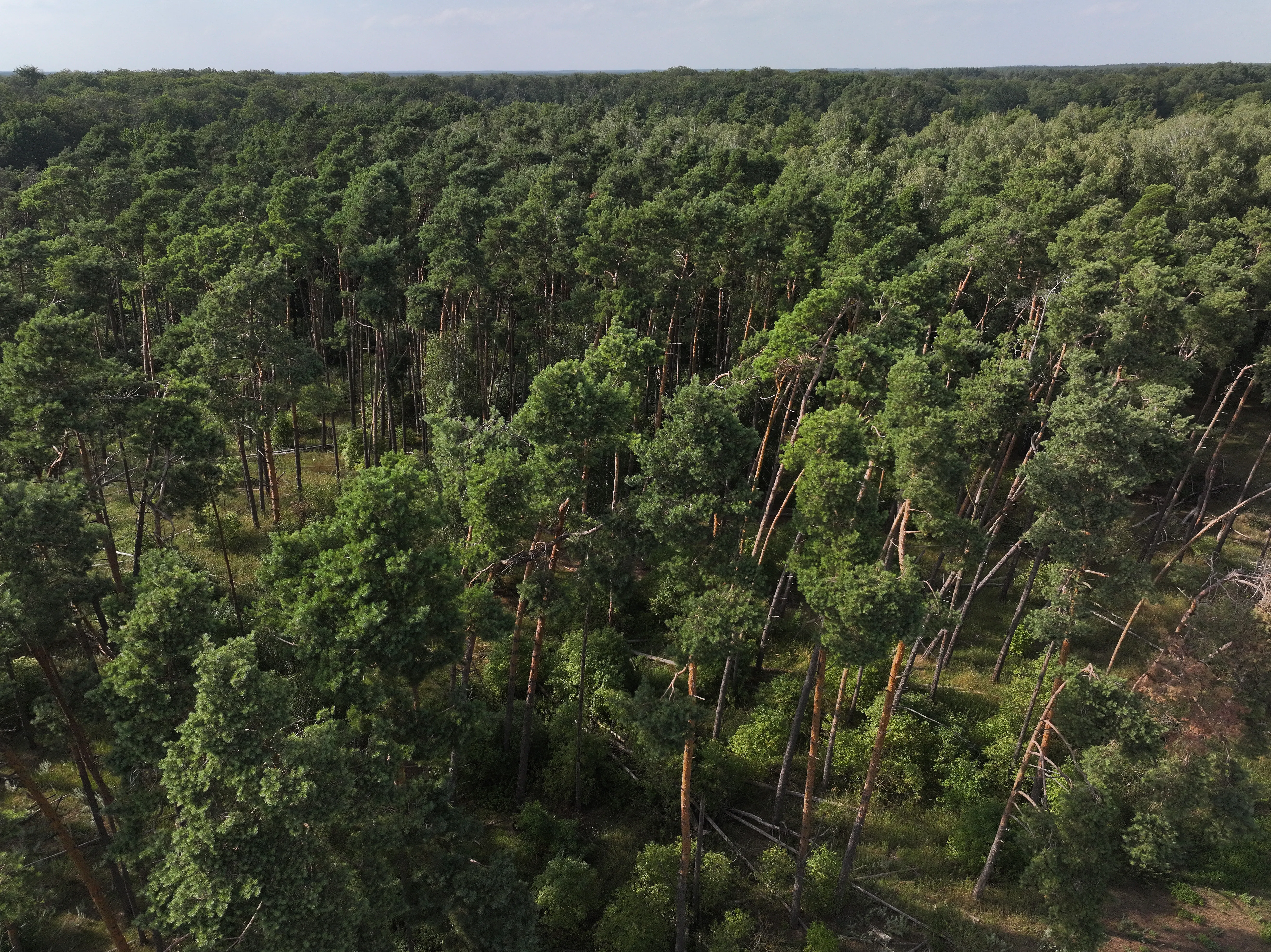
Canopy, a nonprofit that advocates for forest protection, estimates that 300 million trees are logged globally a year to make the virgin wood pulp needed to make viscose, one of the world’s most used fabrics.
It’s an environmental cost that often gets lost in the conversation about viscose, a man-made fiber that is made from trees. It’s silky smooth, fluid, and historically cheaper than cotton. How can a plant-based fabric be bad for the environment?
The short answer is that the industrial process behind it is toxic to the environment. Canopy, which urges brands worldwide to spare ancient and endangered forests from their viscose supply chains, could talk extensively about why the process is harmful. On Tuesday, however, the Vancouver-based nonprofit wanted to talk business. It was not a call to entirely eliminate virgin wood pulp from the supply chain. On the contrary, it was a proposal for a small reduction: five percent.
Related Stories

Cellulosic Fibers Experience a Year in Flux
Fashion Has Plenty of Sustainable Coalitions. Could It Use One More?
What if brands replaced five-percent of their virgin wood pulp with next generation feedstock also known as textile-to-textile pulp? And what if this was done by 2028?
Canopy developed a financial optimization model that explores this as a business case. ” It was part of Climate Week in New York, which is considered the world’s largest annual climate event.
Source link