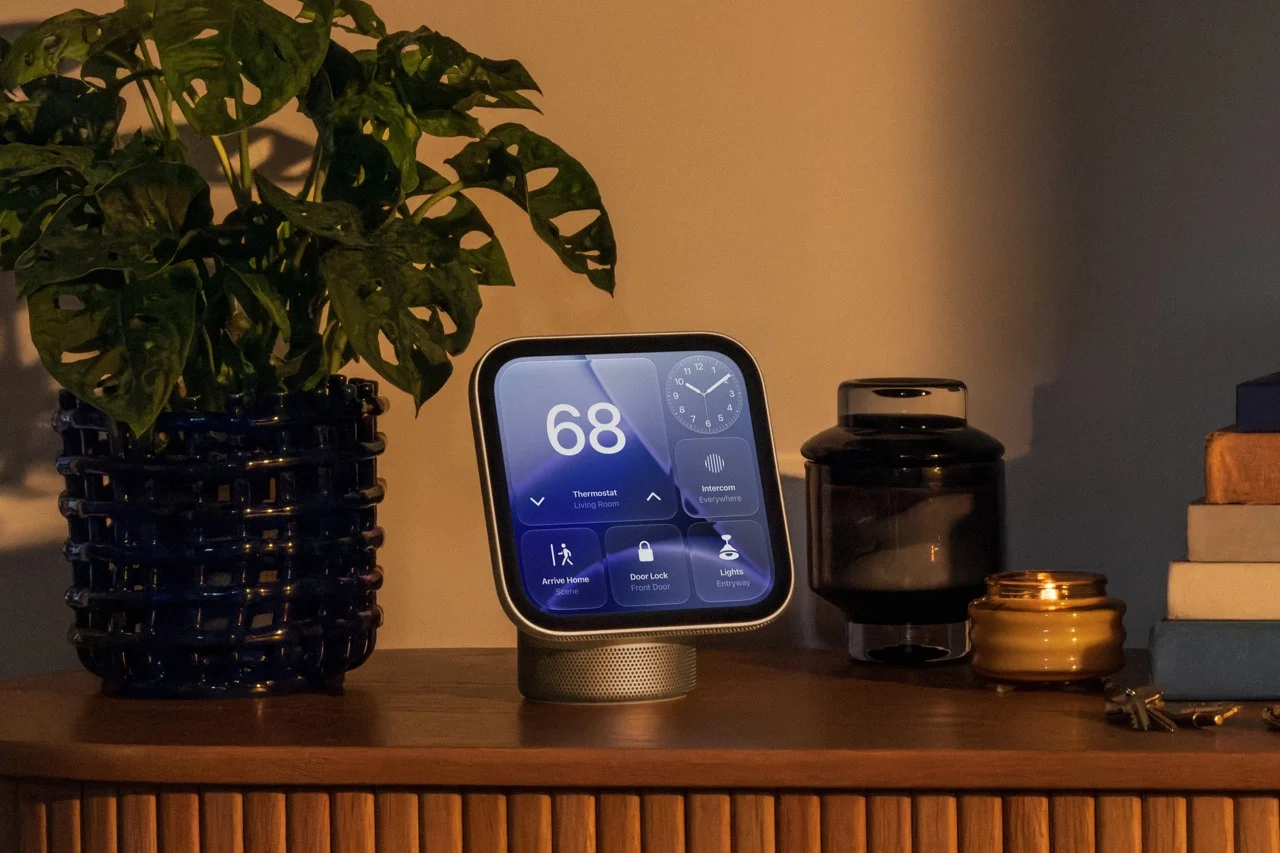
Apple rolled out its HomeView smart display on Tuesday priced from $299. The device aims to revive the company’s connected home division with upgraded Siri artificial intelligence features.
Shipments of the 7-inch touchscreen begin next month. The hardware incorporates facial recognition to control doorbells, thermostats and digital locks across household networks.
The display resembles the arm-mounted screen of Apple’s classic sunflower iMac desktop. It displays customized app icons based on which resident stands in front of the camera. Voice control through Siri handles primary navigation rather than manual taps, tying the hardware directly to Apple’s home operating environment.
Alongside HomeView, Apple updated its HomePod smart speaker and Apple TV set-top box. To solve peripheral compatibility hurdles that stalled previous smart home initiatives, Apple partnered with South Korea’s LG and European industrial group Schneider Electric to release companion doorbells, indoor cameras and smart thermostats tailored for the ecosystem.
That collaboration aims to widen peripheral distribution through third-party retail channels and regional electronics chains. Apple has struggled to build standalone smart home market share in those venues over the past decade.
Hardware expansion into residential hubs serves a broader financial target: sustaining subscription revenue across services including iCloud, Apple TV and Apple Pay. Visible Alpha Research at S&P Global Market Intelligence projects Apple’s annual services revenue will rise 12 per cent to $138 billion by 2027.
Securing the living room countertop is essential for that growth curve. Smart displays act as persistent digital billboards inside consumer households, driving daily engagement with paid streaming and cloud storage platforms.
Source link