A water-based zinc-iodine battery held on to nearly all its storage capacity after thousands of charge and discharge cycles in lab tests led by University College London (UCL).
The researchers developed an electrolyte that keeps reactive forms of iodine stable in water, allowing the battery to draw more capacity from the same material.
The study tackles a problem that has limited the use of water-based batteries in large energy storage projects.
These batteries offer a potential alternative to lithium-ion systems, which can pose a fire risk, but their relatively low energy density makes it harder to store large amounts of electricity.
The team’s design allows iodine to transfer 4 electrons during charging and discharging, up from 2 in conventional iodine battery chemistry. That gives the battery access to more of iodine’s storage capacity.
The difficulty is keeping the highly reactive forms of iodine that emerge along the way from reacting with water.
Earlier experiments addressed this problem with highly concentrated electrolytes containing halogens. Those mixtures helped stabilize iodine but were corrosive and costly, making them difficult to manufacture at scale.
The UCL-led team changed the chemistry of the liquid immediately surrounding the iodine. Some molecules in the new electrolyte keep water away, while others bind to reactive forms of iodine and help prevent unwanted reactions.
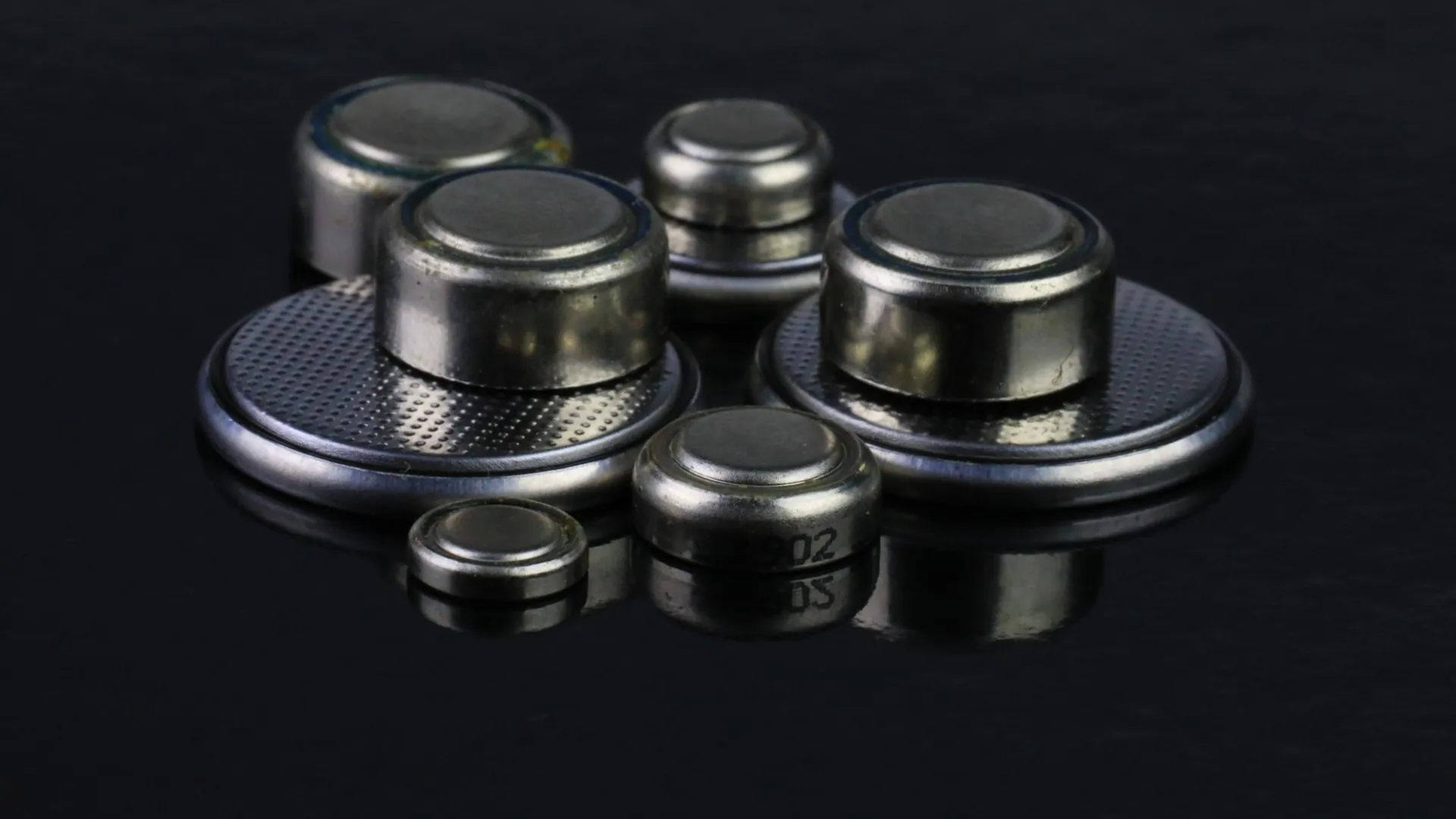
The researchers demonstrated the electrolyte in both pouch and coin cells. Pouch cells are the flat packages commonly used in phones and laptops. Coin cells are small, disk-shaped batteries typically used in devices with lower power demands.
Source link