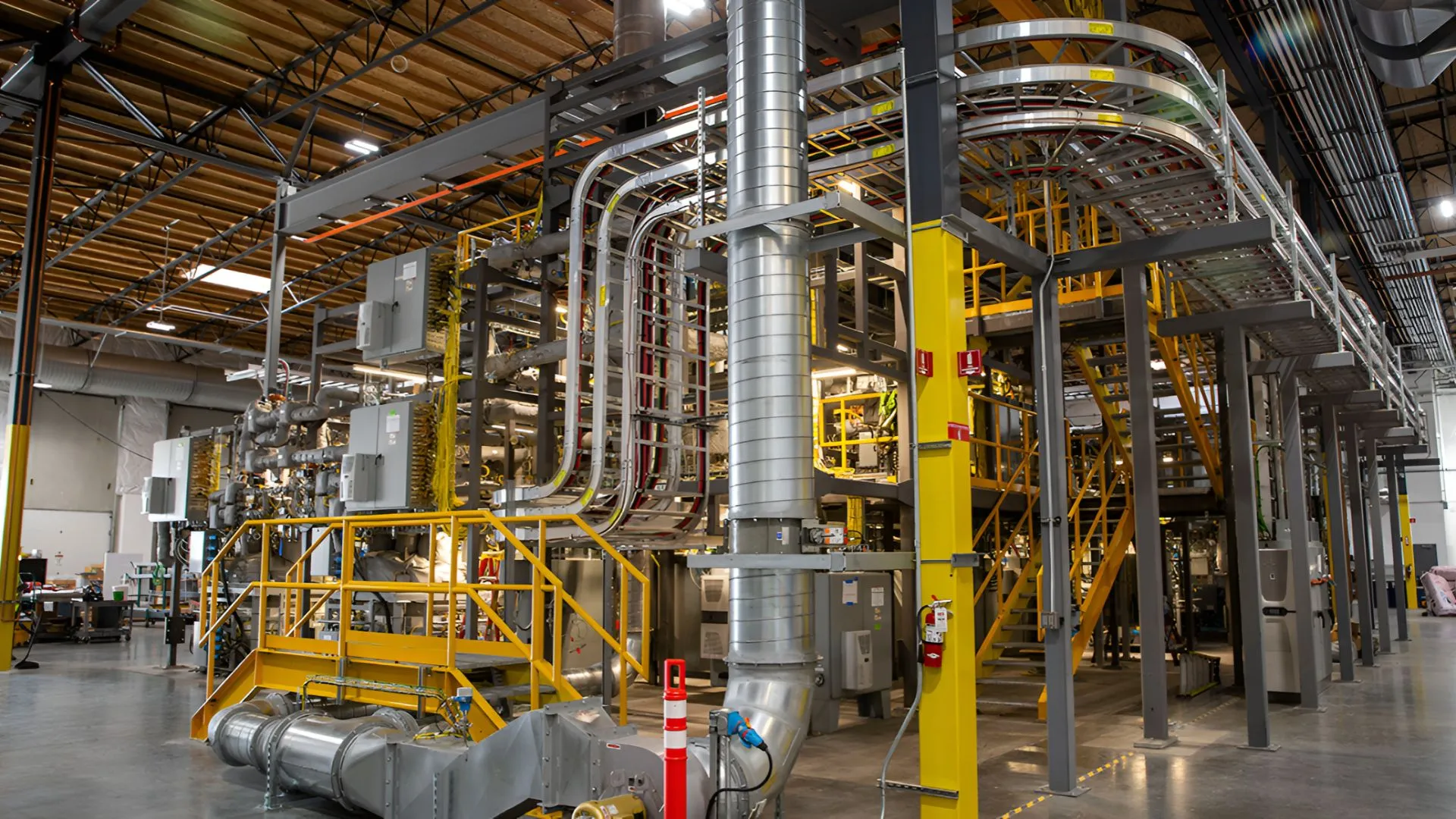
A nuclear experiment backed by the U.S. Department of Energy could deliver crucial operating data for next-generation reactors as early as 2027. The Molten Chloride Reactor Experiment (MCRE) aims to test a fast-spectrum molten chloride salt reactor under sustained fission conditions. Its results could help engineers move the technology closer to commercial use.
The DOE has approved additional cost-shared funding to accelerate the experiment’s final development stage. Southern Company, Idaho National Laboratory and CORE POWER are collaborating on the project through the department’s Advanced Reactor Demonstration Program.
Unlike conventional reactors, which typically use solid fuel, molten salt reactor designs can dissolve nuclear fuel in liquid salt. MCRE will investigate a chloride-based system that operates with a fast neutron spectrum.
Fast neutrons retain more energy than the thermal neutrons used in many conventional reactors. This difference influences how nuclear fuel behaves and how a reactor sustains fission. Engineers need experimental evidence to understand those effects and refine their designs.
MCRE aims to become the world’s first fast-spectrum molten chloride reactor experiment to achieve criticality. That milestone occurs when a reactor sustains a controlled nuclear chain reaction.
Idaho National Laboratory will help researchers gather direct measurements of the reactor’s behavior during operation. Associate Laboratory Director Jess Gehin said engineers currently rely on models to predict how this reactor design will perform.
“Enhancing those models with real-world operating evidence will reduce uncertainty for future reactor designers and regulators,” Gehin said.
The measurements could help developers validate simulation tools and assess engineering decisions. They could also inform future reactor licensing efforts, although regulators will still need project-specific safety evidence.
Source link