Researchers at Binghamton University have developed a bacteria-powered battery inspired by the human small intestine that maintained an output of about 0.75 volts for at least 14 hours during testing.
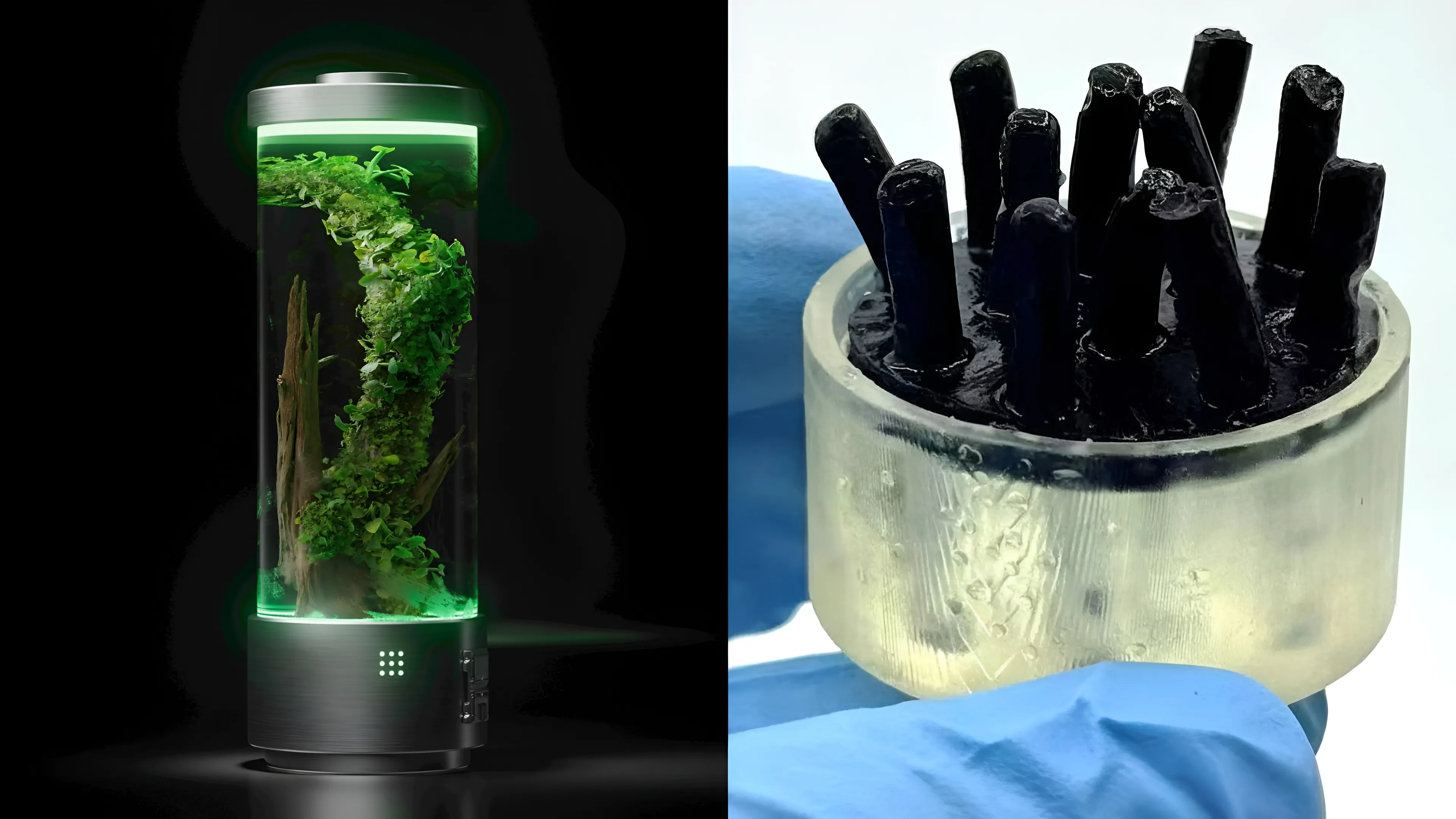
The device uses flexible, finger-like structures inspired by intestinal villi to provide more space for bacteria to grow while improving nutrient delivery and waste removal. These tiny projections, which normally help the intestines absorb nutrients, offer a model for improving electricity generation using spore-forming bacteria.
A team of researchers fabricated the structures using a flexible polymer hydrogel and embedded Bacillus subtilis bacteria within them. The structures serve as the battery’s anode, where bacterial activity helps generate electricity.
The team says the technology could eventually be installed in wastewater pipelines, using organic waste as a nutrient source to generate electricity for low-power devices.
Bacteria-powered batteries generate electricity by harnessing the metabolic activity of microorganisms. However, their performance depends partly on how effectively bacteria receive nutrients and release waste.
Conventional two-dimensional electrodes provide limited surface area for bacterial growth. Porous materials offer additional space but can become clogged as bacteria form biofilms, restricting the movement of nutrients and waste products.
“Porous structures can be easily clogged by biofilm formation, so we had a lot of problems with nutrient delivery, waste buildup or uneven biofilm growth,” said Seokheun “Sean” Choi, a professor of electrical and computer engineering at Binghamton University.
To address these problems, Choi and doctoral researchers Ruohan Zhang and Botian Wang turned to the structure of the small intestine.
The intestinal villi provide a large surface area while allowing nutrients to move across relatively short distances.
Source link