A new report from Georgetown and Duke researchers looks at the advantages of using batteries to meet data center demand — and offers some advice for states.
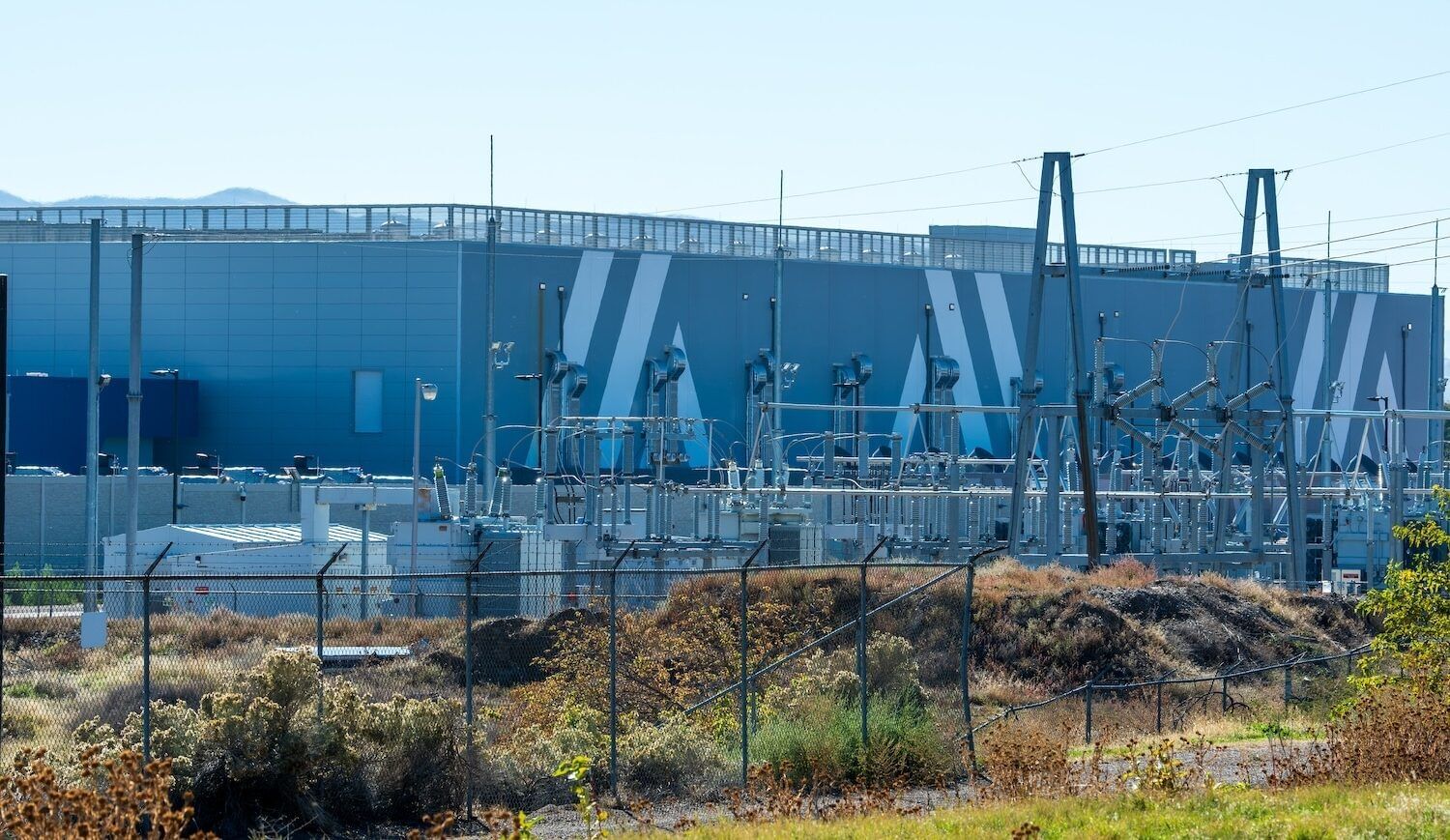
An Aligned Data Centers facility in West Jordan, Utah (Charles-McClintock Wilson/NurPhoto via Getty Images)
Developers and utilities are building tons of gas generation to power the data center boom. It’s an expansion that could cost them and the rest of us dearly, both in terms of climate change and money that may end up wasted if computing demand fails to materialize.
That’s the conclusion of a new report from researchers at Georgetown and Duke universities, which lays out the ways states can push utilities and tech firms to opt for energy storage over fossil fuels whenever possible.
Fossil fuel power — whether in the form of giant utility-scale plants or generators installed behind the meter at data centers — has become the go-to for many in the AI industry. That’s because gas generation offers round-the-clock power in a single package. Overall, U.S. utilities are planning more than 60 gigawatts of new gas plants to serve data center demand, and around 90 GW of behind-the-meter gas generators for data centers have been proposed nationwide.
“At the moment, there’s a lot of inertia and status quo pressure for much of the behind-the-meter resources being natural gas,” said Ian Hitchcock, report co-author and senior program coordinator at the Duke Initiative for Science and Society.
Moving ahead with those gas power plans does more than spell climate disaster .
Source link