This article has been reviewed according to Science X's editorial process and policies. Editors have highlighted the following attributes while ensuring the content's credibility:
When a rechargeable battery operates, ions move into and out of its electrode materials. But where exactly do these ions settle inside the crystal structure? And does their location affect how well a battery performs? These questions are particularly important for next-generation batteries that use abundant elements such as sodium, magnesium and calcium instead of lithium.
A research team at Tohoku University has now revealed that these ions behave very differently, even when inserted into the same electrode material. Their findings show how the locations of individual ions and the structural changes around them can influence battery performance and durability.
"Understanding where ions settle inside an electrode material is essential for designing batteries that can store more energy and last longer," says Hongyi Li, assistant professor at Tohoku University's Institute for Materials Research.
Details of the findings were published in the journal Chemistry of Materials.
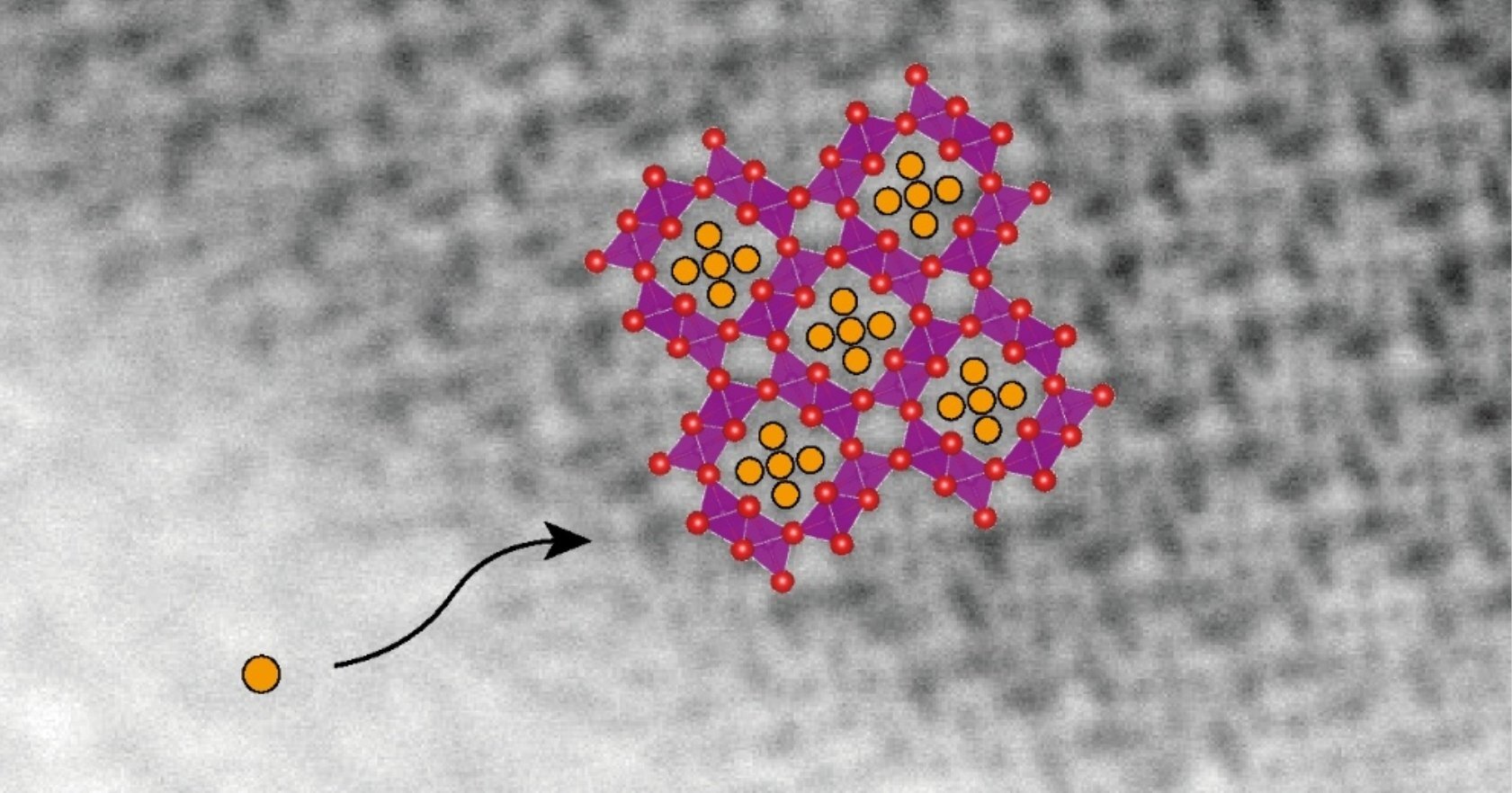
The researchers focused on hollandite-type manganese dioxide (α-MnO₂), a material containing tiny, one-dimensional tunnels within its crystal structure. These tunnels provide pathways for ions to enter and move through the material. However, simply having enough space for ions does not guarantee that they can move easily or that the surrounding crystal structure will remain stable.
To investigate these challenges, the team combined advanced electron microscopy at the Tohoku Center of Excellence for Microscopy (TCEM) at Tohoku University with X-ray absorption spectroscopy at NanoTerasu, a next-generation synchrotron radiation facility.
Source link