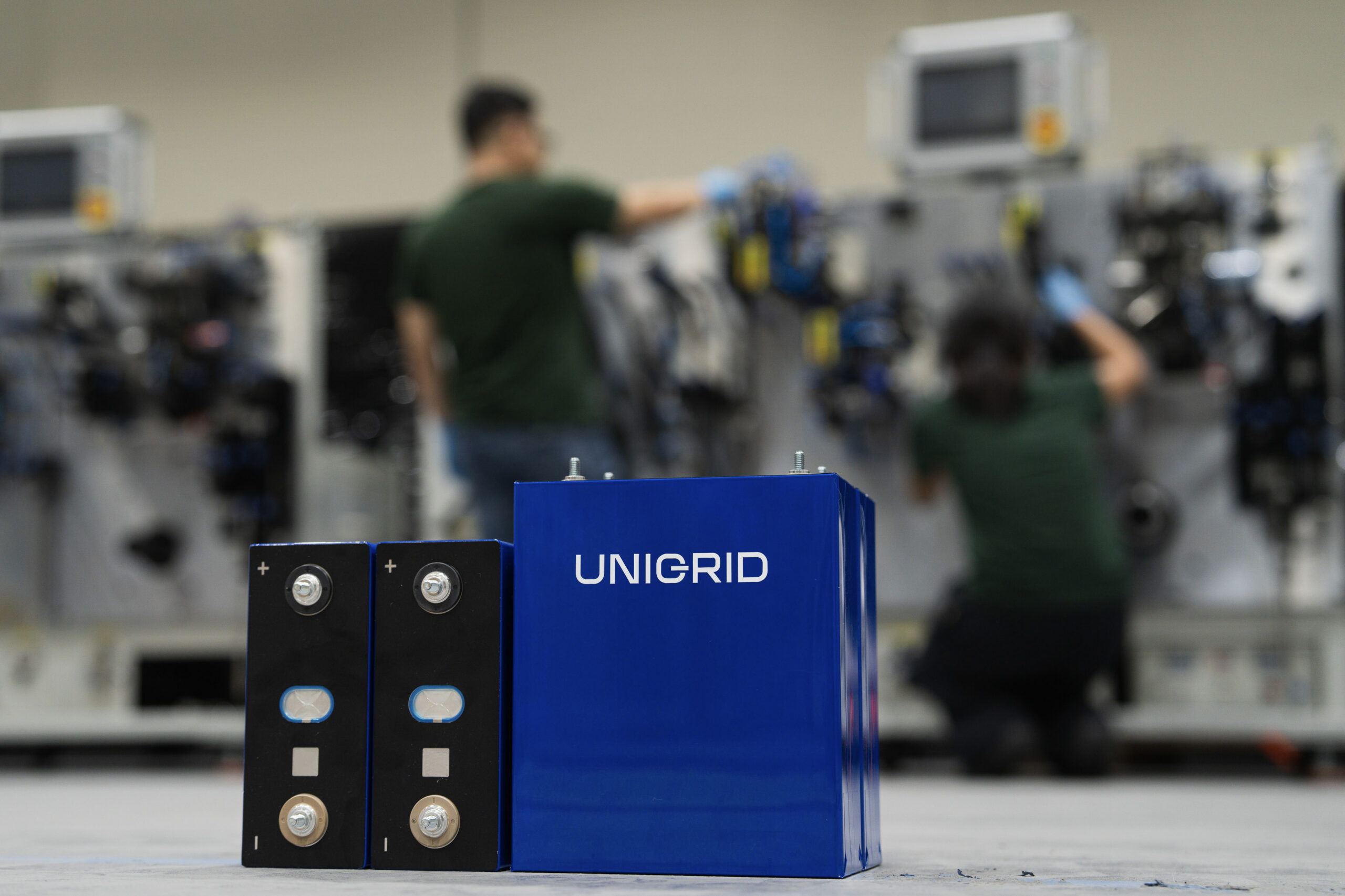
San Diego-based Unigrid is hoping to make sodium-ion a household name. The company’s development team grew out of research centered on the University of California, San Diego, with the goal of providing battery storage technology to serve the markets where lithium-ion is not as suitable.
Unigrid CEO Darren Tan told pv magazine USA that while there are many categories in which lithium ion does well, sodium-ion battery chemistries have advantages in important market segments.
“You’ve got better safety,” Tan said, indicating sodium-ion chemistries are not flammable. “You’ve got extremely long cycle and calendar life. Sodium just doesn’t die. Also, sodium chemistries have great thermal tolerance; they don’t care how hot it is in summer or how cold it is winter. The biggest disadvantage of the batteries is that they are heavier and take up a little more space.”
The company says its 48V Na+ Casa series batteries, which are positioned for commercial and residential storage, have a discharge temperature range of about -100°F to +140°F and will charge down to about -68°F. They are UN38.3 certified and tested to UL 9540A standards at the cell level. The fire resistance of sodium-ion chemistries makes the suitable for deployment indoors, such as in hospitals or multi-unit housing.
At the same time, residential and commercial storage remains dominated by lithium-ion battery makers that are well ensconced with recognized brands with ever-increasing track records.
While there are examples of alternate chemistries and technologies, such as flow batteries, making inroads in the market, these suppliers face an uphill climb.
Source link