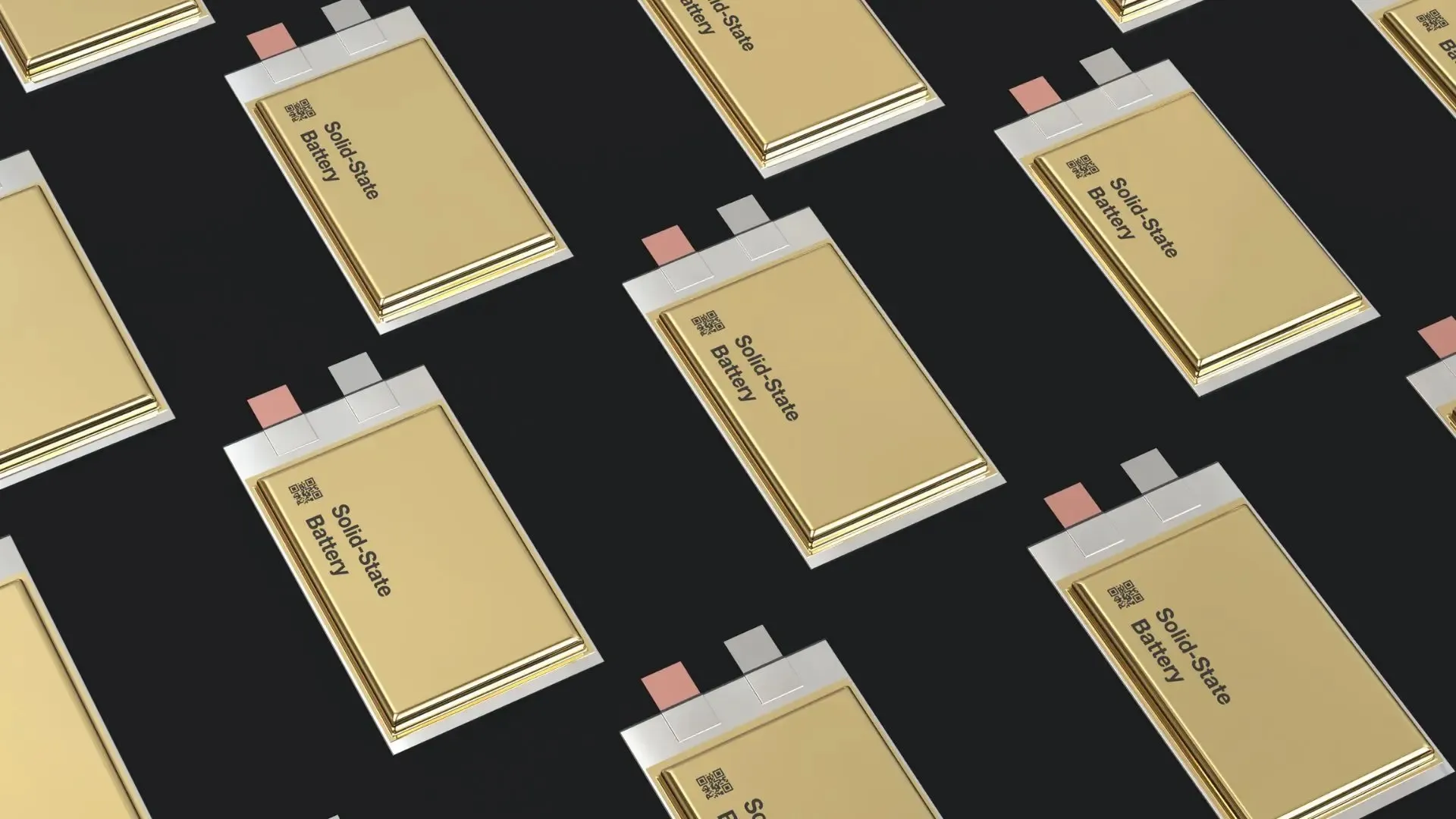
A battery measuring just 2.77 micrometers thick could offer a route to powering wearable electronics, tiny sensors, and medical devices. Developed by a team at Dongguk University in South Korea, the thin-film platform uses tin and carbon layers to control lithium deposition and reduce lithium loss during charging and discharging.
Led by Professor Hyun-Suk Kim of the Department of Energy and Materials Engineering, the researchers combined the coating with an added lithium reserve to improve battery stability. The university announced the findings on November 3.
All-solid-state batteries replace liquid electrolytes with solid materials, offering potential safety and energy-density advantages. However, uneven lithium plating and stripping can destabilize their operation.
Anode-less designs address part of the manufacturing challenge by allowing lithium from the cathode to deposit onto a current collector during the first charge, forming the anode in place. This architecture can simplify fabrication and increase volumetric energy density, particularly in thin-film batteries.
But lithium can become electrically isolated, forming “dead” lithium, or lose contact with the solid electrolyte during stripping. These processes reduce the lithium available for subsequent cycles and compromise capacity.
The Dongguk team investigated whether a coating on the current collector could help control that process. “Our interlayer acts as a seed for Li nucleation, promoting uniform Li plating and reducing Li loss and improving the reversibility of repeated charging and discharging,” Kim said.
The researchers screened carbon-only, metal-only, and combined metal/carbon coatings. A tin/carbon bilayer on a copper current collector delivered the best overall performance among the configurations tested, showing favorable lithium deposition and interfacial stability.
Source link