Canceled grants have stalled renewable energy, climate resilience, and infrastructure projects across Indian Country, adding to decades of federal underinvestment.
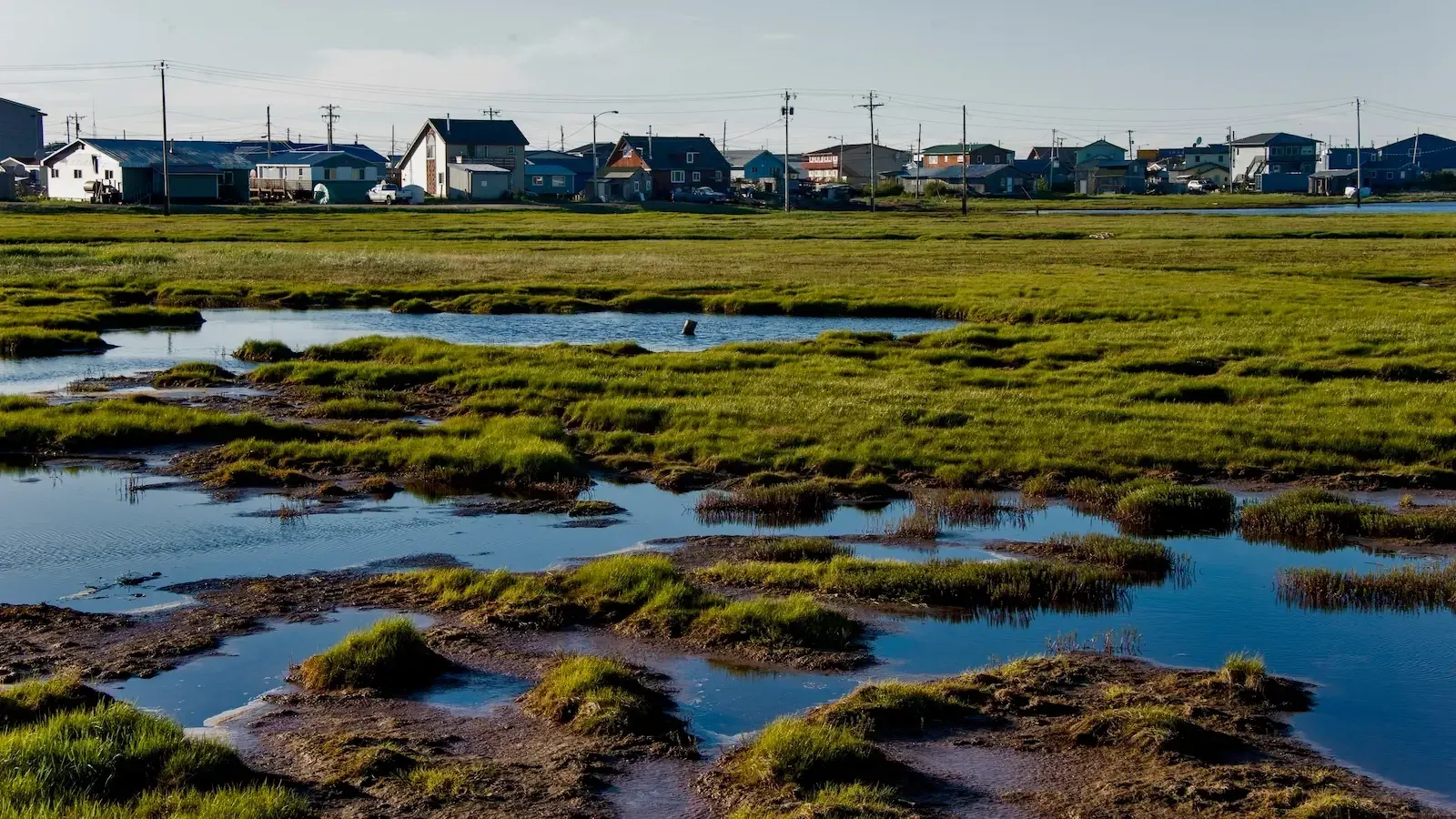
The small Alaskan city of Kotzebue sits next to a marsh. (Prisma Bildagentur/Universal Images Group via Getty Images via Grist)
Every year, Kotzebue, a small city in northwest Alaska, has a three-month window to receive all the diesel fuel it will use throughout the following year. It sits on a gravel spit that juts into Kotzebue Sound just north of the Arctic Circle, and is accessible only by air and sea. Ice keeps freight barges from reaching it for most of the year.
The community relies on diesel for 75% of its power, and residents put about 20% of their income toward buying it. That’s more than three times the average energy burden for low-income households nationwide.
“We’re pretty much at the mercy of world markets,” Chad Nordlum, who is the energy project manager for the Native Village of Kotzebue, told Grist. “Right now, with the Iran war going on, the diesel prices are very high and we’re locked in to much higher prices than we’ve had in the past. There’s really nothing the community can do about diesel prices, but what we can do is produce our own energy.”
That’s why Nordlum was so excited about a $ 20 million grant from the Environmental Protection Agency to support a wind energy project. The funding, announced in 2024 , was part of a larger $ 150 million allocation for tribal infrastructure in Alaska.
Source link