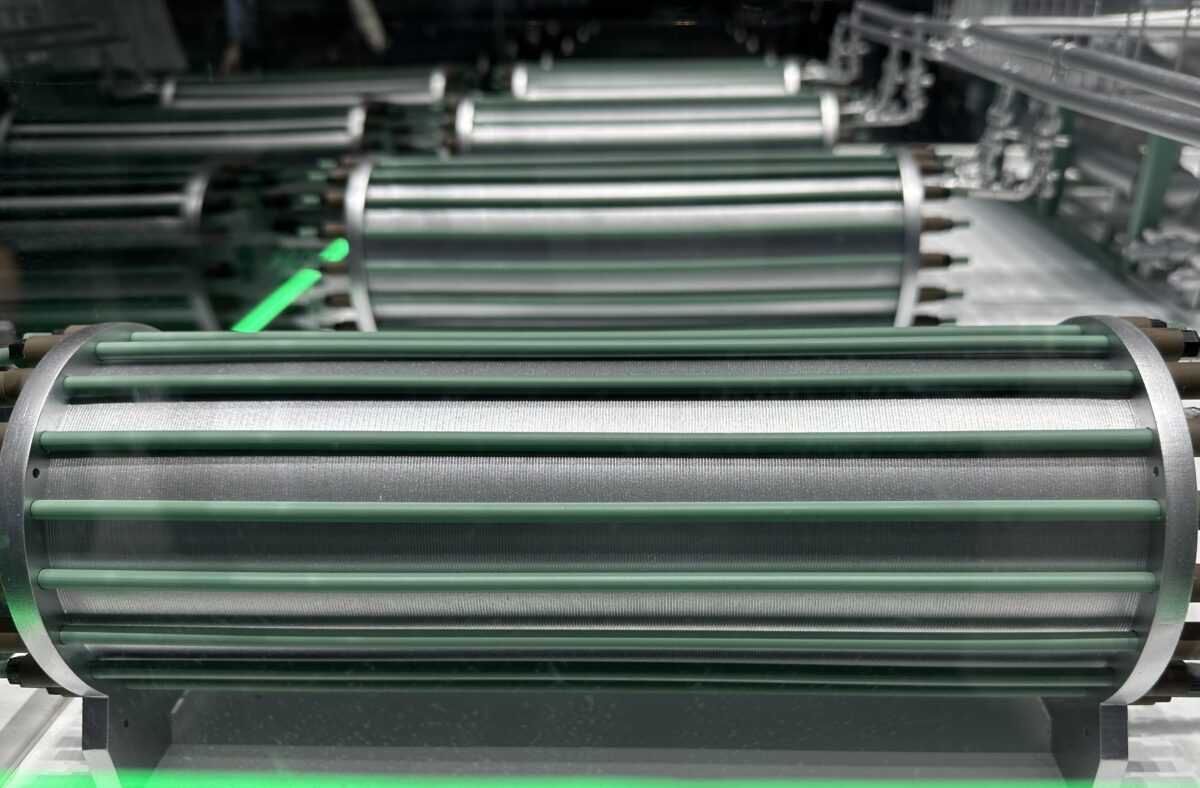
Researchers at Finland’s LUT University have achieved a record voltage of 1,000 V in a series-connected alkaline electrolysis system, aiming to improve the cost efficiency of green hydrogen production. According to the researchers, by increasing voltage, the system reduces current requirements, lowering electrical losses and the costs of power supply and power electronics, which account for approximately one-quarter of a hydrogen plant’s investment costs. According to the researchers, halving these costs could reduce total system investment by around 10% to 15%. The research, conducted using ABB power electronics and electrolyser stacks supplied by Estonia-based Stargate Hydrogen, will now focus on optimising system design, modelling and minimising stray currents to support the scale-up of high-voltage electrolysis. Industrial alkaline electrolysers usually operate at roughly a voltage of 200–400 V.
Japan’s Jera and India’s AM Green have signed a binding agreement for the long-term supply of approximately 70,000 metric tons of green ammonia annually over five years, marking a significant step toward establishing an international renewable fuel supply chain for maritime transport. Announced on October 27, the agreement covers supplies from AM Green’s planned ammonia production facility in Kakinada, Andhra Pradesh, which is expected to begin operations in 2028-2029. The ammonia will be transported to Japan and supplied through receiving, storage, and distribution facilities near Jera’s Hekinan thermal power station in Aichi Prefecture. The fuel is intended primarily for ammonia-powered car carriers, with JERA working alongside shipping companies Kawasaki Kisen Kaisha and Nippon Yusen Kabushiki Kaisha to develop dedicated bunkering infrastructure. Separately, seven Japanese companies have agreed to develop an integrated ammonia supply chain in the Chubu region and build and operate four ammonia-fueled car carriers, with the vessels and a dedicated bunkering ship scheduled for completion in 2030.
Source link