The One Big Beautiful Bill Act drastically reduced the lifespan of federal subsidies available to certain segments of the solar market, and among the first to go was the investment tax credit for residential projects. The ITC is a historic renewable energy subsidy that provides a 30% tax credit against the total cost of an eligible project, and it is currently available to the commercial and utility-scale solar segments.
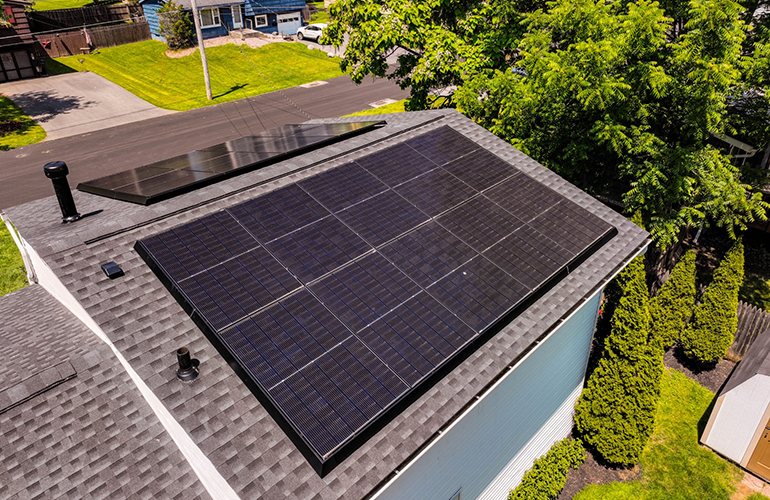
A residential solar project in New York installed by Nickels Energy Solutions. Credit: Nickels Energy Solutions
After 2025, homeowners hoping to install solar on their house couldn’t subsidize the project’s cost with this federal subsidy if it was privately owned. However, a loophole in the tax credit language has allowed leased or “third party-owned” (TPO) solar projects to still receive the ITC (25D) on residential solar projects. In this scenario, it matters who owns the solar project, not necessarily where it’s built. The project can be subsidized because it is owned by a commercial company, and not the homeowner.
Some residential solar installers are still strictly pursuing and installing privately-owned solar projects. Nickels Energy Solutions (NES), a residential solar contractor working in Central New York believes a privately-owned PV system is still the better deal for the customer.
“We don’t have the same offers as some of the bigger companies,” said Kevin Nickels, VP of sales with NES.
Source link