

Researchers at China’s Hohai University have examined seasonal vegetation changes at the 21 GW Gonghe Talatan solar power cluster in Gonghe County, Hainan Tibetan Autonomous Prefecture, Qinghai province, China, and have found that vegetation levels surpassed pre-construction levels within two years of PV installation.
The region is characterized by predominantly flat terrain at an average elevation of approximately 2,920 meters and a cold, arid to semi-arid climate. Average annual temperatures stand at 4.1 C, while annual precipitation reaches 303 mm, nearly 88% of which falls between May and September. Annual evaporation amounts to approximately 1,800 mm, while the region receives more than 2,900 hours of sunshine per year and experiences significant wind-driven sand movement.
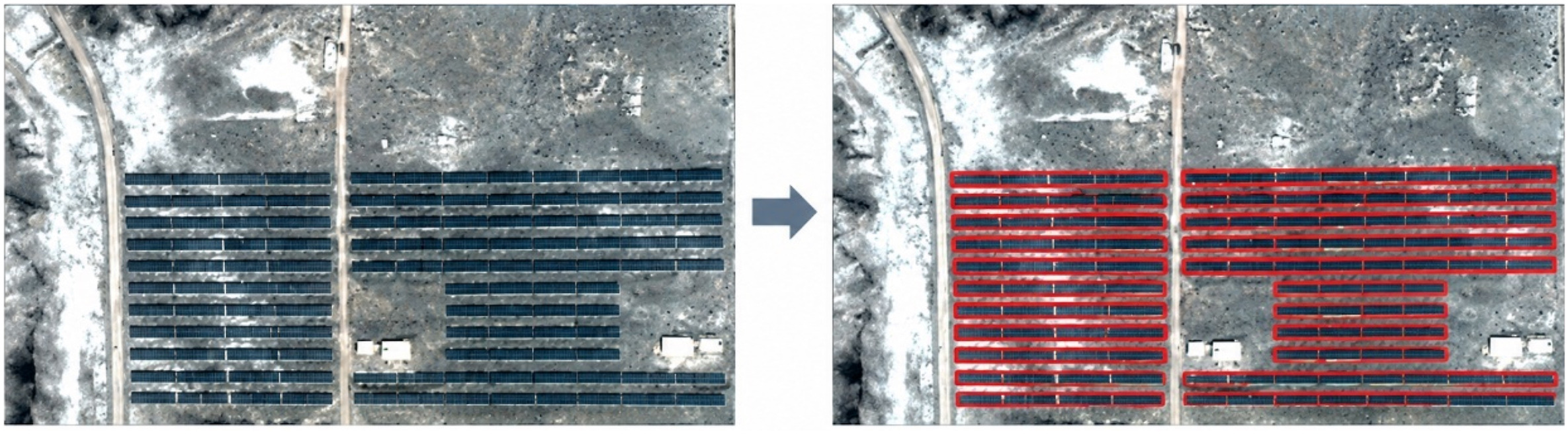
The scientists used a multiscale analytical approach combining high-resolution satellite imagery with long-term satellite observations. They analyzed four Beijing-3 satellite images acquired between May and August 2025, each with a spatial resolution of 1.2 meters. The images enabled them to identify solar panels and assess vegetation growing between them using the normalized difference vegetation index (NDVI), calculated from red and near-infrared reflectance.
The researchers manually mapped the solar panels to exclude panel-covered areas from the vegetation analysis. They also used Landsat satellite imagery with a spatial resolution of 30 meters to track vegetation changes between 2008 and 2025. The datasets were processed through Google Earth Engine to generate annual maximum NDVI measurements.
To assess vegetation differences, the team compared conditions within the solar plants with those in adjacent control areas extending up to 120 meters beyond the plant boundaries.
Source link





