Rolls-Royce SMR has completed an important construction test for its small modular reactor (SMR) program. A new precast concrete component could help make future nuclear plants easier to manufacture and assemble.
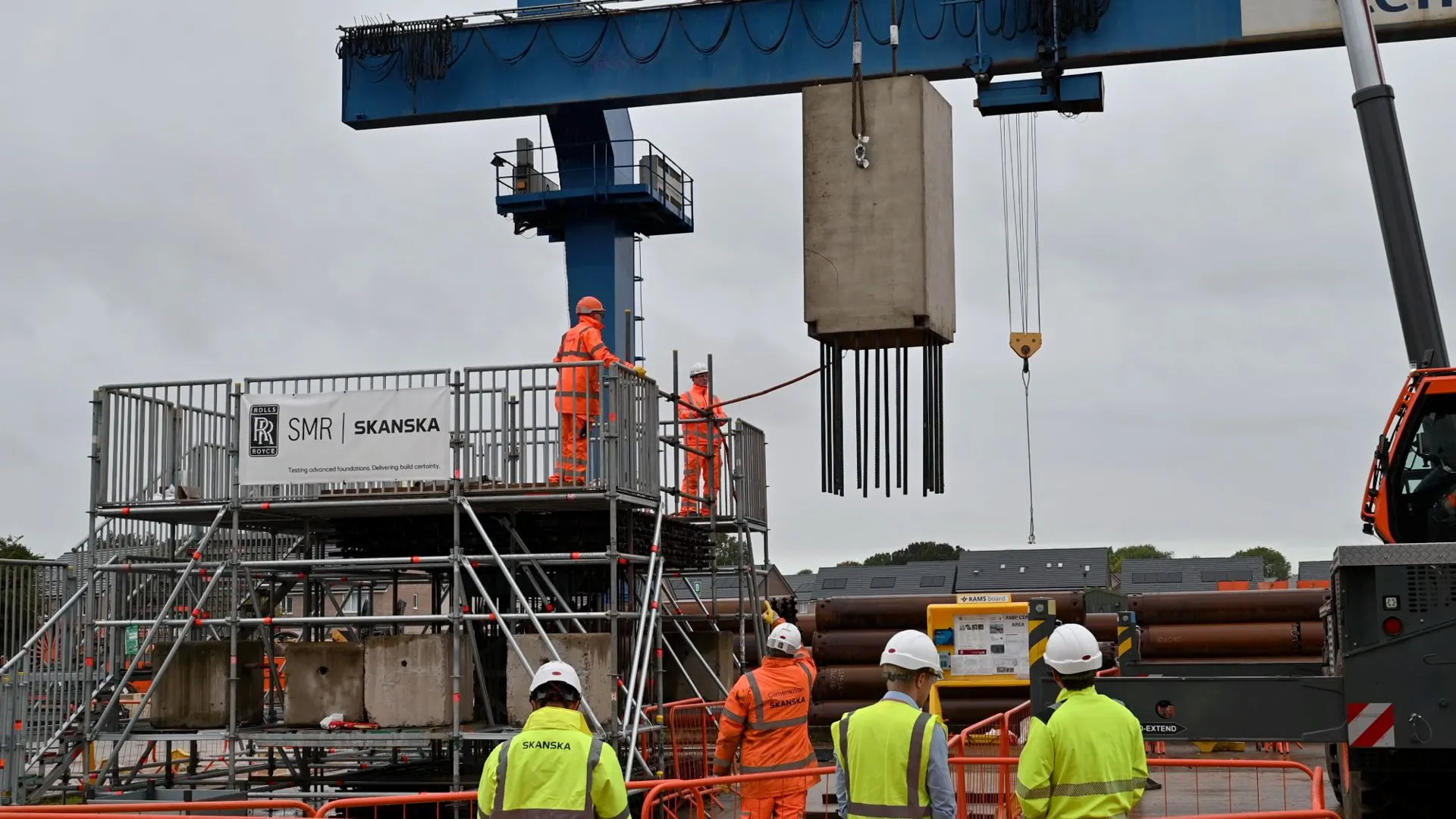
Skanska built and tested an aseismic bearing pedestal at its Bentley Works facility in Doncaster, England. The demonstrator validates an off-site manufacturing approach for a component that plays a crucial role in protecting nuclear infrastructure during earthquakes.
The achievement gives Rolls-Royce SMR another construction method to evaluate before deploying its factory-built reactor design. It also demonstrates how conventional construction techniques could support the industrial-scale production of nuclear power plants.
Aseismic bearing pedestals support isolation devices within the Rolls-Royce SMR design. These devices help separate buildings and other structures from ground movement during seismic events.
The isolation system reduces the forces that earthquakes can transfer into critical infrastructure. Its performance therefore plays an important role in protecting the reactor facility and supporting its structural resilience.
Skanska’s demonstrator allowed engineers to test the manufacturing approach before committing to full-scale deployment. Producing the component away from the construction site could also give manufacturers greater control over quality and production schedules.
The prototype represents a first-of-its-kind precast bearing pedestal for the Rolls-Royce SMR design. Skanska completed its construction and technical trials at Bentley Works, bringing its engineering and manufacturing capabilities into the project.
Off-site manufacturing forms an important part of the Rolls-Royce SMR construction strategy. The company wants to move significant portions of plant construction into controlled manufacturing environments.
That approach could reduce the amount of work required at individual construction sites.
Source link