This article has been reviewed according to Science X's editorial process and policies. Editors have highlighted the following attributes while ensuring the content's credibility:
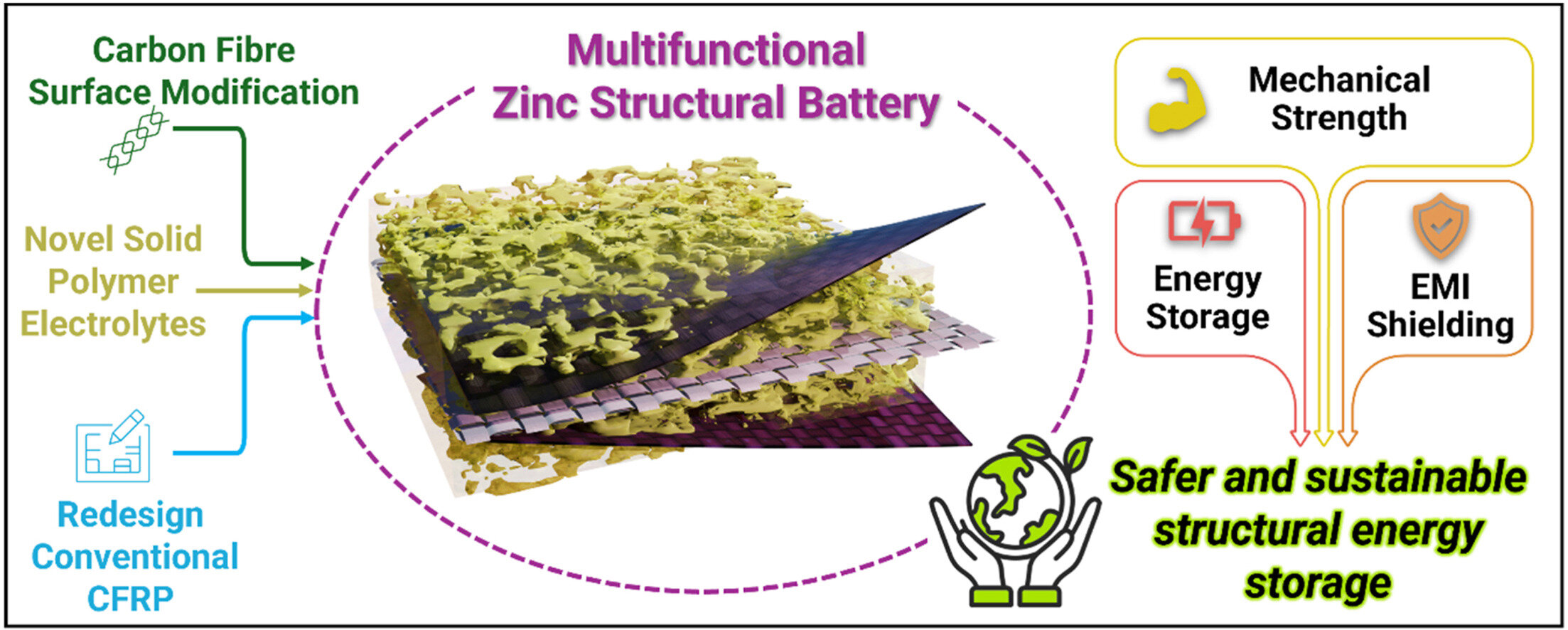
Imagine if your car weren't powered by a conventional battery under the hood but by energy stored in its walls or even its roof? This is a future that Dr. Bhagya Dharmasiri and her colleagues at the Deakin Institute for Frontier Materials have been exploring, bringing load-bearing structures and rechargeable energy storage together to create structural battery composites.
They're working to embed zinc-based energy storage into carbon fiber structures rather than use the lithium-ion batteries found in many modern electronics. The goal is to make safer, better-performing electric cars, airplanes and more.
Lithium and zinc are both critical metals for energy storage, but they have different advantages and risks. Although lithium-ion batteries can deliver a large amount of energy, they also pose a risk of fire or toxic gas release if handled incorrectly. These risks can lead to explosions and fires, as seen in recent years with portable chargers and e-bikes.
There are several approaches to mitigating these risks, including safer electrolytes and improved materials and battery design. Dharmasiri and her colleagues are also researching these areas.
"Lithium remains an important energy-storage technology, and there are many ways we can make these systems safer. Zinc offers another promising approach, particularly where safety and sustainability are priorities," Dharmasiri said.
While zinc stores less energy than lithium, it can use water-based electrolytes, reducing reliance on flammable components.
Source link