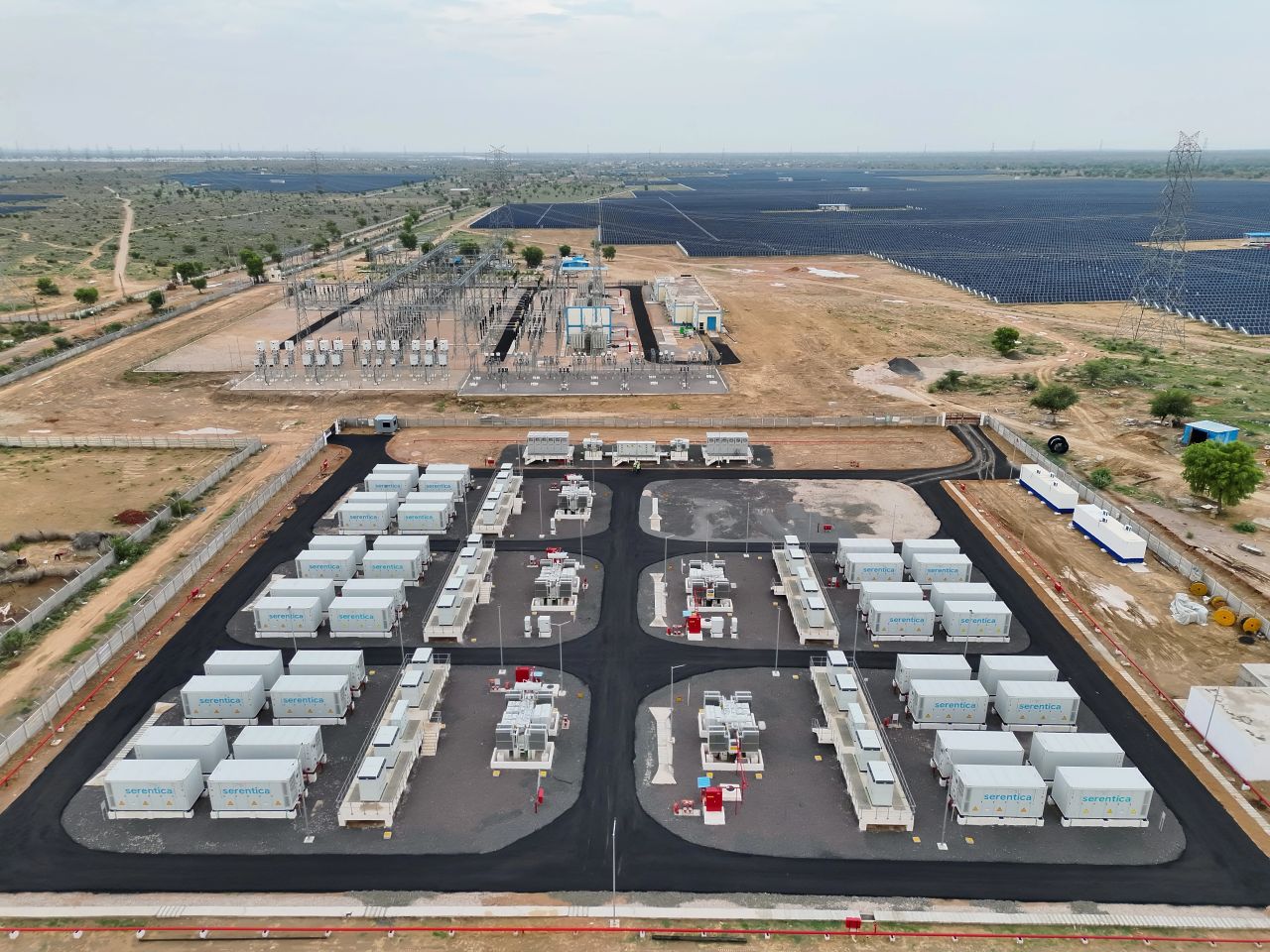
The volume is genuinely extraordinary. Government-owned undertakings including Solar Energy Corp. of India (SECI), Powergrid, NLC India, and NTPC – along with a widening range of local utilities in Gujarat, Rajasthan, Andhra Pradesh, Maharashtra, and other states – collectively floated more than 130 GWh of storage-linked tenders in 2025 alone. SECI’s FDRE-IX tender, seeking 1.2 GW of firm and dispatchable renewable capacity backed by roughly 4.8 GWh of storage, is now the largest single storage-linked pipeline the country has issued.
None of this would be bankable without Viability Gap Funding (VGF). Tranche I offered capital support of up to INR 2.7 million ($28,170)/MWh. Tranche II, revised in July 2025 as system costs fell, cut that to around INR 1.8 million/MWh. In May 2026, the Union Cabinet approved a further outlay of roughly INR 54 billion to support close to 30 GWh of additional storage capacity. As of mid-2026, the sector had 28 awarded tenders and more than 90 individual bid positions on record.
The pricing trajectory is the number every developer quotes, and it deserves to be. India’s first pilot tender in 2022 cleared at INR 1.08 million/MW/month. By December 2025, Andhra Pradesh utility Aptransco’s tender discovered a record low of INR 148,000/MW/month. Two-hour systems now typically clear between INR 148,000 and INR 255,000/MW/month. Four-hour systems, which carry a heavier duty cycle, sit between INR 285,000/MW/month and INR 457,000/MW/month.
Two forces are driving these plummeting prices. Cell and pack costs have fallen sharply, and the bidder pool has widened well beyond the original storage specialists.
Source link