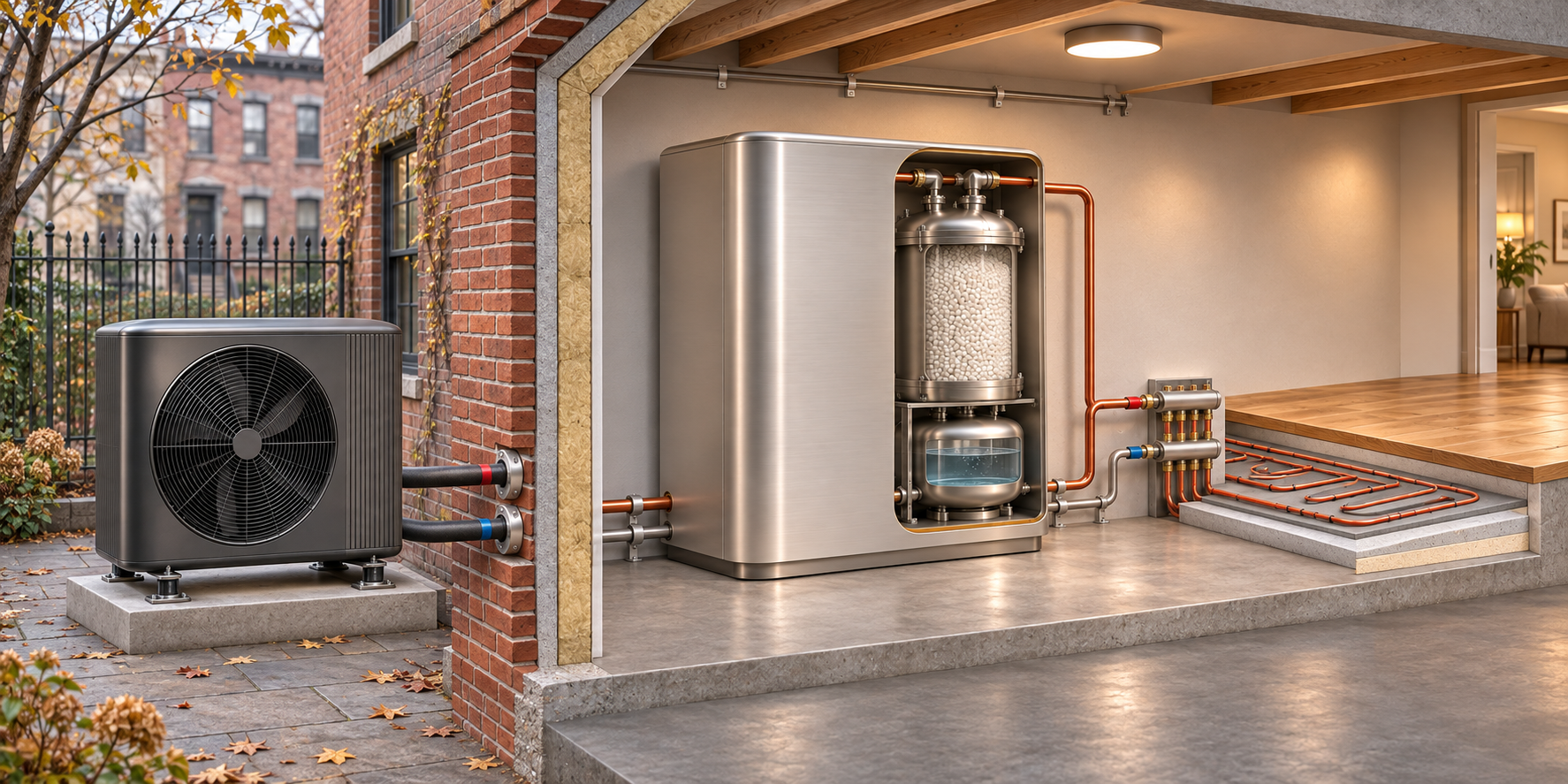
A research team at Pennsylvania State University in the USA evaluated residential heat pumps paired with thermochemical energy storage (TCES) for long-duration energy storage. The researchers aimed to determine whether storing heat ahead of cold spells could reduce heating-related electricity demand when heat pumps become less efficient and the grid faces greater pressure.
“In this paper, we model a TCES system using potassium carbonate (K₂CO₃) as the thermochemical material (TCM),” the group explained. “This system can be thermally charged by an electric heat pump well in advance and discharged to meet the building’s heating load during the heating season. The optimal operation is assessed during the most stressful time of the heating season, based on projections for 2050.”
The researchers used simulation and linear optimization to evaluate an air-source heat pump coupled with potassium carbonate-based TCES and a battery in a 220.82 m² single-family home under New York City conditions. Hourly grid projections for a 95% decarbonized electricity system in 2050 were translated into a varying building electricity-demand limit.
The TCES model represented heat storage through salt dehydration and heat release through hydration, with approximately 80 C water required for charging and 35 C water supplied to radiant heating during discharge. The team further optimized hourly operation to minimize electricity consumption while meeting heating demand and respecting the electricity limit.
Reference charging/discharging efficiencies were 45%/80% for TCES and 95%/95% for the battery. Across 96 simulations, they varied heat-pump performance, TCES specific heating power, and charging efficiency to assess their effects on required storage capacities.
Source link