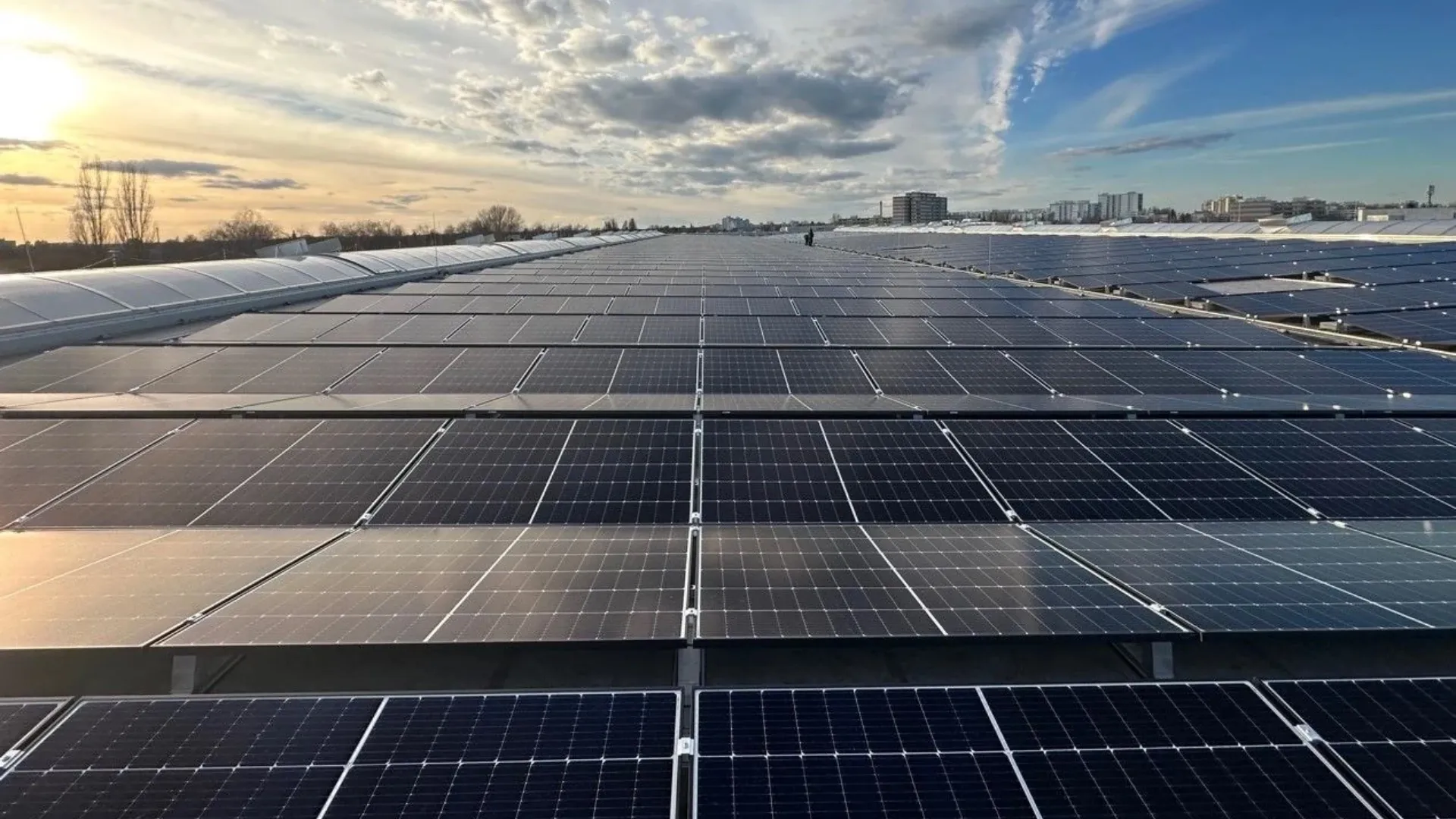
Chinese solar manufacturer Longi has introduced rooftop solar modules rated up to 690 W, using a conductive backsheet that replaces conventional soldered ribbons to boost output and reduce potential connection failures.
Unveiled at All Energy Australia 2026 in Melbourne on October 28–29, the Hi-MO X12 series targets residential, commercial and industrial rooftops.
The modules combine the company’s hybrid passivated back contact (HPBC) 2.0 cells with a redesigned electrical interconnection structure.
Longi said the design removes more than 15,000 potential solder-joint failure points per module. Australian pricing, initial shipment volumes and a commercial delivery schedule have not been disclosed.
The new architecture embeds conductive metal foil circuits within the module’s rear encapsulation structure. Solar cells connect directly to this conductive backsheet, replacing the conventional soldered ribbons used to link cells.
According to Longi, the design increases the current-carrying cross-sectional area by 85 percent, delivering an additional 6 W to 8 W compared with conventional interconnection designs.
The modules also incorporate what the manufacturer calls Full-Screen Technology. This combines shingled cell layouts with hidden busbars to reduce inactive areas and shading on the front of the module.
Longi attributes a further 8 W to 12 W gain to that arrangement, bringing the combined power increase to between 14 W and 20 W.
The company also claimed its ultra-thin stacking process reduces internal stress by 60 percent, while an integrated metal foil barrier cuts water vapor transmission by 90 percent.
The larger LR7-72WVD module, intended for commercial and industrial applications, offers power ratings from 660 W to 690 W.
Source link