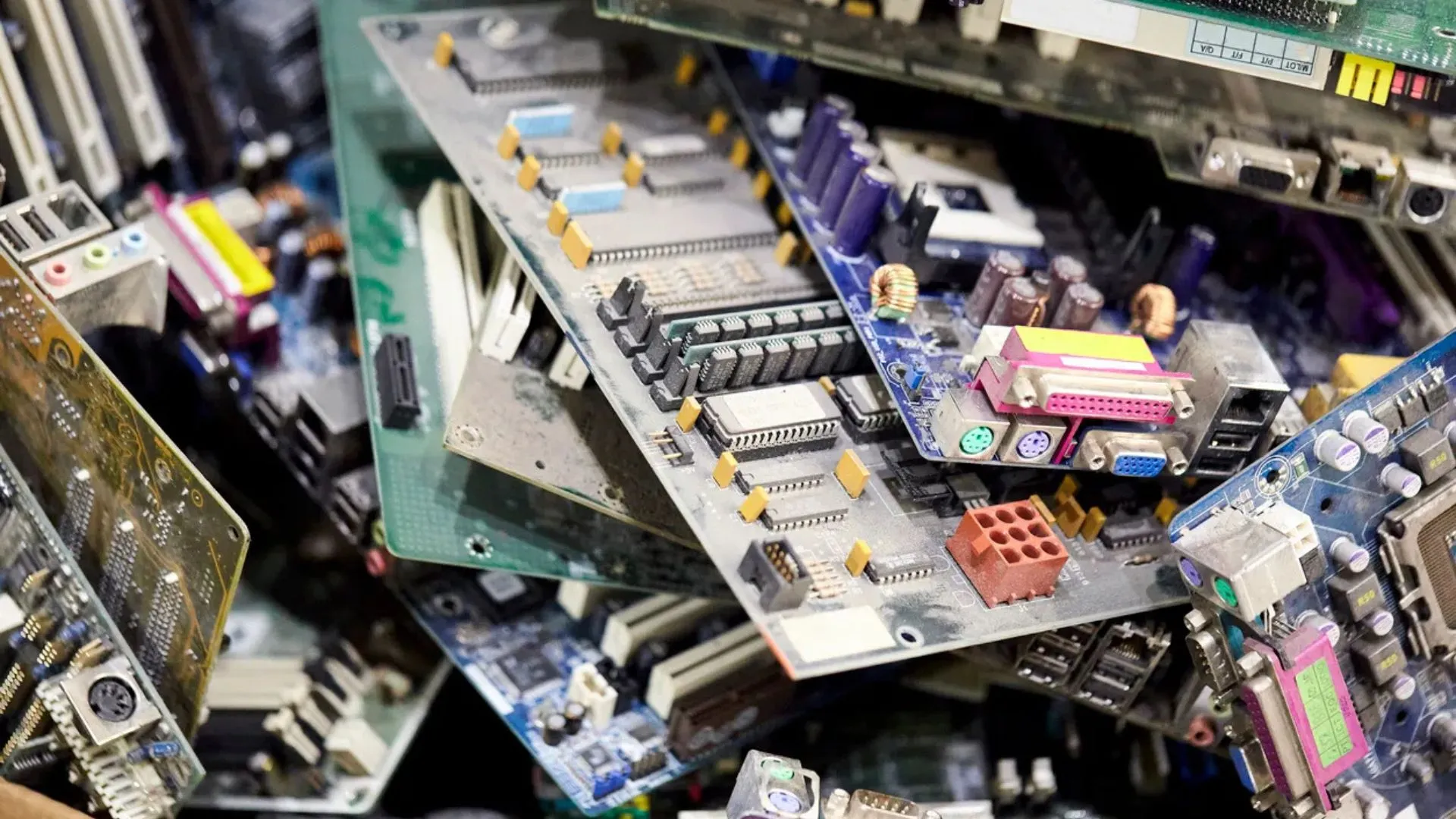
Discarded computer hard drives could become a source of critical raw materials for electric vehicles, wind turbines and other technologies. Researchers in Germany are testing two processes to recover valuable metals from old magnets, including a method that uses ammonium chloride instead of conventional hydrochloric acid.
The work is part of the European Union-funded NEO-CYCLE project, in which researchers at the Fraunhofer Institute for Ceramic Technologies and Systems (IKTS) are working with TU Bergakademie Freiberg to recover neodymium, iron and boron from discarded hard disk drives (HDDs).
Neodymium-iron-boron magnets are among the strongest permanent magnets available. They are used in electric vehicle motors, wind turbines and electronic products such as speakers, smartphones and hard drives. However, recovering their constituent materials at the required purity for reuse is technically challenging.
Neodymium is particularly important because around 90 percent of the material is imported from China, according to Fraunhofer. Much of Europe’s collected magnet waste is also sent to China for processing before the recovered materials are imported again.
The NEO-CYCLE researchers are evaluating two approaches to separate valuable materials from magnets found in discarded computers and laptops.
The first is solid-state chlorination, which is being developed by project partner TU Bergakademie Freiberg. Instead of conventional hydrochloric acid, the process uses ammonium chloride added to a mixture containing neodymium, iron and boron recovered from magnet waste.
When heated, the mixture is converted into metal chlorides and a high-purity ammonia solution. The approach builds on a patented process already used to recycle fluorescent lamps, which researchers are now testing for magnet recovery.
Source link