An international research team developed an open-access image dataset to support visual navigation for autonomous PV cleaning robots under different soiling conditions. The dataset comprises 6,200 annotated images of solar panels, including clean images, synthetically generated contamination at five severity levels, and laboratory images of physically soiled modules.
“The novelty of our research lies in developing a photovoltaic image dataset specifically for the visual navigation of cleaning robots, rather than conventional panel defect inspection,” corresponding author Kumeresan A. Danapalasingam told pv magazine. “By preserving the same reference-line geometry across different levels of simulated soiling, we provide researchers with a systematic way to evaluate whether robotic vision algorithms can reliably identify navigation cues even when the panel surface is contaminated.”
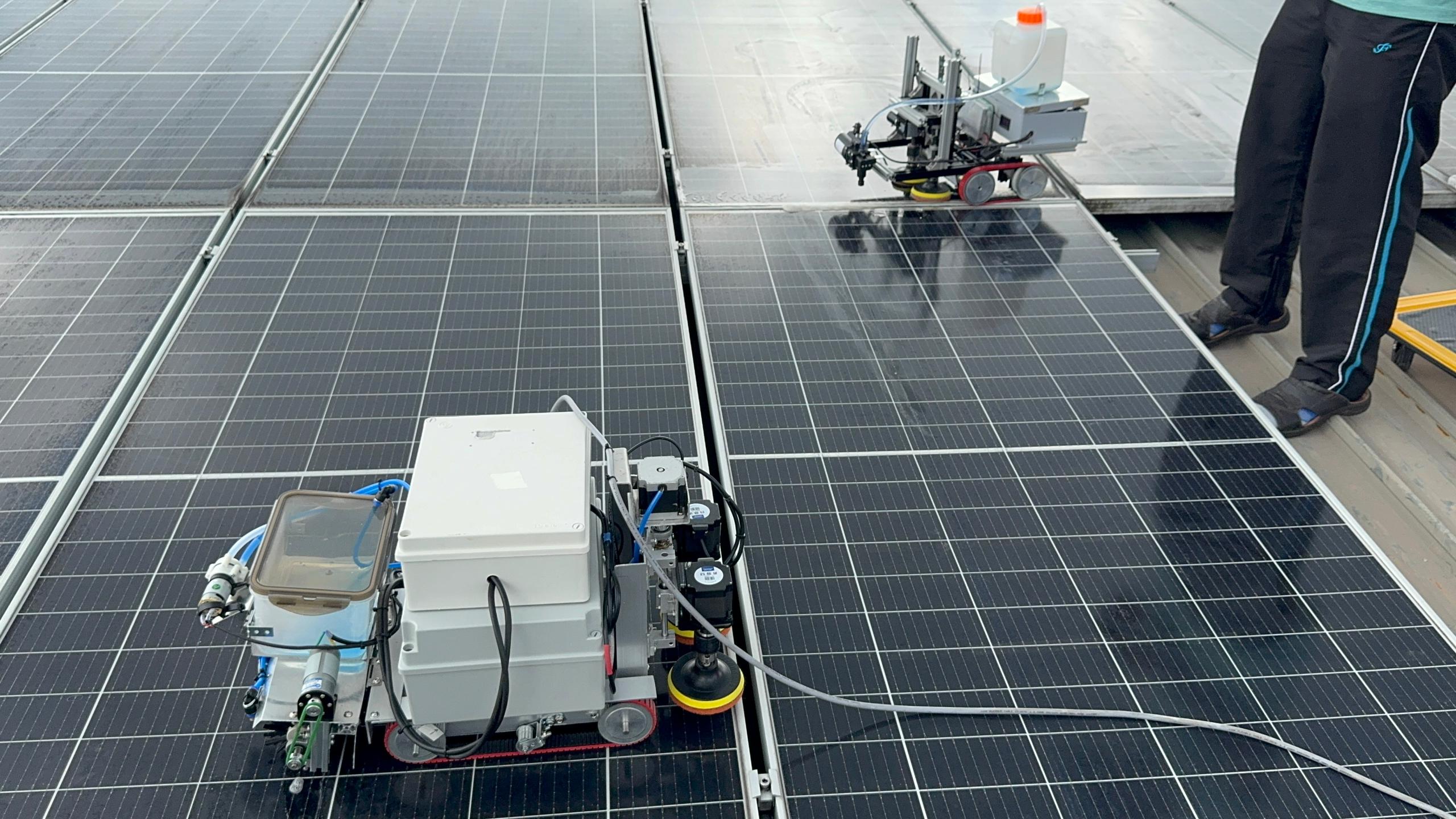
To construct the dataset, the researchers captured top-down images of PV panels using an HF868-2 camera mounted at the front of a solar panel cleaning robot, approximately 15 cm above the module surface. The camera featured a 2.7 mm wide-angle lens with a 135-degree field of view and recorded video at 320 × 240 pixels and 60 frames per second. The images were geometrically calibrated and resized to 160 × 120 pixels to accommodate the computational constraints of onboard robotic vision systems.
The team manually annotated 800 clean images, identifying three types of structural reference lines used for robot navigation: white cell-gap lines, horizontal frame-cell border lines, and vertical frame-cell border lines. We then processed each image using a synthetic augmentation pipeline that generated five additional versions with increasing soiling, from very light to extreme.
Source link