
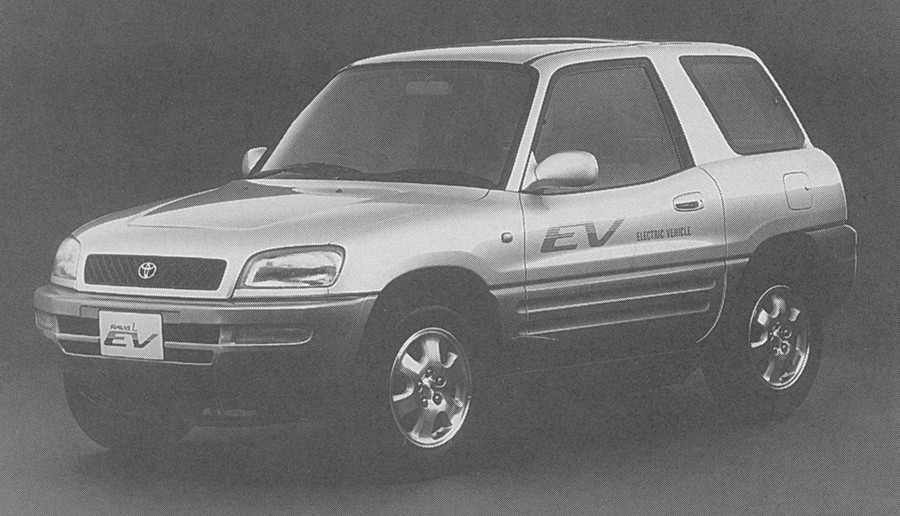
A truly old scan of the RAV-4 EV from the 1997 Tokyo Motor Show brochure. (Toyota Motor Co. Media Group photo) The RAV-4 Was An EV Experiment That Continues To Be One
Support CleanTechnica's work through a Substack subscription , on Patreon , or on Stripe . Help us produce all of the high-quality, original content we publish week after week despite the challenges of content-scraping AI, antisocial media, inflation, and other hurdles. WHEN Hiroshi Okuda assumed the presidency of Toyota Motor Corporation in 1995, he fundamentally shifted the automaker’s global strategy. Recognizing the pressure of California’s impending zero-emission mandates and the long-term threat of petroleum depletion, Okuda demanded that Toyota accelerate its environmental vehicle programs from theoretical research into market-ready reality.
Under Okuda’s leadership, the engineering execution fell to Toyota’s specialized Electric Vehicle Development Division, established in 1992. Executive direction for advanced power research was overseen by
Dr. Hiroyuki Watanabe, an engineer who joined Toyota’s board in 1996 to lead research and development for hybrid, electric, and fuel cell vehicle architectures. Together with a dedicated team of chassis and electrical engineers, they used the first-generation RAV4 crossover as a shared technical foundation for two distinct propulsion paths.
To control production costs and minimize development cycles, Toyota engineers adapted the existing RAV4 platform rather than creating a bespoke chassis. The engineering team initially evaluated two energy storage systems: a sealed lead-acid battery pack and a newly developed nickel-metal hydride battery produced in partnership with Panasonic. Focus group trials across Japan and the United States confirmed that lead-acid chemistry resulted in insufficient operational range.
Source link