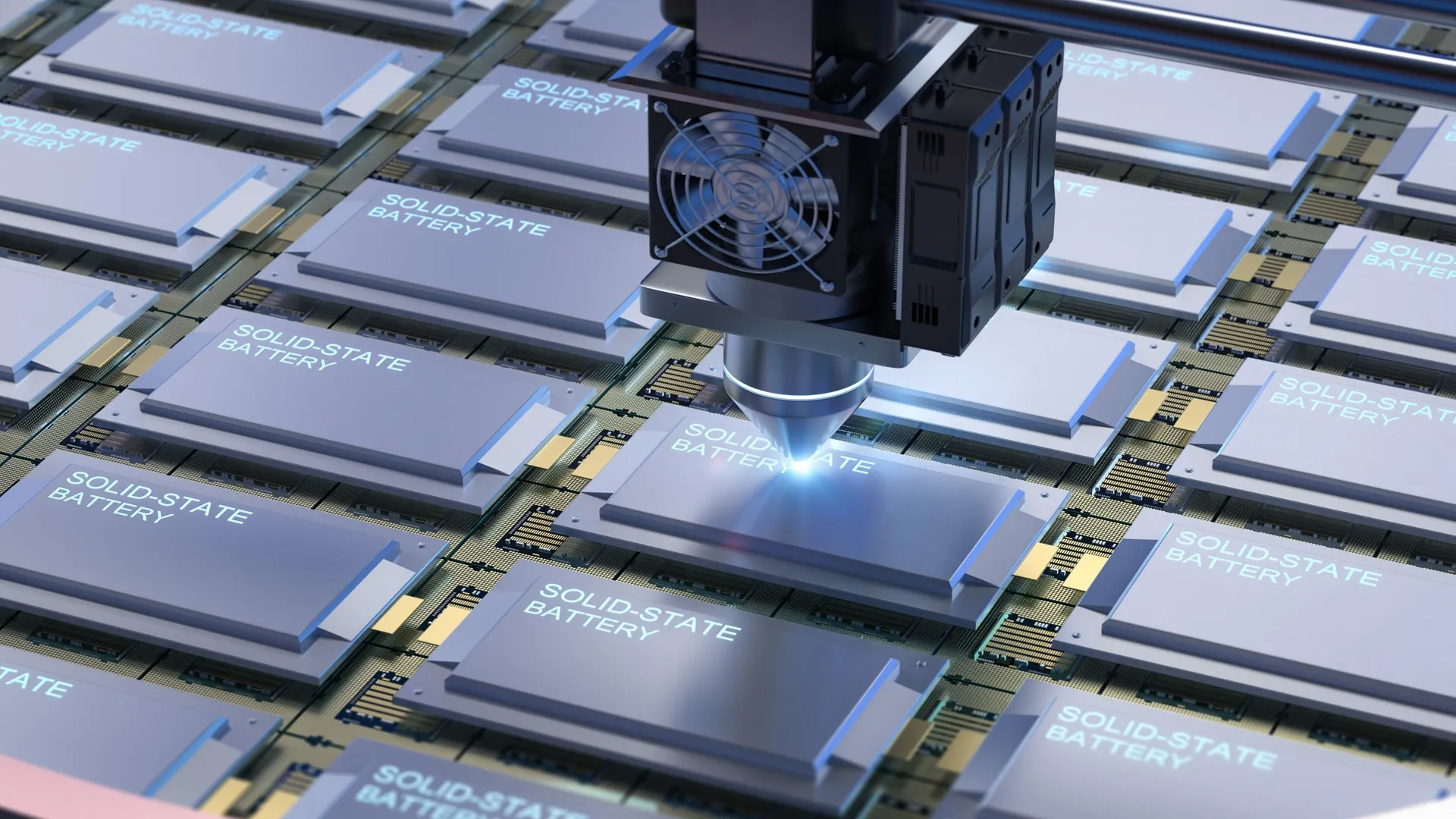
Mercedes-Benz will test ProLogium’s latest Gen4 lithium ceramic battery cells as the German automaker evaluates next-generation battery technology for future electric vehicles.
The companies have signed a joint testing agreement that gives Mercedes-Benz priority access to ProLogium’s Gen4 Superfluidized Inorganic Next-Generation Lithium Ceramic Battery cells.
The cells will undergo electrical, thermal, and safety testing at Mercedes-Benz facilities and specialized external institutes. The program will assess whether the technology could eventually be integrated into future vehicle platforms.
ProLogium says its Gen4 platform is designed to balance five areas: safety, performance, energy density, scalable manufacturing and cost. The technology combines a non-flammable inorganic electrolyte, ceramic separator and an active safety mechanism while targeting fast charging, high power output and low-temperature performance.
The agreement expands a partnership between Mercedes-Benz and ProLogium that dates to 2016. The automaker is also a strategic investor in the Taiwanese battery developer.
The companies have previously worked on different lithium ceramic battery formats, including pouch and prismatic cells, as well as ProLogium’s Bi-Polar technology. Their collaboration has moved from early cell development and validation toward evaluating batteries for possible vehicle applications.
“Over nearly a decade, our collaboration with Mercedes-Benz has evolved from early cell development and validation to testing our latest Gen4 technology for future vehicle applications,” said Vincent Yang, founder and CEO of ProLogium.
The Gen4 design follows ProLogium’s earlier hybrid-solid-state Gen3 technology. Its newer approach, introduced in 2025, is intended to combine characteristics associated with solid-state and liquid battery designs while addressing manufacturability and cost.
Mercedes-Benz will now put those claims through its own testing process before determining whether the cells are suitable for automotive use.
Source link