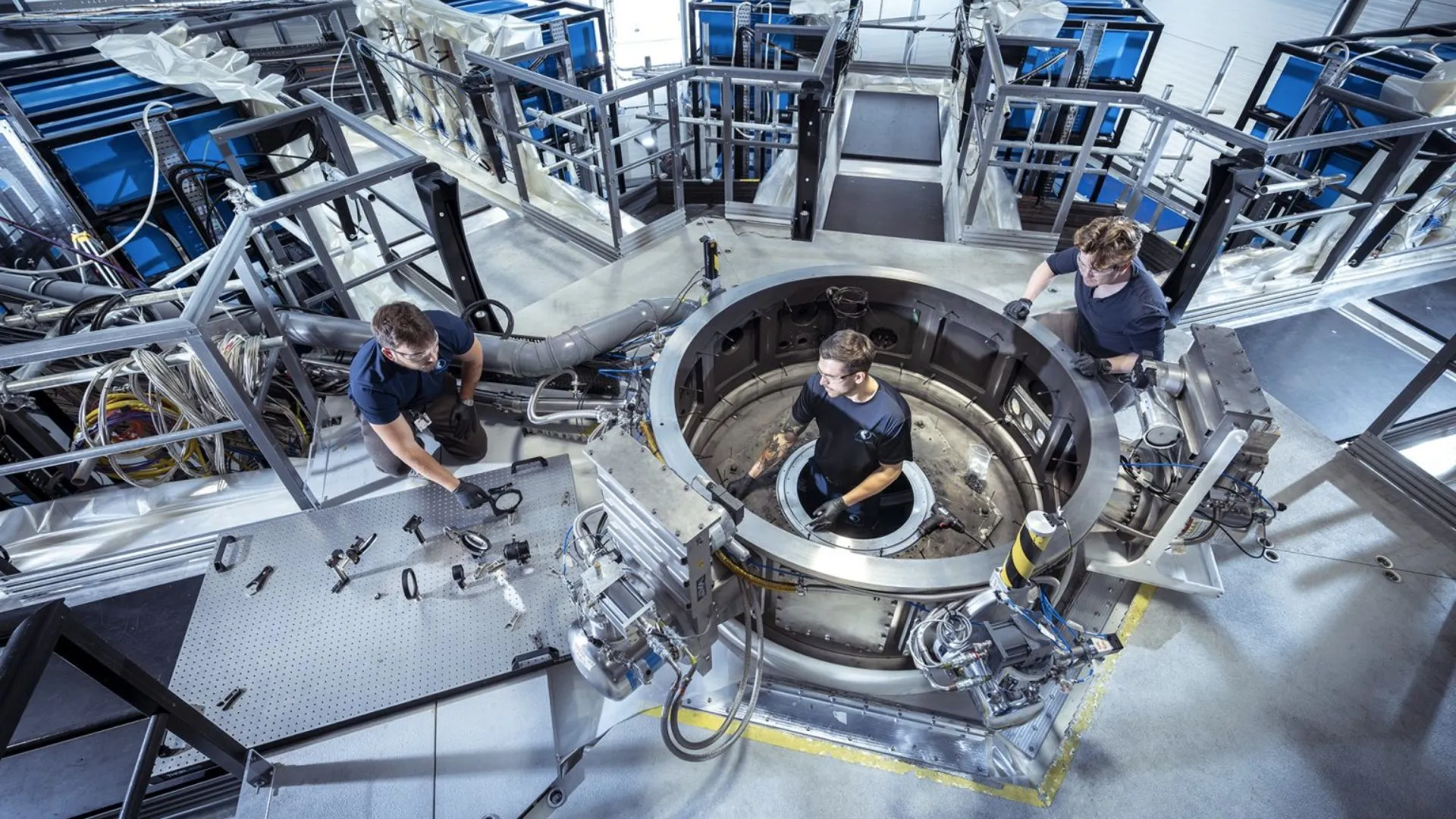
A British company has demonstrated the key fuel compression principle underpinning FLARE, its proprietary approach to inertial fusion. First Light Fusion showcased this approach in a series of experiments on M3, the company’s in-house pulsed power facility.
FLARE separates the two main steps needed for fusion: first compressing the fuel, then rapidly igniting it. Much like an engine compresses fuel before ignition, FLARE first assembles the fuel to high density before delivering a separate, rapid burst of energy to trigger fusion. The M3 experiments validate the first of these stages: compressing fuel to high density using a simple, lower power driver.
“This experiment validates a central principle of FLARE: that we can simplify the machine by putting more functionality into the target,” said Mark Thomas, Chief Executive Officer at First Light Fusion. ” One of the central challenges in fusion is cost. The machines typically used to compress fuel must deliver enormous bursts of energy with exceptional precision. Repeating that process places significant stress on components, increasing operational and capital costs due to the risk of failure, maintenance requirements and downtime. FLARE takes a different approach. Its multi shell target is designed to control much of the compression process itself, turning a relatively simple electrical pulse into a carefully timed series of shock waves. These progressively compress the fuel to high density without prematurely heating it, reducing the peak power and complexity required from the driver, according to a press release. “First Light Fusion’s demonstration of the compression of materials to very high pressures, using multi-shell liners on a low voltage generator, represents a significant step on the path to validating the science behind the FLARE fusion concept,” said Prof.
Source link