
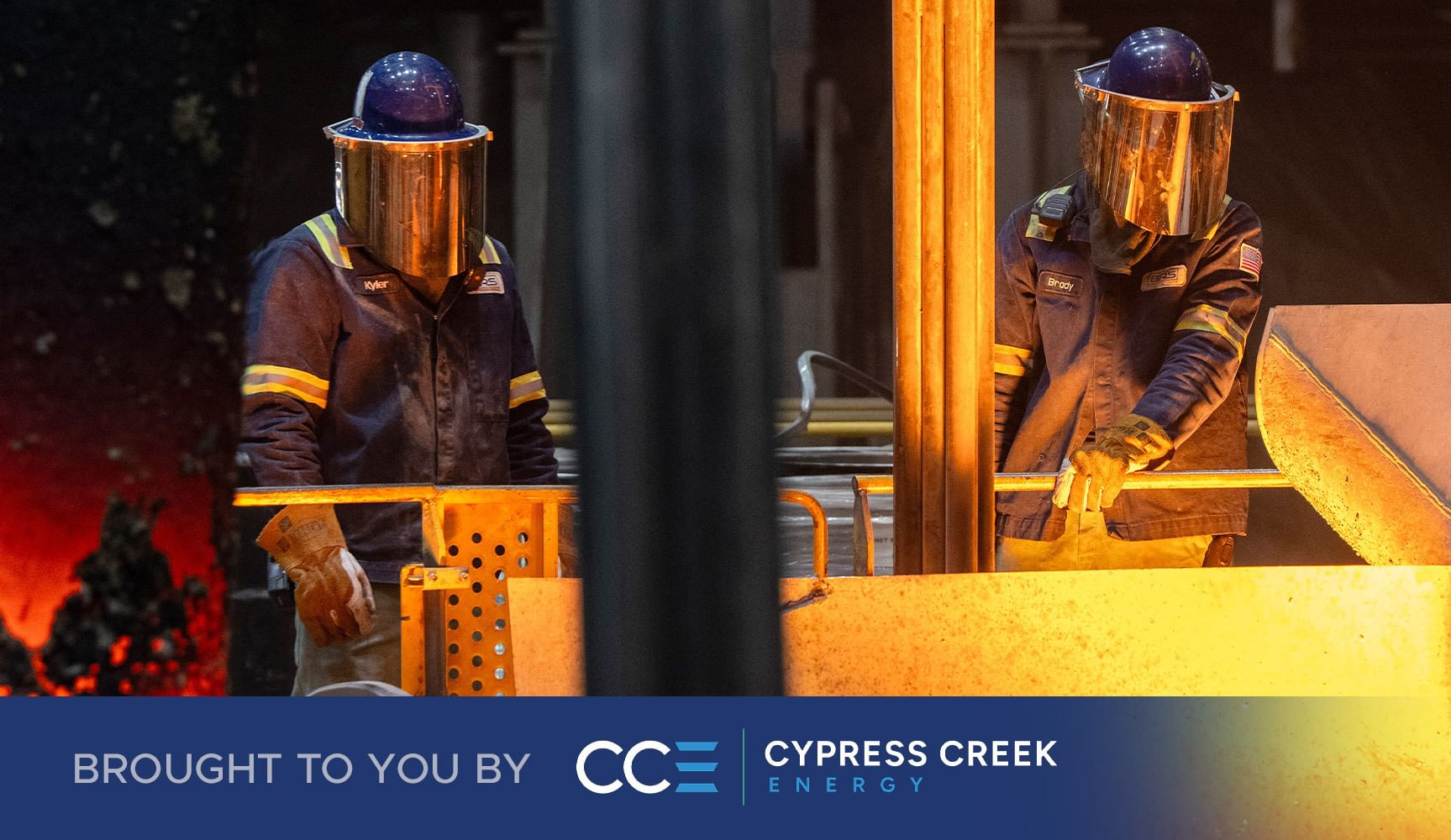
In the early 2020s, U. S. Steel launched a nationwide search to find the best location for a new factory. The company had recently completed its acquisition of the Big River Steel mill in Osceola, Arkansas. The goal of the expansion: Replicate the success of Big River Steel, which supplies the automotive, construction, and renewable-energy industries and can produce over 3 million tons of steel annually.
After an exhaustive search, the company realized there was no reason to look beyond Northeast Arkansas. “We went to 48 states and narrowed the site selection down to 20, 10, five, and then three,” said Dan Brown, U. S. Steel’s executive vice president of advanced technology steelmaking and CEO of Big River Steel. “We built another plant one mile from where we’re at.” At close to $3.5 billion, the investment in what is now called Big River Steel 2 was the largest in U. S. Steel’s storied 125-year history.
A variety of factors go into determining the ideal location of a steel plant, including proximity to large customers, good railroad and river transportation, and a solid local workforce. Arguably most important, however, is access to reliable and affordable electricity, because producing steel requires an enormous amount of power. “If that isn’t number one, it’s in the top two,” Brown said. “You have to have a good electricity provider and a good electricity source.”
The reliable, affordable energy source that will help power the growth of one of America’s most iconic manufacturers is solar and energy storage.
Source link





