
This article has been reviewed according to Science X's editorial process and policies. Editors have highlighted the following attributes while ensuring the content's credibility:
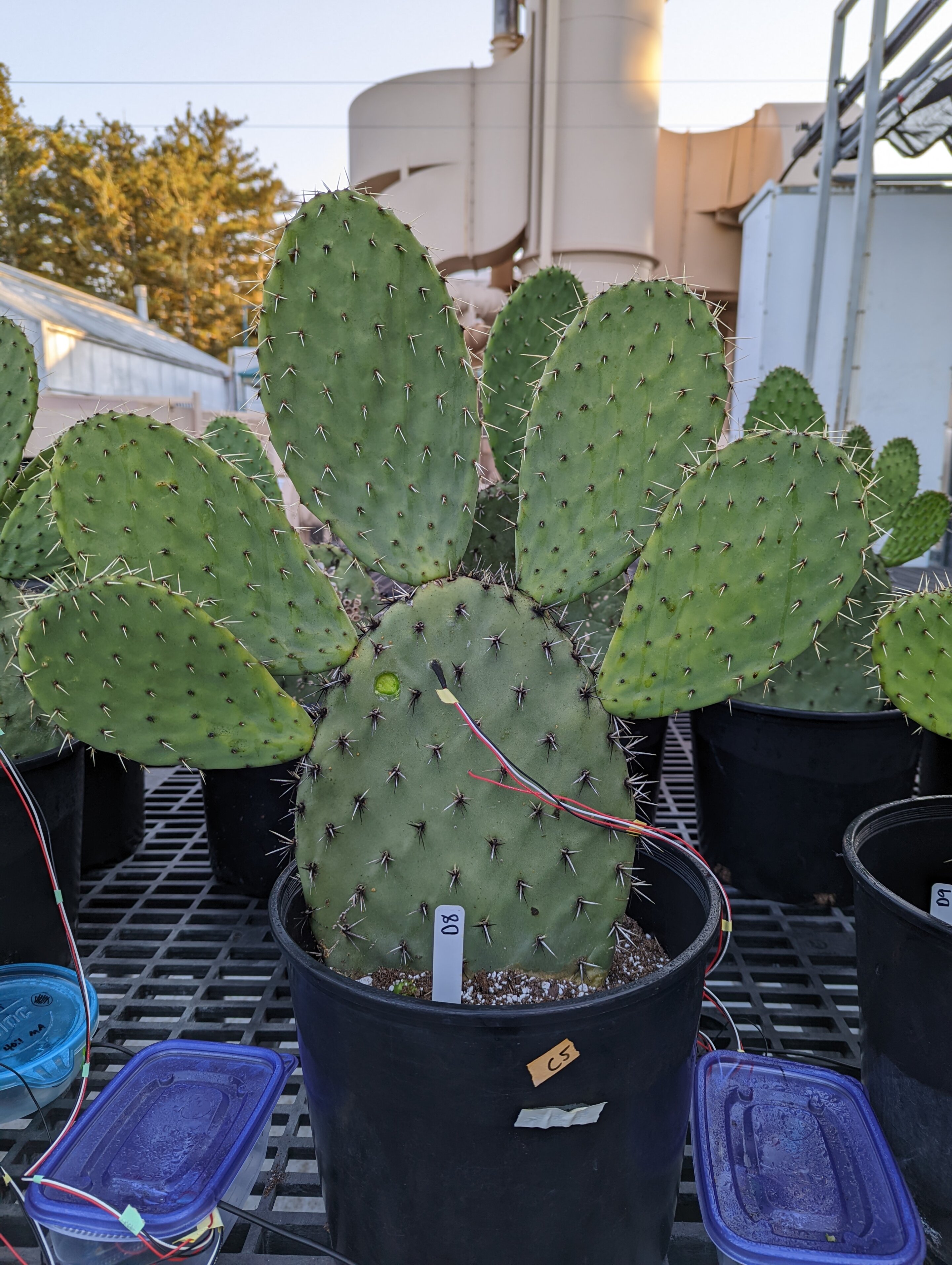
In a greenhouse at the University of California, Santa Cruz, electricity gently hums, but it isn't coming from a lightbulb or socket. Instead, the voltage is being produced from the stems of prickly pear cacti, which researchers converted into living solar panels.
A team of scientists developed a technique to harvest small amounts of power from cacti that takes advantage of the plants' specialized, water-preserving approach to photosynthesis. They envision that this green renewable electricity source could power sensors on farms that measure crop conditions amid increasing climate change–related pressures.
A new study published in the journal Plants, People, Planet demonstrates the team's approach to capturing energy from prickly pear cacti and shows how environmental conditions affect cactus voltage strength.
Undergraduate researchers from three academic divisions at UC Santa Cruz contributed to this project, enabling the students to design climate solutions with an approach that felt true to the campus' spirit.
"The undergraduate students told me they liked this project so much because it felt whimsical, and like a lighthearted approach to something that is so serious," said Charlie Chesney, an environmental studies Ph.D. alumna who led the project. "It was a fun way to explore climate solutions that put creativity first."
Environmental studies professor Michael Loik, who has been studying cactus physiology and ecology for around 40 years, spearheaded the project with Chesney.
"I've been obsessed with the plant since forever, it seems," Loik said.
Source link





