German transmission system operators 50Hertz, Amprion, TenneT, and TransnetBW have forecast EEG funding needs of €17.524 billion for 2027, according to a newly published projection. In October 2025, they initially estimated funding needs of €16.152 billion for 2026, excluding the expected EEG account balance, according to data on the operators’ website.
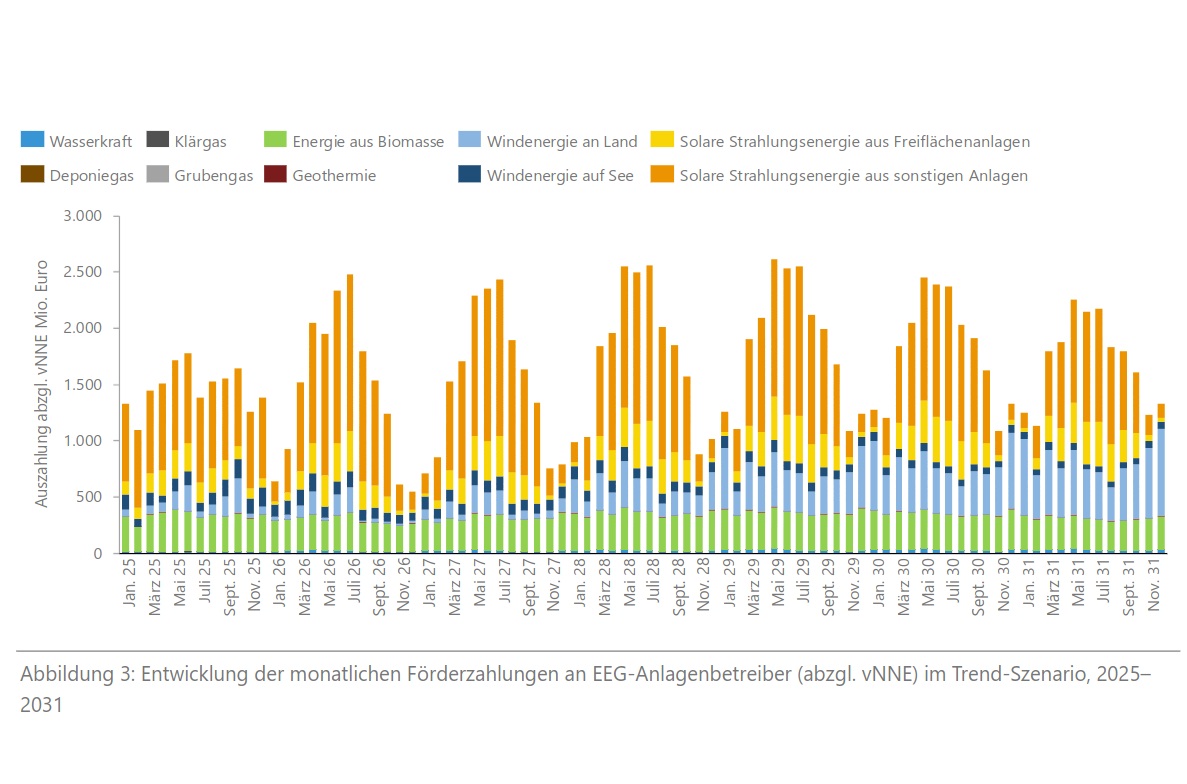
The latest calculations draw in part on a medium-term forecast by the Research Center for Energy Economics (Forschungsstelle für Energiewirtschaft, FfE). It estimates payments to operators of installations supported under the EEG at around €18.3 billion in 2027, up from nearly €17.7 billion in 2026. These support payments are not equivalent to total EEG funding needs, which also account for market revenues and other costs.
The FfE identifies wholesale electricity prices as a key factor influencing support payments. Under its trend scenario, the average wholesale electricity price falls from around €106 per megawatt-hour in 2026 to approximately €70/MWh in 2030. This would widen the gap between the applicable remuneration value and the market value earned by many installations, increasing market premium payments.
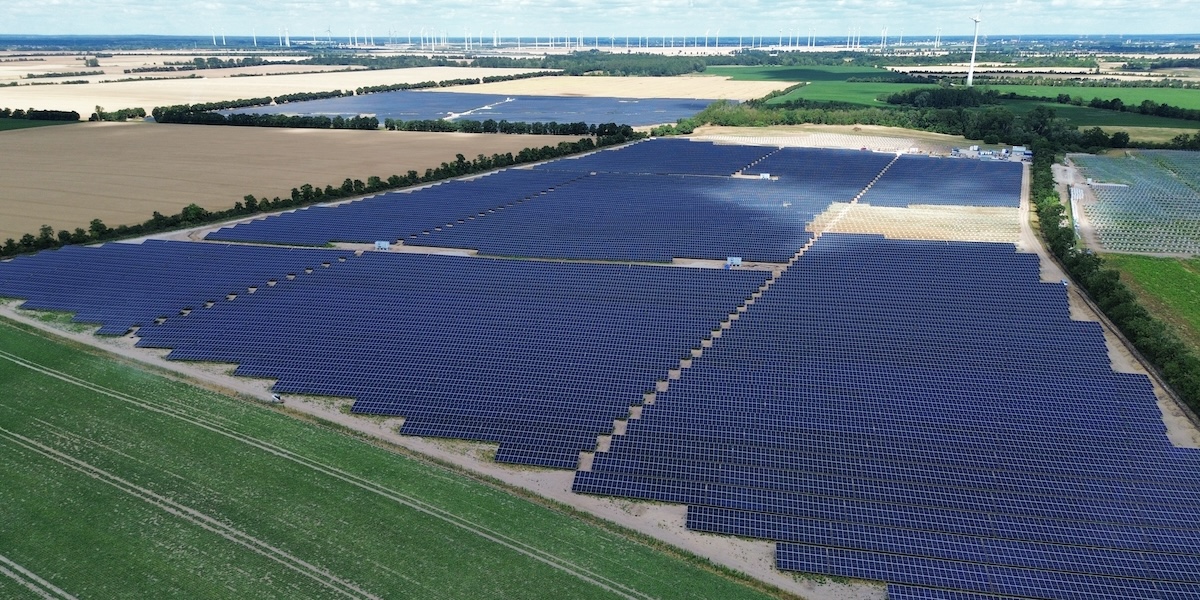
Photovoltaic installations account for the largest share of projected support payments in 2027. Other solar installations, particularly rooftop systems, are expected to receive around €9.7 billion, while ground-mounted solar plants account for a further €2.25 billion. Together, these represent approximately 65% of forecast payments.
The FfE notes that most support payments go to older installations receiving higher remuneration rates. A recent Enervis study reached a similar conclusion about support costs for new and existing solar and wind power plants.
Source link