The state recently awarded nearly $1.9 million to help organizations investigate the best ways to slash emissions from heavy-duty industrial operations.
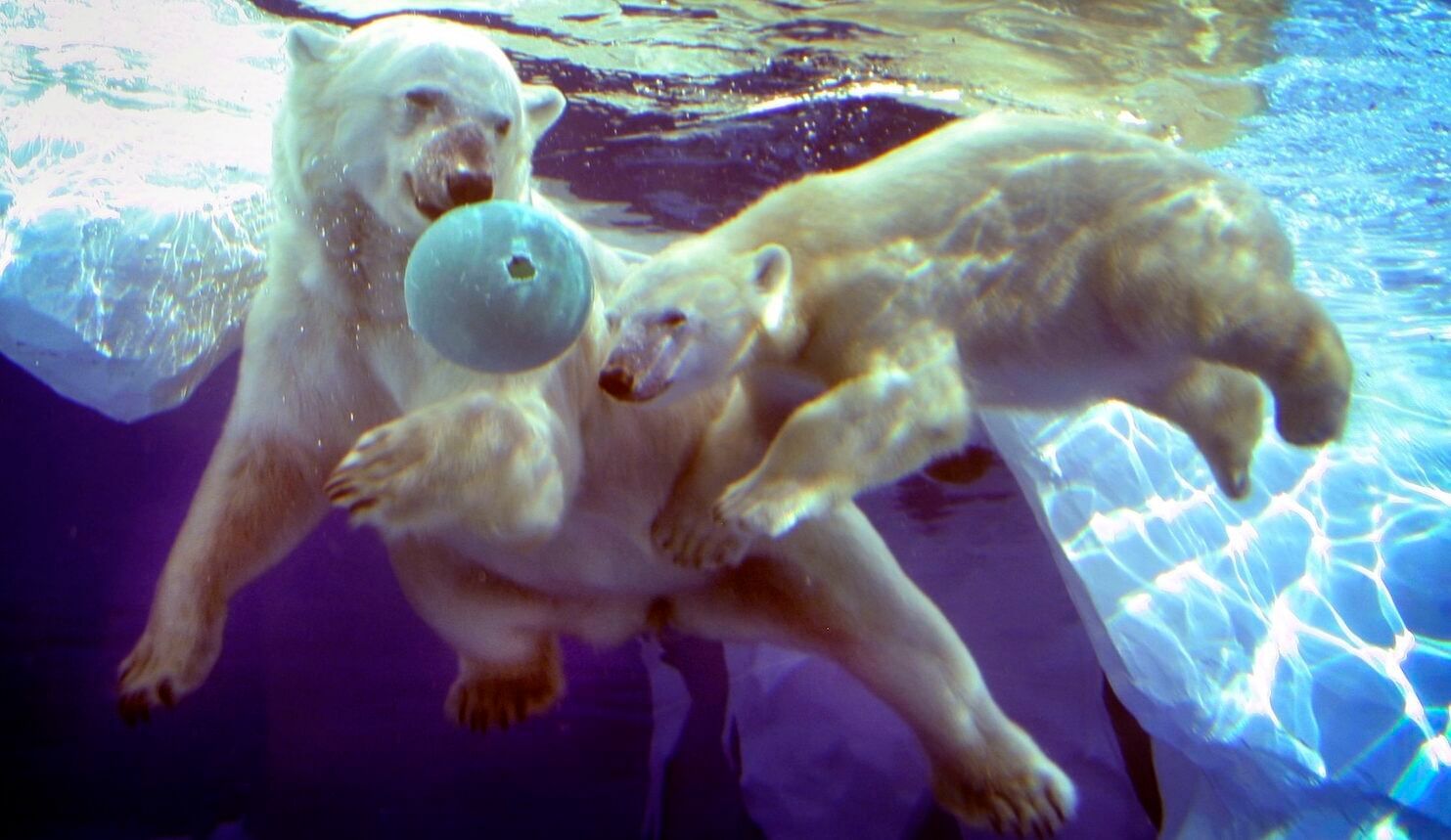
A polar bear cub swims with her mother at the Detroit Zoo in Royal Oak, Michigan. (Bill Pugliano/Getty Images)
Re-creating polar habitats in Michigan is no small feat. Just ask the Detroit Zoo, where the polar bear and penguin centers require producing industrial levels of cooling from energy-intensive equipment. For the zoo, figuring out how to keep animals comfortable using less, and cleaner, energy is key to meeting its long-term climate goals and cutting utility bills.
One potential approach is to install large heat pumps that remove warm air from the frigid exhibits and transfer it to nearby buildings that need heat, such as a chimpanzee habitat, said Andy McDowell, director of sustainability and systems planning at the Detroit Zoological Society. Geothermal loops built beneath grassy outdoor exhibits could similarly supply zero-carbon heating and cooling — provided they’re not placed near clawed animals that dig into the dirt.
The zoo is actively exploring such strategies thanks to a $260,000 grant it recently received from the state of Michigan. The funding will help the organization develop a campus-wide model outlining different ways to decarbonize and more efficiently distribute its heavy-duty energy loads — work that McDowell says may not have been financially possible otherwise.
“ Our 100 -year anniversary is coming up in 2028 , and I really want this to influence our next campus master plan,” McDowell said.
Source link