A research team in India has proposed a novel agrivoltaic system that uses linear-diverging Fresnel optics to redistribute transmitted sunlight into shaded regions. Named Even Solar Sharing Agrivoltaics (ESS-AV), it uses diverging Fresnel optics, which are thin, transparent sheets patterned with tiny grooves that spread incoming sunlight outward.
Fresnel optics use thin, lightweight lenses or sheets with precisely engineered grooves to bend and redirect incoming light. Unlike conventional lenses, they can control how sunlight is concentrated or dispersed while requiring significantly less material.
“The central novelty of our research is demonstrating that how sunlight is distributed beneath photovoltaic modules is as important as how much sunlight crops receive over the course of a day,” said corresponding author Adersh Asok to pv magazine. “Our ESS-AV system continuously redistributes sunlight into shaded regions, producing a more homogeneous light environment beneath the photovoltaic array.”
Asok explained that the conventional fixed-tilt agrivoltaic configurations often create alternating regions of intense sunlight and deep shade, which might influence crop growth underneath. “Importantly, we compared ESS-AV with a conventional checkerboard agrivoltaic configuration having identical PV coverage and nominal electrical capacity. This enabled us to isolate the influence of instantaneous light distribution on crop productivity without compromising electricity generation,” he added.
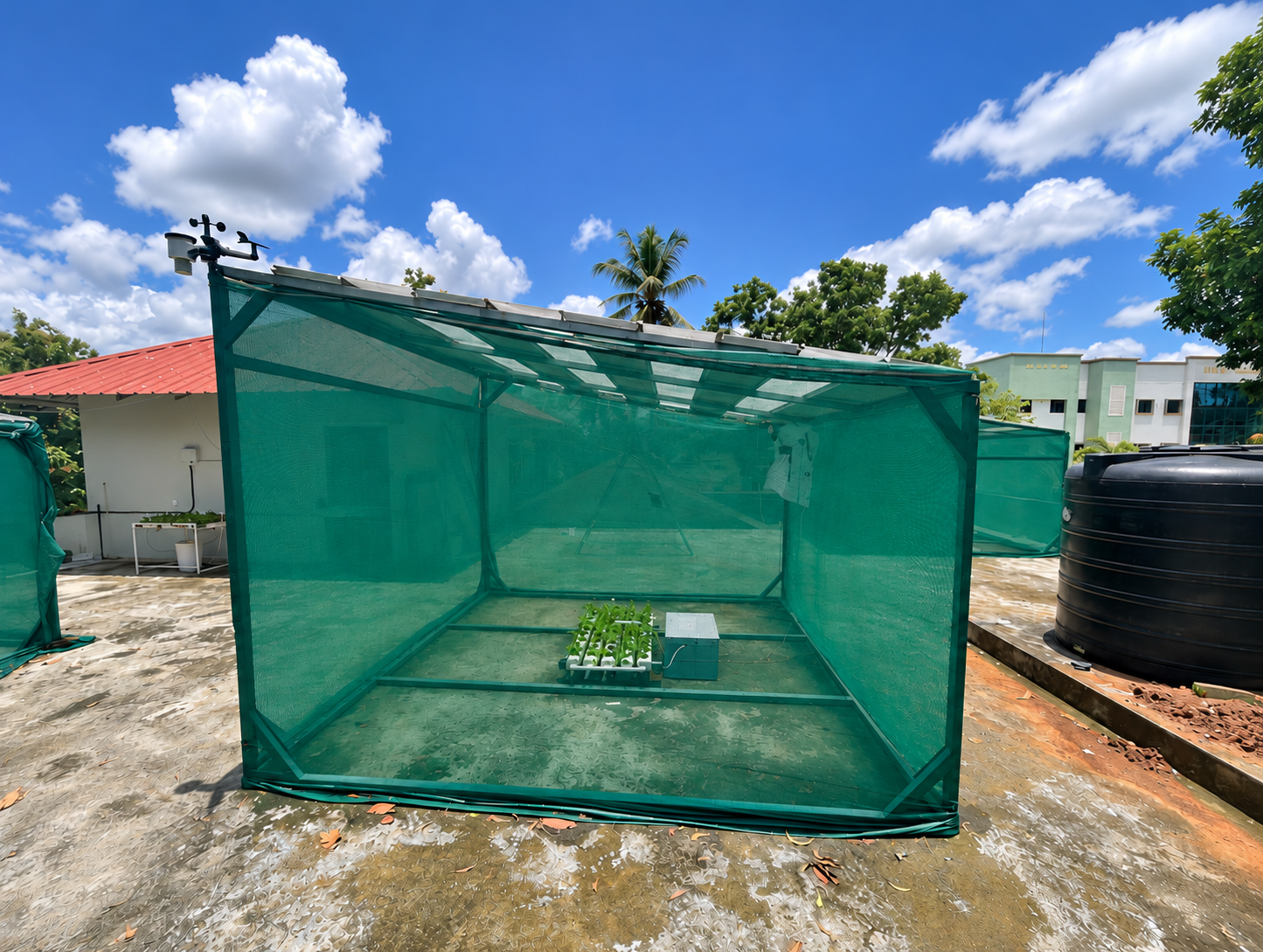
1 kW rooftop agrivoltaic systems at Thiruvananthapuram, southern India, each with 15 PV modules and 50% PV coverage. One used a conventional checkerboard layout, while the ESS-AV system incorporated Fresnel sheets between modules to redistribute sunlight. The team designed the optics in AutoCAD, simulated them in COMSOL Multiphysics, and fabricated them using a laser machine.
Source link