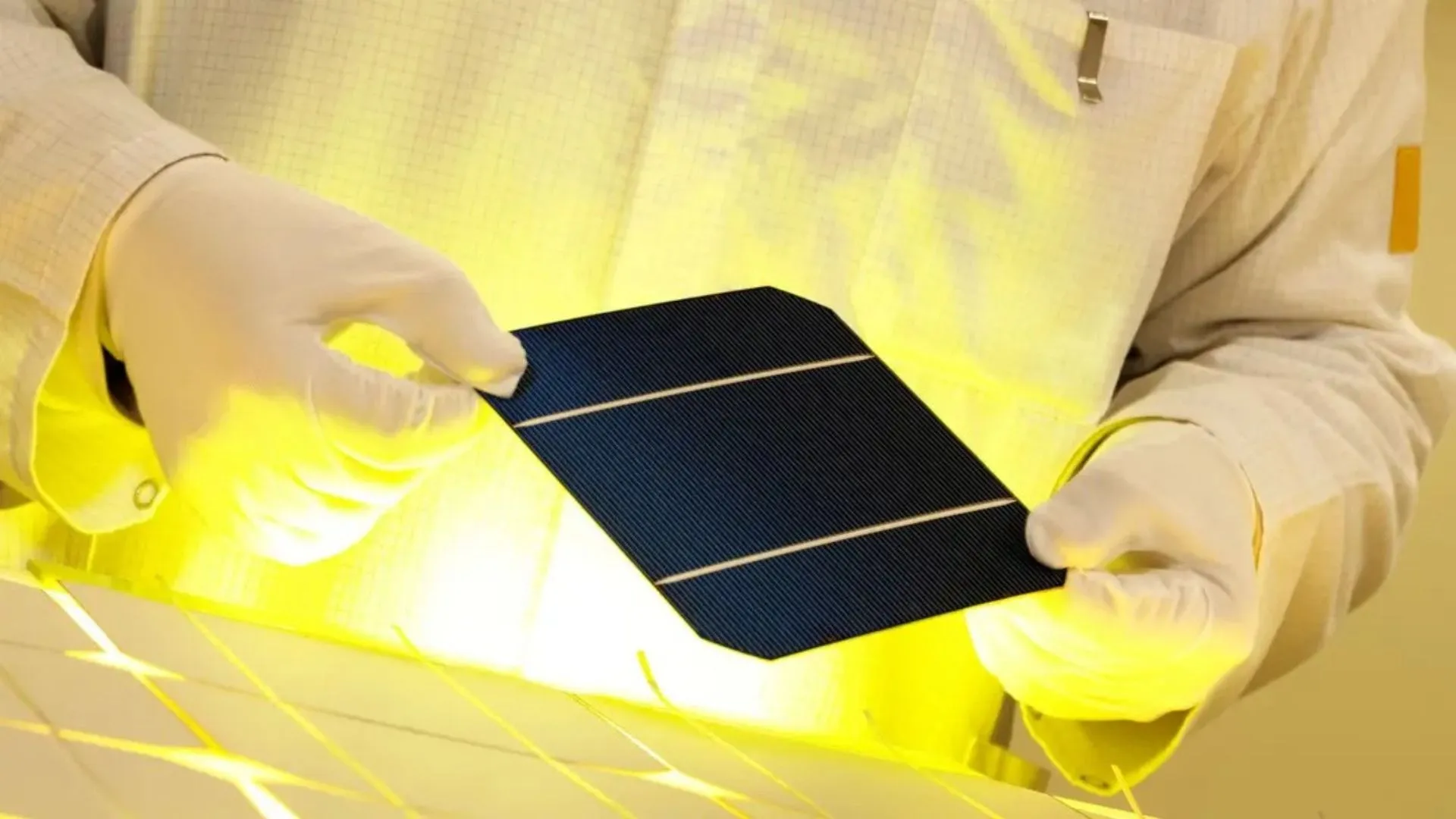
A joint research team led by Southeast University and Soochow University has found a way to stop the molecular fighting in flexible perovskite solar cells. To turn rigid solar tech into bendable panels that can roll over backpacks or car roofs, researchers had to fix a major manufacturing flaw in flexible perovskite solar cells.
Printing these flexible devices requires depositing two layers at once. A ultrathin foundational transport layer called a single-molecule film (self-assembled monolayer, SAM), and the light-harvesting perovskite crystals
When engineers tried to coat them together onto bendable substrates, the SAM molecules and perovskite components bound too strongly to each other instead of taking their proper positions. This chemical feud left behind uneven, defect-ridden layers that broke down under operational heat and humidity.
The joint research team solved this chemical roadblock by introducing a customized “decoupling” molecule. The discovery acts as an atomic referee. It prevents the two components from reacting prematurely and unlocks reliable, large-scale production.
“A 25-square-centimeter flexible device retained 92.5 percent of its initial PCE of 22 percent after 1044 hours of maximum power point tracking at 85°C (185°F) and 65 percent relative humidity,” the study paper noted.
Flexible substrates have uneven surface roughness and varying hydroxyl-group densities, making standard large-area printing techniques ineffective. Attempting a conventional co-deposition strategy improves surface wettability, yet strong intermolecular interactions between transport layer molecules and perovskite components disrupt both substrate anchoring and crystal formation. These chemical conflicts ultimately leave current flexible solar modules far behind their rigid counterparts in both efficiency and stability.
Source link